
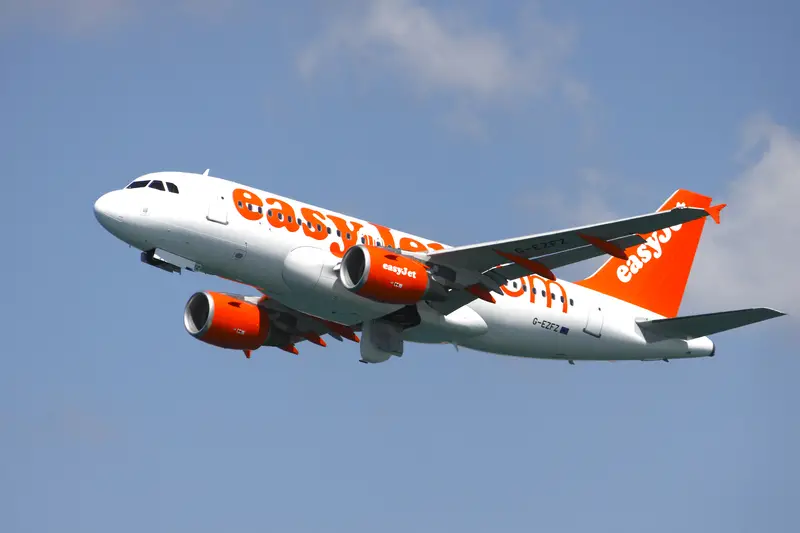
An easyJet aircraft carrying 186 passengers made an emergency return to Tenerife South Airport on Tuesday, July 21, 2026, after a captain determined that a confrontation involving roughly ten travelers posed too great a risk to continue the journey, Spanish air traffic control confirmed. The Airbus A320-214 had been en route to Liverpool John Lennon Airport when the incident forced the turnaround.
According to Spain’s Civil Guard, the dispute actually started before boarding, when two British families clashed at the departure gate inside the terminal. That argument didn’t end at the threshold—it followed them onto flight EZY3352 and exploded into a full-blown disturbance roughly half an hour after takeoff, which had occurred just before 8 p.m. local time.
Flight-tracking records revealed the Airbus A320-214 circling at 1,425 feet before reversing course toward the Canary Islands. The jet, scheduled to land at its destination around 12:25 a.m., instead touched back down shortly after nine p.m. on the island. Control tower personnel in Spain confirmed the arrival time.
Spanish air traffic controllers reported that the flight crew radioed ahead to request a police presence, notifying ground staff that a brawl had broken out among approximately ten passengers. The captain chose to abort the flight because of the “danger this posed to the safety of the flight.” Controllers remarked that airline staff and travelers are facing such disruptions with increasing frequency and expressed solidarity with those affected.
Eight Removed, No Arrests
Law enforcement officers were standing by when the aircraft landed, though a Civil Guard spokeswoman confirmed that no arrests were made. Authorities removed eight individuals from the plane—two adults and six minors—who had been traveling as a single group and were all British nationals. The spokeswoman stated that all eight were formally identified but not taken into custody.
Investigators determined that the clash originated in the airport building before departure. The Civil Guard explained that a heated argument flared between the two families inside the terminal and continued once they boarded, eventually escalating to the point where the pilot decided to turn around. The spokeswoman noted that officers did not find evidence of physical violence during the flight itself. Police were unable to establish what sparked the initial disagreement between the families.
Reports differed slightly on the total number of people caught up in the melee. Air traffic control and certain accounts placed the figure at around ten, other sources described roughly a dozen passengers involved, and the Civil Guard’s tally of those actually taken off stood at eight. All sources, however, agreed on the basic chronology: a gate-level dispute, an airborne flare-up, a captain’s call to reverse course, and a police escort upon landing.
Once the disruptive passengers were off the plane and order was restored, the aircraft departed again for Liverpool. An easyJet spokesman acknowledged that the flight had returned to the airport due to a group of customers behaving disruptively, was met by police, and then completed its trip. The airline noted that its crew members receive training to respond swiftly in order to ensure flight safety and passenger security, adding that unruly conduct directed at employees is not accepted. The carrier pointed to potential penalties, including monetary sanctions and possible bans from future travel.
Fines and a Possible Flying Ban
Spanish protocol for aviation incidents typically involves identifying anyone flagged as responsible, removing them from the flight, and issuing a financial penalty—unless police directly observe criminal conduct. Under the jurisdiction of AESA—Spain’s agency overseeing civil aviation compliance—violations of air safety regulations can trigger penalties. Standard infractions may result in fines starting around £50 and reaching as high as nearly £40,000. Those found responsible may additionally face charges for diversion expenses and carrier-imposed travel restrictions.
Stricter measures may be coming. In recent weeks, Spanish authorities proposed new rules that would prevent unruly passengers from flying on other airlines after being banned by one carrier. Meanwhile, British transport and interior ministry officials are developing a system to share information on problem passengers across multiple airlines, reflecting a broader international trend toward tighter controls on in-flight misconduct.
Part of a Wider Pattern
This emergency landing adds to a series of disruptive episodes on Liverpool-bound flights this year, many of which resulted in diversions and, in certain instances, criminal charges. On Jan. 6, 2026, Fintan Wyatt demanded to meet the captain during an easyJet flight from Sharm El-Sheikh to Liverpool. Catherine Bellis physically attacked both her boyfriend and flight attendants on a Ryanair service from Tenerife to Liverpool. Callum Kerr, a Warrington resident, stopped breathing after being held down by crew and fellow passengers aboard a Jet2 service bound for Manchester Airport on June 21; he was later pronounced dead.
Footage recently emerged of an easyJet pilot physically subduing a seemingly drunk traveler on the floor of a vacation aircraft, with a flight attendant assisting in the hold. Earlier in May, police arrested a male and female passenger on an easyJet departure from Gatwick to Antalya, Turkey; witnesses said the woman consumed vodka directly from the bottle and spat at another traveler, while the man allegedly bragged about a criminal record and made threats toward complainers.
For the families at the center of the Tenerife return, the immediate consequences were logistical and disruptive rather than criminal. Controllers emphasized that the captain made the choice to return in order to safeguard the remaining passengers, and the aircraft landed on runway 07 smoothly during its turnaround.
