
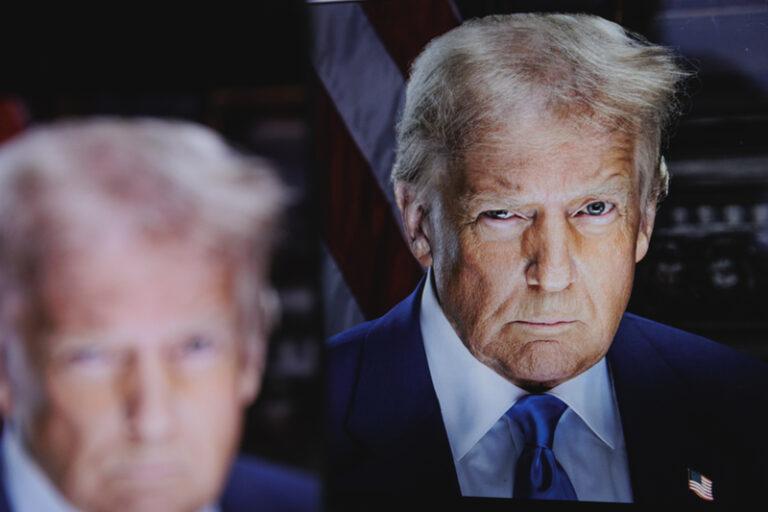
President Donald Trump endorsed escalating threats from his Federal Communications Commission chairman to revoke broadcast licenses of television networks over coverage of the U.S.-Israel war with Iran, marking one of the most direct assaults on press freedom in modern American history.
FCC Chair Brendan Carr warned broadcasters on Saturday that they risk losing their licenses if they continue what he characterized as “hoaxes and news distortions” about the military conflict. Trump amplified the threat on Sunday on Truth Social, declaring he was “thrilled” that Carr was investigating “Corrupt and Highly Unpatriotic ‘News’ Organizations.”
The campaign represents a sharp departure from decades of established First Amendment protections. Trump and Carr are now suggesting that critical war coverage amounts to disloyalty punishable by loss of broadcast privileges.
In an interview with BBC News, Carr warned that licenses are not guaranteed. “People have gotten used to the idea that, you know, licenses are some sort of property right,” he said. “I try to sort of help reorient people that, no, there is a public interest, and broadcast is different.”
The threats came after Trump criticized coverage of the military strikes the U.S. and Israel launched against Iran on February 28, 2026. The president posted on Saturday that “Lowlife ‘Papers’ and Media actually want us to lose the War,” singling out The New York Times and The Wall Street Journal by name.
Carr met with Trump at Mar-a-Lago on Saturday, according to reports. The FCC chair has visited Trump’s Florida club regularly during the winter months, raising concerns about coordination between the supposedly independent regulatory agency and the White House.
The warnings extend beyond war coverage. In September 2025, Carr called for the suspension of ABC late-night host Jimmy Kimmel after the comedian criticized Trump and Republicans for their reaction to the assassination of conservative activist Charlie Kirk. ABC took Kimmel’s show off the air but restored it roughly a week later following widespread backlash.
Defense Secretary Pete Hegseth joined the administration’s media assault, barring press photographers from briefings after publications ran what officials deemed “unflattering” photos of him. Hegseth singled out CNN at a Pentagon briefing, declaring, “The sooner David Ellison takes over that network, the better.”
Democratic lawmakers condemned Carr’s threats as unconstitutional overreach. Massachusetts Senator Elizabeth Warren said the administration was attempting censorship, calling it “straight out of the authoritarian playbook.” California Governor Gavin Newsom labeled the threats “flagrantly unconstitutional.”
Senator Mark Kelly called it “overreach by the FCC because this administration doesn’t like the microscope and doesn’t want to be held accountable.”
Legal experts and even the FCC’s own website cast serious doubt on whether Carr can follow through. The commission’s website states that the “First Amendment and the Communications Act expressly prohibit the Commission from censoring broadcast matter.”
Public interest lawyer Andrew Jay Schwartzman told reporters that Carr’s warnings lack teeth, calling the threats “hollow” and saying he poses “no genuine danger to any broadcasters’ licenses based on his unhappiness with their content.”
Anna Gomez, the FCC’s lone Democratic commissioner, was blunt in her assessment. She noted that no broadcast licenses are up for renewal until 2028 and that early renewal attempts are “exceedingly rare.” The FCC, she added, “can issue threats all day long, but it is powerless to carry them out.”
The FCC issues eight-year licenses to individual broadcast stations but does not license television networks such as CBS, NBC, ABC or Fox. In its more than 90-year history, the commission has rarely revoked a broadcast license—and never over news content.
Yet media observers warn that the threats themselves can chill coverage, even if legally questionable. Former CNN journalist Don Lemon, who was arrested in Los Angeles in January after covering an anti-ICE protest at a Minnesota church, summarized the concern after his arrest: “Process is the punishment.”
Trump suggested media outlets that publish false information during wartime should face treason charges—a crime punishable by death. He accused Iran of being a “master of media manipulation” working “in close coordination with the Fake News Media” to spread AI-generated images, including one showing a U.S. aircraft carrier falsely burning at sea.
The president has frequently targeted news organizations throughout his political career, filing lawsuits against The Wall Street Journal, The New York Times and others over coverage he considers biased. Now, with control of the FCC, Trump and Carr appear ready to escalate those battles into threats against the fundamental infrastructure of American broadcast journalism.
In an interview with The Guardian published Monday, Carr indicated he could accelerate license reviews and suggested revoking licenses remained “on the table.”
Whether Carr can legally act on his threats remains uncertain. What is clear: the Trump administration has launched an unprecedented campaign to intimidate news organizations during wartime, testing the limits of press freedom at a moment when independent journalism faces its most significant challenge in generations.
