
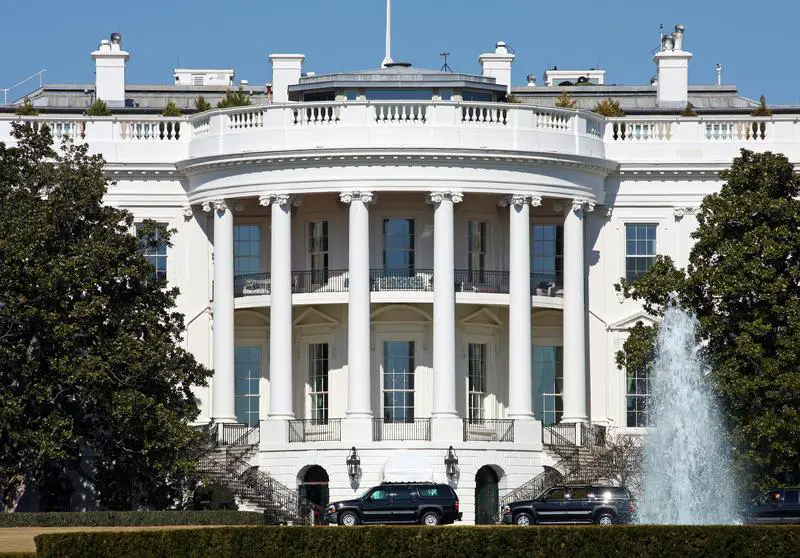
In a July 23, 2026, press briefing, White House press secretary Karoline Leavitt made headlines by claiming that “literal, self-proclaimed communists” have secured electoral victories and are now ascending within Democratic Party ranks. The accusations came during the same session in which she deflected inquiries connecting President Donald Trump’s Iran conflict to rising consumer costs while simultaneously defending the administration’s nuclear agreement with Saudi Arabia.
A Nuclear Pact Framed as Economic Opportunity
When reporters questioned the nuclear arrangement with the Saudi kingdom, Leavitt responded by first reading a Truth Social message the president had posted earlier that day—an uncommon approach to answering queries about delicate international treaties.
Challenged to explain why Riyadh receives civilian nuclear cooperation while Tehran faces prohibition, Leavitt said the agreement secures preferential access for U.S. companies and advances American interests. The core defense, then, rests on corporate profit: permitting Saudi atomic development benefits American businesses financially.
What the pact authorizes is deeply troubling. These Saudi agreements enable the kingdom to pursue nuclear expansion without external monitoring—a sharp departure from the administration’s rigid stance that Iran must be kept entirely nuclear-free. One nation faces absolute prohibition; the other receives opportunity wrapped in commercial language.
Communist Label Deployed Against Democratic Victors
Leavitt warned that self-identified communists have won races and now claim leadership roles among Democrats, cautioning the nation risks resembling Cuba. While Republicans routinely label their opponents socialist or communist, her use of descriptors like “literal” and “self-proclaimed” represented a markedly sharper escalation.
The rhetoric carries particular weight considering who has actually triumphed at the ballot box. Progressive Democrats including Democratic Socialist Zohran Mamdani in New York centered their campaigns on affordability—a subject that continues to plague the administration. Trump has consistently rejected the notion, previously labeling affordability a “hoax” invented by Democrats, and Leavitt mirrored that dismissal by targeting what she termed the “Democrat solution to, quote, affordability.”
No rhetorical strategy, however, can erase what consumers encounter at checkout. When politicians succeed by vowing to reduce expenses, claiming the problem is manufactured offers scant comfort to families confronting escalating grocery and fuel charges.
Iran Conflict Linked to Consumer Burden
That credibility gap widens when the origins of price increases are traced. Fertilizer costs have skyrocketed due to Trump’s war in Iran, driving up food expenses nationwide. Petroleum prices have likewise surged because of the conflict, hitting motorists hard across the country. Leavitt maintained the administration promotes its record of economic strength and worker prosperity, but such talking points clash with the bills households actually pay.
The human cost of the war emerged in disturbing fashion. Without providing any proof, Trump has asserted that deceased U.S. military personnel had conveyed to him their conviction that Iran must never acquire nuclear weapons—a claim that transforms tragic loss into policy rationale. The phrase “Iran must never have a nuclear weapon” has become the administration’s primary justification for its Tehran strategy.
Regional instability underscores the gravity. Volatility throughout the Middle East has persisted, with Iranian activity near the Strait of Hormuz and large-scale American evacuations from the area demonstrating how rapidly the war has altered everyday existence and international commerce.
The session brought together foreign affairs, economic talking points, and campaign-season attacks in compressed form. A widely observed analysis of the briefing disclosed more about White House priorities than any scripted remarks could.
Vice President JD Vance has remained involved in the administration’s broader effort to market its economic and international policy achievements. But the issues surfaced on July 23 persisted after the microphone went dark: will the public buy the argument that affordability concerns are fiction, and should the international community accept Saudi Arabia pursuing nuclear capabilities without inspection?
Collectively, the briefing revealed an administration determined to shift the narrative. By casting political adversaries as radicals, dismissing cost-of-living concerns as partisan fabrication, and repackaging a nuclear treaty as employment policy, the White House deployed messaging meant to recast uncomfortable truths. Yet the fundamental realities endure—elevated prices stemming from military action, a nuclear double standard justified through economic arguments, and evidence-free assertions invoking dead soldiers—and they resist being explained away.
