
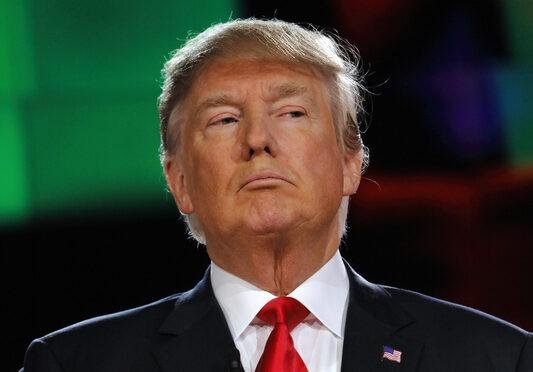
During a July 27, 2026 flight to Michigan, President Donald Trump berated CBS News reporter Jennifer Jacobs when she inquired about his push for senators to remain in Washington working on voting legislation instead of campaigning ahead of November midterms, calling her inquiry “What a stupid question!”
Communication scholars who study the president’s interactions with the press contend these clashes with female journalists represent a deliberate tactic, not spontaneous outbursts.
A Documented Pattern
The Air Force One episode marks the latest in a series of similar exchanges. In May, Trump labeled a female reporter questioning him about White House ballroom construction “not a smart person” and a “dumb person” as he departed the White House. He acknowledged the project would move forward, characterizing it as under budget and ahead of schedule.
That same month, ABC reporter Rachel Scott faced dismissal of her question as stupid near the Lincoln Memorial, where Trump also branded her “one of the worst reporters.” He had been addressing cleanup operations at the Lincoln Memorial Reflecting Pool when the confrontation occurred. These encounters have routinely featured remarks targeting a journalist’s intelligence, demeanor or appearance in lieu of policy responses.
Experts See a Deliberate Strategy
Georgetown University linguistics professor and author Deborah Tannen observed that Trump deflects challenging questions by assailing the questioner, especially deploying “stupid” when confronting women. According to Tannen, the insult serves to mask his inability to provide substantive responses, undermining the question to prevent his stance from being examined on its substance.
Colorado State University communication studies professor Karrin Anderson stated Trump exploits reporters’ questions to attack their intelligence instead of offering accountability. His abrupt shift from insult to praise mid-answer indicated he recognized the exchange might strengthen impressions of antagonism toward female journalists, she noted.
Pressure on the Senate Mounts
The recorded press gaggle aboard the presidential aircraft occurred as Trump traveled to Waterford Township, Michigan. Jacobs questioned whether senators should be out campaigning for the November midterms rather than staying in town to work on voting legislation known as the SAVE Act (Safeguard American Voter Eligibility Act), which Trump has elevated as a central legislative priority.
Trump avoided addressing the substance of her inquiry. He shouted back, “What a stupid question!” When Jacobs persisted, asking, “Shouldn’t they be out campaigning, though?” Trump reiterated the insult before seeming to moderate. He called Jacobs “a smart person” and reminded her that, dating back to the Iowa caucuses, she had accurately forecast his victory.
Trump justified his demand to cancel the Senate’s August recess by characterizing the SAVE Act as vital. He cautioned that Republicans would face political consequences if they failed to enact it, forecast unanimous Democratic resistance, and indicated approximately four GOP senators would oppose it without naming them.
The legislation would mandate voters provide proof of citizenship and voter identification to participate in federal elections while severely limiting mail-in voting. The measure has passed the House repeatedly, most recently on July 23, yet has continually faced resistance in the Senate. GOP senators Susan Collins, Mitch McConnell, Lisa Murkowski and Thom Tillis opposed including the measure within a Republican budget package in June.
In a Truth Social post the same day, Trump urged Senate Majority Leader John Thune to hold the chamber in session until the bill succeeds and pressed Republicans to abolish the filibuster to enable passage with a simple majority. The Senate’s recess is slated to commence August 7 and conclude September 14. In mid-July, White House press secretary Karoline Leavitt said that the president’s “patience is running out” with the Senate leader, though Trump informed reporters he preserves a positive relationship with Thune and has not contemplated replacing him.
House Speaker Mike Johnson has put forward a $95 billion budget framework embedding elements of the SAVE Act, aiming to advance it through reconciliation, a process demanding only a simple majority. But the Senate parliamentarian could determine that voting reforms fall outside the scope of budget reconciliation procedures, leaving the bill’s path uncertain.
