
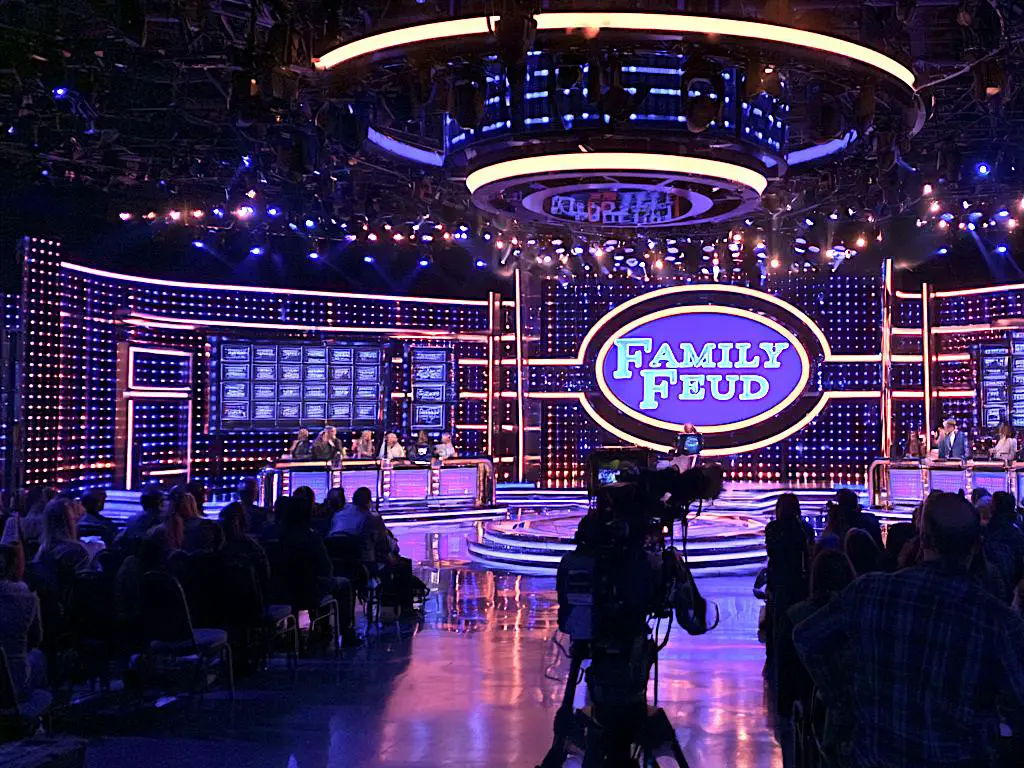
There is a particular kind of strategy at the heart of network game shows, and Steve Harvey built a career performing it. The comedian had hosted “Family Feud” for 13 years as of May 2023 by playing a man perpetually scandalized — expressing disbelief at answers that the show’s own format seemed designed to provoke. It was a reliable formula, and audiences long rewarded it with laughter. But one episode revealed the fragility beneath the act, when Harvey’s performance of moral outrage collided with a contestant who turned out to be right. The clip, shared to the show’s Instagram, drew a wave of viewers who found nothing funny about it at all.
The moment itself was small, almost forgettable, which is precisely why it matters. Harvey posed a survey prompt to a player named Tracy, asking what people are still clutching in their hands when they fall asleep at night. Tracy hesitated, then offered a reluctant guess — “themselves,” she said, delivered with evident nervousness. Harvey seized the opportunity. He pointed to the show’s title on the card in his hand, emphasized the word “Family,” and reminded her that people watch this program in the daytime.
When the Board Betrays the Host
Then the reversal arrived. Tracy’s answer appeared on the board, listed as “appendage.” The survey had accounted for exactly the kind of response she gave. Harvey, caught off guard, stared at the board and asked aloud what “appendage” even meant. The man who had just chastised a contestant for an inappropriate answer discovered that the answer was valid. The moment captured a host defending, then retreating from, the very response he had condemned.
What makes the episode instructive is not that Harvey misjudged a single guess. It is that the misjudgment exposed the machinery of the whole enterprise. “Family Feud” survives on double meanings. Its questions invite exactly the kind of answers that let Harvey perform his signature astonishment. Ask adults what people clutch in their hands at night, and a certain percentage will not be thinking about teddy bears. That is not an accident; it is the design. The suggestiveness is the product. Harvey’s shock is the packaging.
For years, this arrangement worked because the audience was in on it. Previous episodes featured NSFW guesses that shocked Harvey, made the audience gasp, and even had him stop the show — moments viewers embraced precisely because everyone understood the game. The contestant took a chance, the crowd reacted, and Harvey played to the camera. The outrage was theater, and theater requires a knowing audience.
The Contract Between Host and Contestant
The Tracy episode broke that contract, and the comments beneath the Instagram post registered the breach with unusual clarity. Viewers did not object to the innuendo. They objected to the hypocrisy of a host who benefits from the innuendo and then scolds the person who takes the bait. One commenter observed, “The questions leave little to no room for kid friendly thoughts.” Another asked, “U ask this types of question n still say it’s FAMILY feud.” A third demanded, “Then why do you form the questions like that!?” The complaints, taken together, amount to a coherent critique: you cannot bait a hook and then punish the fish.
There is a moral asymmetry in the exchange that the commenters appear to have intuited. Harvey holds all the power. The contestant walks in blind, guessing at what a survey of strangers might have said, exposed under studio lights before an audience. When Harvey plays shocked at a clever guess, the humor is shared. When he shames a nervous contestant for an answer the board itself validated, the humor shifts into something closer to bullying — the powerful figure using his platform to embarrass someone in a weaker position, and getting it wrong in the process.
This is not to overstate the gravity of a game-show gaffe. The incident was minor; the show continued. But the episode is a useful specimen because it isolates a tension that daytime entertainment usually keeps hidden. The genre depends on manufactured spontaneity — reactions that feel genuine but are structurally guaranteed. When the manufacturing shows through, as it did here, the audience is left staring at the seams. And once you can see the seams, the illusion is harder to enjoy.
The Cost of Feigned Innocence
The deeper irony is that Harvey’s shock has always been the least believable thing about the show. A man cannot host a program built on suggestive survey prompts for over a decade and remain authentically scandalized by them. The astonishment is a bit, and everyone has tacitly agreed to accept it as one. But a bit only works as long as it stays consistent. The trouble arises when the performer turns his fake innocence into a weapon — when the pretense of being appalled becomes an occasion to make someone else feel small. At that point the audience is asked to laugh not with the host but at the contestant, and a meaningful slice of the audience declined.
It is worth noting how quickly the backlash formed, and what it signals about the shifting expectations viewers bring to these programs. As of May 2023, the show’s format leaned heavily into risqué territory, underscoring that the innuendo was not incidental but foundational. Audiences had made their peace with that. What they appeared less willing to tolerate was a host who benefits from the format’s suggestiveness while affecting to disapprove of it — and who directs that disapproval at the contestant rather than at the questions themselves.
The dispute, small as it is, gestures toward a larger recalibration in how audiences read power and consent in entertainment. The old model assumed the host was untouchable, the arbiter whose reactions defined the room. The Instagram commenters rejected that hierarchy outright, insisting that the person who designs the game bears responsibility for its outcomes. They refused to let Harvey occupy the position of scandalized bystander when he is, in fact, central to the performance. It is a modest act of resistance, expressed in the vernacular of social media, but it reflects a genuine shift: the audience now talks back, and it keeps receipts.
Harvey’s career has proven remarkably durable, and the show’s formula had weathered many moments by 2023. But the episode leaves behind a small, clarifying lesson about the economy of feigned innocence. You can build a career on pretending to be shocked. You can turn that shock into laughter, and laughter into longevity. What you cannot do, it turns out, is aim the pretense at someone in a vulnerable position and expect the room to stay on your side. The moment Harvey pointed to the word “Family,” he was not defending a standard. He was invoking one he himself works against for entertainment — and the board, indifferent to his performance, simply told the truth.
