
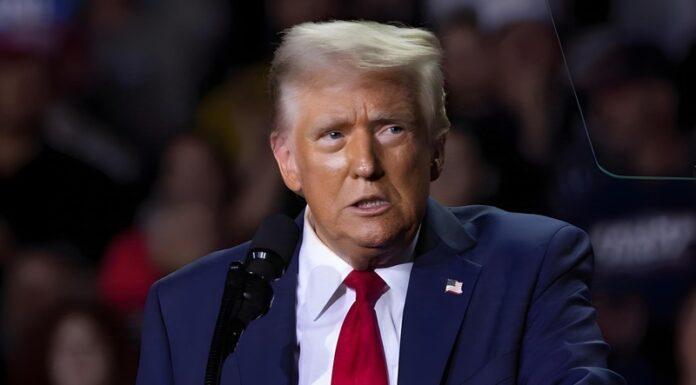
President Donald Trump has been privately consumed by thoughts of his own death since the July 11 passing of South Carolina Sen. Lindsey Graham, whose sudden cardiac arrest at age 71 shocked the White House and triggered an unusual period of introspection for the 80-year-old commander in chief.
Trump has reportedly fixated on the circumstances surrounding Graham’s final hours, repeatedly questioning whether the senator’s demanding international itinerary may have contributed to his collapse. The president has also been examining Graham’s genetic background, according to sources, hunting for hereditary factors that might explain how someone apparently in good health could die with such little warning.
An aortic dissection — a tear in the major artery carrying blood from the heart — claimed Graham’s life just two days after his 71st birthday. The senator had shown no outward symptoms of distress and had traveled to the Ukrainian capital on July 10 for meetings with Ukraine’s President Volodymyr Zelenskyy before flying back to his Capitol Hill residence.
Final Conversation Before Collapse
The two men spoke by phone around 7 p.m. after Graham arrived home from Ukraine. They discussed the Safeguard American Voter Eligibility (SAVE America) Act, and Trump later described Graham as sounding fatigued — a natural consequence of overseas travel — but otherwise fine. They scheduled another meeting before ending the call.
That conversation could have been Graham’s final one, Trump told NBC “Meet the Press” host Kristen Welker on July 12. Emergency responders arrived at the senator’s home Saturday night following a cardiac arrest. Graham had been scheduled to appear on “Meet the Press” the next morning.
During his television appearance, Trump called Graham’s death “a tough loss” and said the senator was “like family.”
Physical Decline and Public Doubts
While Trump routinely proclaims his fitness for office and touts having “aced” three separate cognitive screenings meant to detect early dementia — results he frames as evidence of superior intellect — neither he nor the White House has clarified why he has undergone so many such evaluations.
Signs of deterioration have surfaced throughout his second administration. Bruising on his hands, occasionally covered with cosmetics, has become visible, along with swelling around his ankles and episodes of falling asleep in public settings.
Trump openly acknowledged discomfort with reaching 80 on June 14, describing it as an unwanted benchmark. Speaking to a Georgia crowd in February, he voiced uncertainty about his eternal destiny, expressing hope for heaven while admitting reservations.
From Critic to Confidant
Graham had represented South Carolina in the Senate since 2003 and launched a 2016 presidential bid during which he emerged as one of Trump’s harshest Republican detractors before dropping out. That hostility later gave way to steadfast loyalty, and Graham became a regular golfing companion. Vice President JD Vance praised him as a senator who championed his beliefs with intensity and possessed the chamber’s finest wit.
Trump directed flags lowered to half-staff through 6 p.m. on July 18 to honor Graham. Republican Sen. Tim Scott, who also represents South Carolina, described the death as a stark illustration of life’s fragility.
History and Remembrance
Graham’s death follows two brushes with death of Trump’s own. A gunman’s bullet struck him during a Butler, Pennsylvania, rally in July 2024, an attack that killed supporter Corey Comperatore. Another assailant opened fire at the White House Correspondents’ Association dinner in April. Trump’s immediate response both times emphasized calls for national cohesion.
Political analyst David Rothkopf, appearing on The Daily Beast Podcast, suggested Trump’s preoccupation with affixing his name to buildings and monuments reflects anxiety over his historical standing, characterizing the president as someone who feels mortality closing in. Regardless of whether that interpretation is accurate, Trump’s approach to eulogizing remains predictable. Tributes to figures he respected — such as activist Charlie Kirk and former wife Ivana Trump — carry genuine warmth. Those directed at adversaries like filmmaker Rob Reiner and onetime FBI head Robert Mueller drip with scorn.
The senator’s unexpected collapse has left Trump unusually withdrawn, according to the report, prompting extended private discussions with his closest advisers about aging, vulnerability and the randomness of death.
