
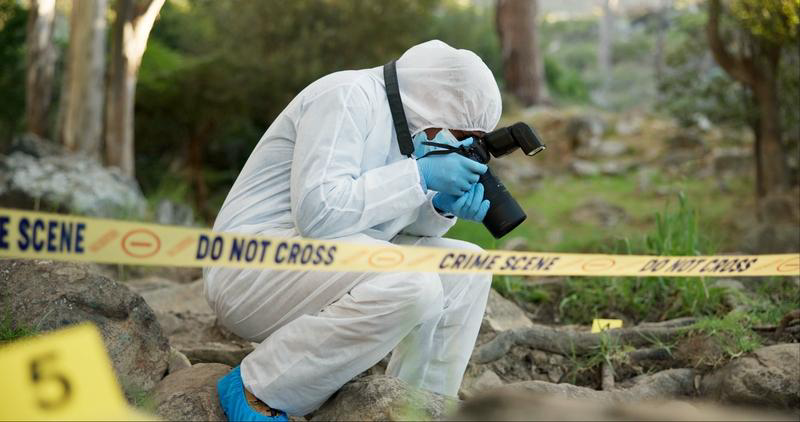
Ireland has reached a grim milestone in its excavation of a shuttered Catholic institution in County Galway, with forensic teams recovering 99 sets of remains from the grounds since work commenced in July 2025. The most recent discovery of 22 infants was announced July 22, 2026, at the former Bon Secours facility in Tuam, where historians estimate as many as 800 youngsters may be interred without proper markers.
Investigators uncovered the latest victims in coffins located on the southwestern portion of the property, in terrain that archival records identify as a designated “burial ground.” Dr. Niamh McCullagh, a forensic specialist on the project, said the density of infant burials in such a limited space suggests many more await discovery.
“To find such a high number this early in the excavation of this space specifically indicates to us there are more in the area,” McCullagh said.
A System Built on Shame
Established in 1925 inside a former workhouse first erected in the 1840s for impoverished residents, the Tuam complex housed famine victims before British soldiers took over the structures during Ireland’s 1922-23 civil conflict. In 1923, the site became an execution ground for half a dozen anti-treaty IRA members. The Bon Secours Sisters assumed control two years later, transforming the gray three-story structure into a facility for unwed expectant mothers and orphans on behalf of County Galway.
Living conditions were harsh. Heating was inadequate throughout the buildings, and plumbing existed only in the kitchen and maternity areas. Communal sleeping quarters accommodated as many as 200 children alongside 100 mothers simultaneously. Families cast out daughters to avoid the stigma of out-of-wedlock pregnancy, and many women arrived in secret. Peter Mulryan, raised at the institution, discovered only decades later that his mother had been transported by bicycle under cover of darkness when she was in her sixth month of pregnancy.
Women faced effective imprisonment, compelled to work for as long as a year before being expelled. The majority were forced to part with their children permanently. Meanwhile, no accountability existed for fathers, regardless of whether conception occurred through consensual relationships, sexual assault, or familial abuse. Young residents of the facility faced ostracism at school. These institutions emerged in the 1920s following Irish independence, with Catholic religious orders operating most of them.
A Secret Buried for Decades
The concealed truth first emerged in the 1970s when two boys, Franny Hopkins and his friend Barry Sweeney, climbed the stone wall encircling the abandoned property while fleeing an orchard owner after stealing apples. Their feet hit the ground with a hollow sound. The pair cleared undergrowth and lifted a concrete slab.
“There was just a jumble of bones,” Hopkins recalled. The boys had found an unmarked mass grave within what had once been a sewage receptacle, in a community whose very name derives from an Irish term meaning graveyard. The revelation stayed hidden outside the facility’s crumbling perimeter for four decades. Local resident Catherine Corless, a homemaker with a passion for the area’s past, ultimately exposed what had happened. Starting with plans for a simple historical society piece, her work evolved into a full investigation of children whose fates were unaccounted for. She discovered no burial records existed for babies who had died at the site.
“I thought I was doing a nice story about orphans and all that, and the more I dug, the worse it was getting,” she said. Her investigation eventually concluded that close to 800 babies and young children’s remains were likely there.
The Painstaking Work of Identification
Recovery teams transport remains to a purpose-built mortuary and laboratory facility in Toghermore, Tuam, where specialists perform cleaning, drying, and analytical procedures. ODAIT, the state body managing the dig, uses radiological imaging and three-dimensional scanning methods to establish facts about these children’s existences and causes of death, such as their ages and biological sex. Per ODAIT officials, such forensic data may enable investigators to narrow identification possibilities and connect skeletal material with individual identities, providing families their sole opportunity for accountability. Documentation shows approximately one-third of residents perished at the institution, with many succumbing to starvation and treatable illnesses. McCullagh emphasized the findings transcend mere statistics—the burial site itself and the concentration of human remains carry profound importance, with excavators expecting to locate more bodies.
For families connected to this location through their personal histories, every exhumed body brings them closer to long-withheld truth. The Tuam grave site now compels a national and international reckoning, with officials in Dublin and Vatican City grappling with historical practices that shunned unwed mothers and separated them from their offspring.
