
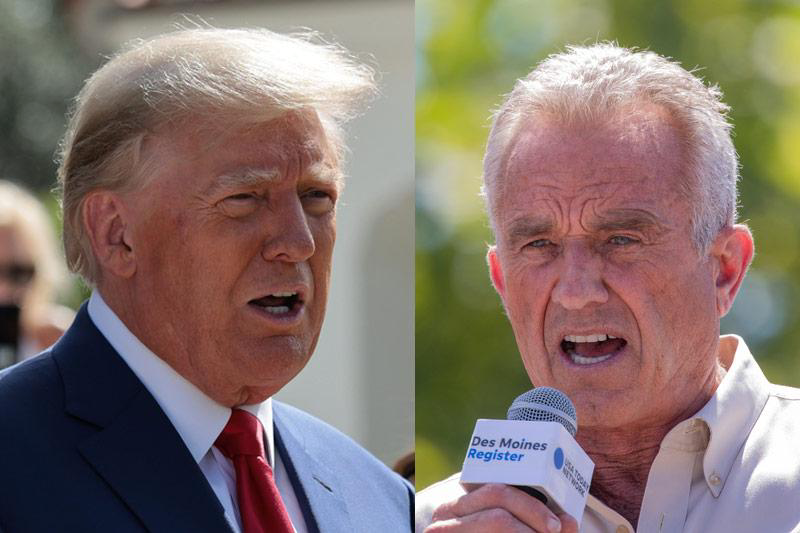
A confrontation between Health and Human Services Secretary Robert F. Kennedy Jr. and President Donald Trump during a June 2026 Oval Office session has emerged through a newly leaked report, with Trump demanding Kennedy prove a scientifically discredited theory connecting childhood immunizations to autism. The commander-in-chief expressed frustration that his health secretary had failed to validate this association after a year and a half leading the agency.
Kennedy, among the nation’s best-known figures spreading doubt about vaccines, was reportedly caught off guard by how forcefully Trump pressed him. The June episode was not an isolated incident. During a May gathering at the president’s Virginia golf course, Trump challenged Kennedy on why progress remained slow in pursuing the autism theory, suggesting the health secretary had developed the “yips” due to his reluctance.
Sweeping Changes to Vaccine Policy
Trump’s private urgency has translated into significant regulatory shifts. An executive order the president issued in May directed a dramatic reduction in pediatric vaccine schedules, cutting recommended routine immunizations from 17 down to 11 based on a department recommendation. Trump has also considered dividing the combined measles, mumps and rubella shot into three individual injections, a step lacking any scientific rationale and contradicted by extensive research finding no MMR vaccine-autism association.
Public health authorities are sounding alarms about tangible harm. Measles infections this year have reached their highest levels since federal officials declared the illness eradicated domestically in 2000. Outbreaks of measles, pertussis and additional severe infectious conditions are concentrating among healthy people who have not received immunizations.
Trump’s Long-Standing Fixation
Though the president promoted COVID-19 shots and claimed credit for Operation Warp Speed, Trump holds persistent reservations about pediatric immunization programs and has repeatedly suggested vaccines might trigger autism—an assertion entirely unsupported by evidence. According to the leaked information, Trump “steers nearly every conversation” with Kennedy toward this topic. The president has also promoted the unsubstantiated idea that Tylenol use during pregnancy could cause autism.
White House spokesman Kush Desai defended the administration’s stance, asserting that parental worries about climbing autism diagnoses had faced dismissal or ridicule and that the government was committed to pursuing these questions through rigorous science.
A department spokesperson would not comment on private exchanges between Trump and Kennedy but stated both men share a commitment to tackling chronic illness in American children using rigorous science.
A Divisive Appointment and Controversial Record
Kennedy’s path to confirmation was contentious. The Senate approved him 52-48 on February 13, 2025, making him the 26th leader of the department, which controls $1.7 trillion in federal expenditures. Supreme Court Justice Neil Gorsuch administered the oath, and Trump signed an executive order on childhood chronic disease that same day. Kennedy possesses no credentials as a medical doctor, scientist, or health researcher, yet has spent years questioning vaccine safety while promoting theories linking Wi-Fi to cancer, alleging coronavirus vaccines contained microchips for surveillance, and denying that HIV causes AIDS. His anti-vaccine advocacy has been connected to a 2019 measles epidemic in Samoa that killed 83 people.
His performance as secretary has drawn continued criticism. During a September 2025 Senate hearing, Kennedy asserted CDC figures indicate approximately 76 percent of Americans suffer from chronic disease and, when Sen. Mark Warner questioned how many had died from COVID, claimed he did not think anyone knew. Dr. Richard Besser, who previously served as acting CDC director, disputed multiple Kennedy claims, telling PBS News that COVID vaccines saved more than a million American lives.
A department video released in September 2025 prompted sharp rebuke from the Infectious Diseases Society of America (IDSA) for portraying vaccines as competing priorities alongside nutrition, exercise and clean water programs. Dr. Tina Tan, the organization’s president, said in a public statement that Americans deserve access to evidence-based information and safe, effective vaccines. The group emphasized that decades of infectious disease mortality declines occurred only after vaccines became widespread.
White House officials had previously encouraged Kennedy to moderate his public vaccine skepticism over fears it might damage Republicans in November’s midterm elections. The June confrontation indicates those underlying strains persist—and that Trump expects tangible outcomes.
