
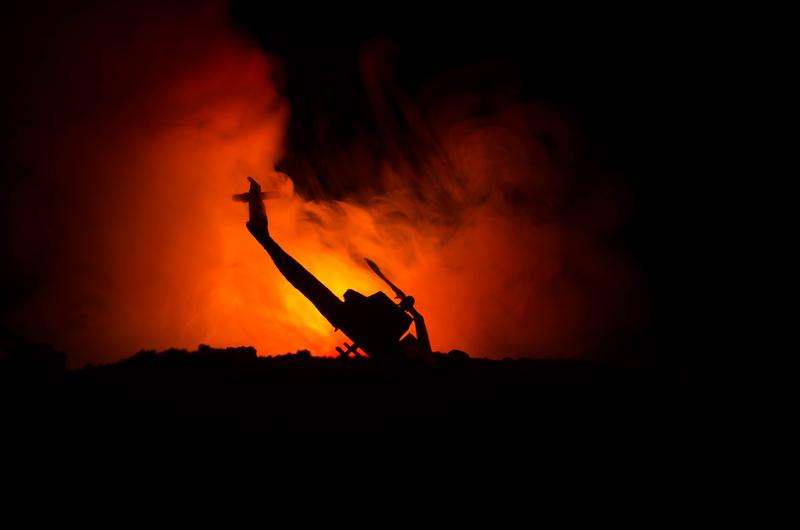
A military helicopter went down on June 10 in Muzaffarabad, the capital of Pakistan-administered Kashmir, killing all 22 soldiers aboard in what authorities are describing as one of the deadliest aviation disasters to strike the country’s armed forces in recent years. Pakistan’s military attributed the crash to an apparent technical fault, and an investigation is underway to determine the precise cause.
The aircraft, a Russian-built Mi-17 transport helicopter, crashed in the disputed Kashmir region while carrying personnel deployed to handle security concerns related to a planned protest by a recently banned political alliance. Security officials who spoke on condition of anonymity said the soldiers had been traveling to carry out security duties after a call for a march on Muzaffarabad by the Joint Awami Action Committee, an umbrella body of various groups outlawed in early June that has repeatedly clashed with authorities.
Rescuers spent hours combing through badly burned wreckage before confirming there were no survivors. By June 11, the remains of all 22 soldiers had been recovered, officials said, clearing the way for a mass funeral held that day that drew the nation’s senior military and civilian leadership.
Senior Officers Among the Dead
Among those killed were a colonel and two army majors, according to two security officials who were not authorized to brief reporters publicly. The presence of multiple senior officers among the casualties underscored the scale of the loss for Pakistan’s armed forces.
An Associated Press reporter counted 22 coffins draped in Pakistan’s national flag at the funeral ceremony, where rows of uniformed soldiers carried their fallen comrades past mourning family members and government dignitaries. Witnesses and regional officials described the recovery operation as grim, with the soldiers’ remains pulled from charred debris scattered across the crash site.
Prime Minister of Pakistan-administered Kashmir Faisal Mumtaz Rathore attended the funerals alongside other senior government and military officials. President Asif Ali Zardari, Prime Minister Shehbaz Sharif and Army Chief Field Marshal Asim Munir each issued separate statements expressing sorrow and extending condolences to the families of the fallen.
Escalating Tensions in Kashmir
The crash occurred as Pakistan deployed additional security forces across Kashmir, where tensions had been escalating for days. Coordinated attacks on police posts on June 6 and June 7 killed four officers, and further clashes erupted on June 8 in Rawalakot between security forces and supporters of the banned group, leaving at least 11 people dead and setting off a wave of unrest that authorities are still working to contain.
Authorities have not indicated any connection between the planned protest and the helicopter crash, and Pakistan’s military has pointed to a technical fault as the apparent cause. The findings are expected to be closely scrutinized given the high-profile nature of the casualties and the volatile political climate in the region.
Muzaffarabad and the surrounding territory have long been a flashpoint, but the convergence of armed attacks on security forces, a banned political alliance pushing for street demonstrations and now a military catastrophe has left the region on edge. The Joint Awami Action Committee emerged from grassroots grievances over economic and political issues, and its activities have drawn a heavy security response, with checkpoints and patrols increasing across Pakistan-administered Kashmir.
History of Military Aviation Accidents
Military helicopter crashes are not uncommon in Pakistan, where rugged terrain, aging fleets and challenging weather conditions have contributed to a long history of aviation accidents. In September 2025, an army helicopter on a routine flight crashed in northern Pakistan, killing two pilots and three technicians.
That earlier disaster prompted similar official inquiries and renewed calls for updated equipment. The crash represents one of the highest single-incident death tolls for Pakistan’s army in recent years, surpassing the September 2025 disaster and drawing comparisons to earlier tragedies involving troop transports in the country’s mountainous border regions.
For families of the fallen, the politics surrounding the deployment provided little comfort. The mass funeral instead became a moment of collective grief, with mourners lining streets near the ceremony to pay respects as the flag-draped coffins were carried to their final resting places.
Military officials have not yet released a timeline for the conclusion of the technical investigation. As Pakistan absorbs the shock of losing 22 service members in a single moment, the focus now turns both to honoring the dead and answering urgent questions about what went wrong in the skies above Muzaffarabad. The investigation’s outcome could have implications for fleet maintenance practices and operational decisions across the Pakistani military for years to come.
