
House Democrats introduced formal articles of impeachment against Defense Secretary Pete Hegseth on April 15, as President Trump maintained his naval blockade of Iranian ports despite Iran briefly reopening the Strait of Hormuz before closing it again in response to Washington’s refusal to lift its stranglehold on the country’s economy.
Rep. Yassamin Ansari filed six impeachment articles against Hegseth alongside 12 other House Democrats, marking a dramatic escalation in congressional opposition to the administration’s Iran policy. The move came on the same day that House Republicans narrowly defeated a Democratic war powers resolution by a vote of 214 to 213 Thursday—the third such measure to fail in recent weeks.
The U.S. Navy seized an Iranian-flagged cargo ship called the “Touska” on April 19 after it attempted to bypass the naval blockade in the Gulf of Oman. U.S. Central Command has directed 25 commercial vessels to turn around or return to an Iranian port since the blockade’s implementation, which analysts estimate costs Iran $435 million daily in economic losses.
Iran had briefly reopened the Strait of Hormuz on April 17, with Foreign Minister Abbas Araghchi declaring it “completely open” for commercial vessels during the remaining ceasefire period, requiring ships to use a coordinated route. But just one day later, on April 18, Iran announced it had closed the waterway again, citing the ongoing U.S. naval blockade as justification.
Negotiations remain uncertain after Iran’s official news agency reported the government had declined to join peace talks, citing “Washington’s excessive demands, unrealistic expectations, constant shifts in stance, repeated contradictions, and the ongoing naval blockade.” The fragile two-week ceasefire between the U.S. and Iran is set to expire April 22.
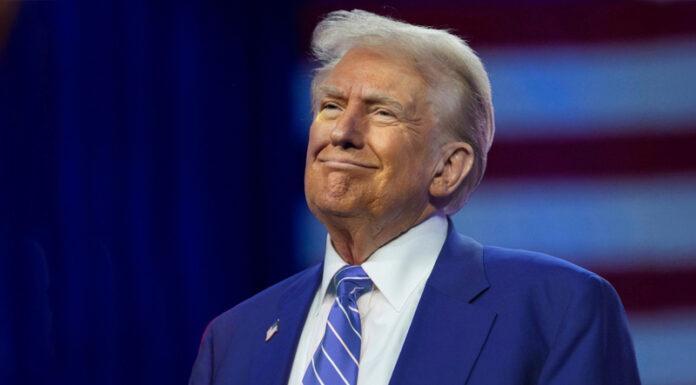
During a pre-recorded Fox Business conversation with Maria Bartiromo on “Mornings with Maria” that aired Wednesday, April 15, 2026, the president expressed optimism about ending hostilities. “We’ve beaten them militarily, totally,” Trump said, claiming the war is “very close to over.” He added that if he “pulled up stakes right now, it would take them 20 years to rebuild that country.”
The president’s optimism contrasted sharply with the military reality. Admiral Brad Cooper confirmed Wednesday that more than 10,000 U.S. personnel, over a dozen warships, and more than 100 aircraft have enforced what he described as an operation that had “completely halted” all seaborne economic activity into and out of Iran. CENTCOM reported the blockade had been “fully implemented” within 36 hours of Trump’s order.
White House Deputy Chief of Staff Stephen Miller appeared across multiple Fox News programs defending the strategy, calling it a “total resetting of the American power dynamic for the next 100 years.” Miller told Sean Hannity that the United States “has the capacity to continue this indefinitely” if Iran refuses to make a deal, warning that without an agreement, Iran would “become a footnote.”
Rep. Mike Lawler, R-N.Y., defended Trump’s approach in a separate Fox Business appearance, arguing that a war powers resolution would “give cover to the regime.” The congressman has faced angry constituents at town halls in his suburban swing district demanding explanations for his votes against constraining presidential war powers.
The narrow House vote saw Rep. Jared Golden of Maine, a centrist Democrat retiring at the end of his term, join Republicans in opposition. Rep. Thomas Massie of Kentucky, known for his libertarian views, broke with his party to vote alongside Democrats.
Thirteen U.S. service members have been killed and approximately 381 wounded since strikes began on February 28. The broader regional death toll has exceeded 6,000 people according to reports—more than 3,300 in Iran alone, with over 2,100 killed in Lebanon.
Economic conditions inside Iran have deteriorated sharply under weeks of bombing combined with the naval blockade. Staple food prices have risen as much as sevenfold in recent months, while the rial has weakened to trade near 1.6 million per dollar in unofficial markets. Analysts warn that Iran’s oil storage capacity could reach its limit within 13 days without access to export revenue, forcing well shutdowns that could permanently damage production infrastructure.
Trump’s rescheduled summit with Chinese President Xi Jinping, now planned for mid-May in Beijing after being delayed from late March due to the Iran conflict, looms as another pressure point. The president claimed on Truth Social that Xi would give him a “big, fat, hug” when they meet, touting China’s purported agreement not to send weapons to Iran in exchange for the U.S. “permanently opening” the Strait of Hormuz.
Vice President JD Vance, who led the U.S. delegation during failed weekend talks in Islamabad, described Trump’s vision for resolving the crisis. “If you guys commit to not having a nuclear weapon, we are going to make Iran thrive,” Vance said, outlining the message Trump wants to convey.
A 10-day ceasefire between Israel and the Lebanese government took effect Thursday, with displaced families beginning to move toward southern Lebanon. Uncertainty remains over how Hezbollah will respond to the arrangement.
As of March 26, 2026, European mediators have intensified diplomatic pressure ahead of the April 22 ceasefire deadline, urging both Washington and Tehran to formalize a temporary extension. Oil markets remain volatile despite recent declines, while defense analysts warn that prolonged blockade conditions could trigger broader regional escalation if negotiations stall.
Defense Secretary Pete Hegseth has warned Iranian leaders that bombing campaigns will resume if a deal isn’t reached. Trump has repeatedly threatened that if Iran chooses not to dismantle its nuclear program, “I don’t know how much longer they can survive.”
Trump’s assertion that the war is “very close to over” sits uneasily alongside the 25 turned-back ships, the 13 American graves, and the uncertain path ahead. Whether his words reflect confident strategy or wishful thinking, the world is watching to see if actions match rhetoric before the ceasefire clock runs out.
