
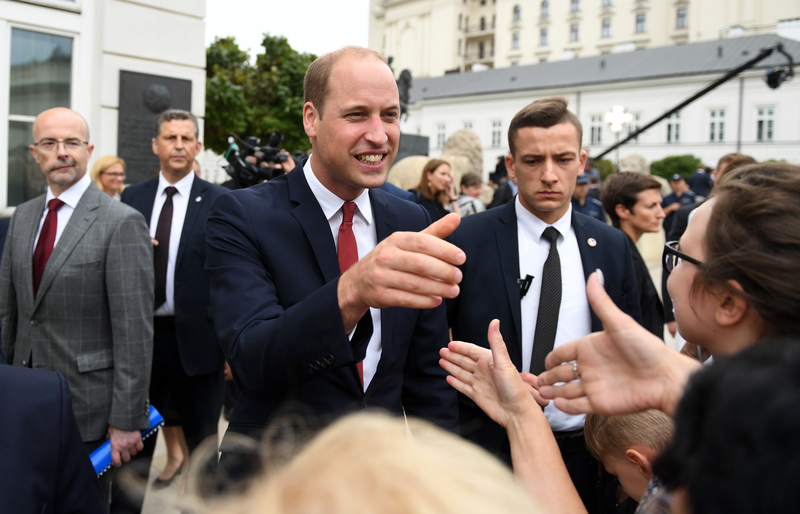
When King Charles appointed his son Prince of Wales in September 2022, palace courtiers immediately began planning what they expected would be a grand ceremonial event to match the historic occasion. What they didn’t anticipate was that William would reject the entire concept outright.
Royal biographer Robert Hardman uncovered the surprising decision in his book “Elizabeth II: In Private. In Public. The Inside Story,” revealing that palace staff had arranged for a formal ceremony at St. David’s Cathedral in Pembrokeshire, West Wales. According to Hardman’s account, a member of William’s team told the biographer that a formal ceremony “wasn’t ever something that he wanted to do.”
The prince didn’t just decline an elaborate investiture — he also turned down even a church service to mark his assumption of the title. Instead, William and Princess Kate made a simple visit to Anglesey and Swansea, locations with deep personal meaning for the couple who spent three years living in Anglesey following their 2011 wedding.
This decision stands in sharp contrast to the spectacle of King Charles’s 1969 investiture at Caernarfon Castle, which attracted 19 million British viewers and 500 million people globally. Queen Elizabeth presented her eldest son with the prince of Wales’ sword, coronet, ring, rod, and mantle during that televised ceremony, creating an elaborate display watched around the world.
Yet that 1969 ceremony was not well received by many Welsh people at the time, generating controversy about English authority over Welsh culture and identity. Charles had prepared by spending nine weeks at Aberystwyth University learning Welsh, but the event still sparked tensions that have not been entirely forgotten.
William’s modern sensibilities have led him to engage with Welsh culture differently. He downloaded Duolingo in 2024 to learn Welsh phonetically, embracing technology over traditional instruction. His efforts culminated in his St. David’s Day 2025 speech, delivering his first full message in Welsh before switching to English.
In the video message, William celebrated Wales’ “history, its culture, and its incredible people,” adding that “from its breathtaking landscapes to its language, Wales continues to inspire.” He concluded by wishing “the people of Wales and everybody around the world, Happy St. David’s Day.”
William received his prince of Wales title just one day after his father became king following Queen Elizabeth’s death. Rather than using the occasion for pageantry, he chose personal connection over public spectacle.
Russell Myers, author of “William and Catherine: The Monarchy’s New Era: The Inside Story” published in March 2026, interprets William’s choices as part of comprehensive efforts to modernize the monarchy. A former courtier told Myers that being born in 1982 makes William a millennial, fundamentally shaping his outlook on royal responsibilities.
Millennials have experienced more rapid change than any previous generation, the courtier explained, navigating the birth of the internet, social media, and a world facing unprecedented challenges. This generational perspective influences how William and Kate tackle their public roles, prioritizing careful preparation over rushed commitments.
A former palace staffer noted that the prince and princess of Wales “recognize their own foundations need to be rock solid before they can deliver for anyone else, much more so than anyone in the family before them.”
Spring 2026 brought another significant development as William and Kate became Grantors of Royal Warrants, authorized by King Charles to officially endorse businesses and brands that supply goods or services to the Royal Household. Kate made history as the first princess of Wales to grant Royal Warrants in 116 years, since Princess Mary of Teck held the title in 1910. The appointments represent another expansion of the couple’s public duties that carries real-world weight without relying on ceremony.
His pattern of rejecting elaborate ceremonies when simpler alternatives serve better reflects William’s broader philosophy toward royal duty. By emphasizing personal connections in Anglesey and Swansea over staging a televised spectacle, he avoided reopening historical wounds while still honoring Wales.
Whether downloading language apps instead of attending formal lessons or declining investiture ceremonies, William has consistently prioritized substance over tradition when the two come into conflict. His approach to the prince of Wales title offers a preview of how he might reshape the monarchy itself—rather than preserving traditions simply because they exist, he appears willing to evaluate each one on its merits, a potentially transformative philosophy for an ancient institution navigating the 21st century.
