
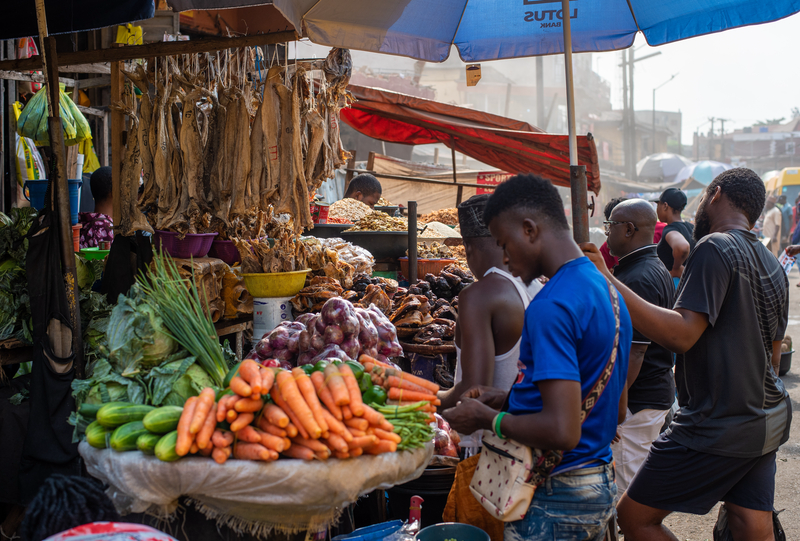
More than 100 civilians, including children, were killed when Nigerian military aircraft mistakenly bombed a market in the country’s northeast on April 11, 2026, in what has become one of the deadliest incidents of civilian harm in Nigeria’s 17-year battle against jihadist insurgents.
The catastrophic toll at Jilli market represents the latest in a devastating pattern of military misfires in northeastern Nigeria. Since 2017, such airstrikes have killed at least 500 civilians, according to an Associated Press tally. Security analysts blame persistent intelligence failures and inadequate coordination between ground forces and air units for the recurring tragedies.
Hospitals in Geidam and Maiduguri struggled to handle dozens of seriously wounded victims treated for massive trauma, burns, and shrapnel wounds. At least eight more people died Sunday in medical facilities already overwhelmed by years of insurgency-related casualties. A worker at Geidam General Hospital, speaking anonymously, confirmed at least 23 injured patients were receiving treatment there.
Local chief Lawan Zanna Nur Geidam told AFP that combined dead and injured casualties reached approximately 200. Isa Sanusi, Amnesty International’s Nigeria director, confirmed children were among those killed. “We have their pictures and they include children,” Sanusi told the Associated Press.
Nigerian military leaders defended their actions, saying they had executed a well-planned operation against what they identified as an insurgent base and supply center. Officials characterized the location near the abandoned village of Jilli, locally known as “Kasu Daulaye”—meaning “the terrorists’ market”—as having been “long identified as a major terrorist movement corridor” used by Islamic State West Africa Province fighters and their collaborators. The military claimed scores of terrorists were killed as they rode motorcycles in the restricted area.
Borno State Governor Babagana Zulum confirmed that both Jilli and the nearby Gazabure market had been officially closed five years ago due to insurgent control. Security sources acknowledged that Boko Haram militants have long frequented the Jilli market seeking food supplies, making it difficult to distinguish between civilians and insurgents.
The bombing took place at a market site located where Borno and Yobe states meet, as warplanes searched for Boko Haram and Islamic State West Africa Province fighters active in the area. Amnesty International and local officials confirmed the catastrophic civilian toll.
Operating under Operation HADIN KAI, the Nigerian Air Force acknowledged the incident and dispatched its Civilian Harm Accident and Investigation Cell to Jilli on a fact-finding mission. Military officials confirmed they had conducted what they described as a precision strike on a known terrorist location but made no immediate mention of civilian casualties in their initial statement.
Abdulmumin Bulama, a member of a civilian security group working with the military, said intelligence indicated terrorists had gathered near the market and were planning attacks on nearby communities. The Yobe state government confirmed that the airstrike had targeted a Boko Haram stronghold and acknowledged that “some people…who went to the Jilli weekly market were affected.” Brigadier General Dahiru Abdulsalam, military adviser to the Yobe state government, provided no further details on the death toll.
The Yobe State Emergency Management Agency dispatched response teams to assist with casualty evacuation and treatment. Amnesty International condemned the strike as unlawful and called for an independent investigation, adding that the military is “fond of” labeling civilian casualties as bandits or terrorists.
Similar tragedies have repeatedly plagued the region where the military frequently conducts air raids against armed groups controlling remote forest enclaves. In January 2017, at least 112 people died when a fighter jet struck a camp housing 40,000 displaced people near the Cameroon border. In December 2023, a military airstrike mistook a Muslim religious gathering for bandits in Kaduna state, killing at least 85 people. And on March 16, 2026, strikes on crowded areas in Borno State, including a market and the gate of the University of Maiduguri Teaching Hospital, killed at least 23 people and injured 108 others.
The northeastern region has endured more than 17 years of jihadist insurgency since Boko Haram’s 2009 uprising, which spawned powerful splinter groups, including Islamic State West Africa Province. The conflict has killed tens of thousands and displaced millions, creating a humanitarian crisis that continues to challenge Nigerian security forces and international aid organizations.
U.S. Africa Command spokeswoman Col. Rebecca Heyse said American forces played no role in the strike, noting that U.S. troops were “not involved in the planning, intelligence sharing or execution of this operation.” President Bola Ahmed Tinubu convened a security meeting with service chiefs and the Inspector-General of Police at the Presidential Villa in Abuja following the incident.
The Nigerian Air Force has promised a thorough investigation, but Amnesty International and other human rights groups demand an independent inquiry into what went wrong at Jilli market. The death toll may rise as some of the seriously wounded remain in critical condition. Local officials continue to compile lists of the dead and missing, while survivors grapple with injuries and the loss of family members in a region already devastated by years of conflict and instability.
