
A retired judge has determined that systematic failures across multiple British agencies and within one family allowed a violent teenager to kill three children at a Taylor Swift-themed dance class in 2024 — deaths that should never have happened. The inquiry’s conclusion, published April 13, 2026, in a 763-page report, found that Axel Rudakubana’s attack was entirely preventable.
Sir Adrian Fulford, who led the nine-week inquiry, described the July 29, 2024, killings as unprecedented in the U.K. for their “extreme and very particular depravity.” The attack at the dance class in Southport claimed the lives of six-year-old Bebe King, seven-year-old Elsie Dot Stancombe, and nine-year-old Alice da Silva Aguiar. Ten others were wounded, and 16 more people — many of them children — continue to suffer serious psychological trauma.
The government has promised to act on all 67 recommendations contained in the report. Prime Minister Sir Keir Starmer called the findings “harrowing” and pledged “total determination” to make changes across the state. Home Secretary Shabana Mahmood was set to address the House of Commons following the report’s release.
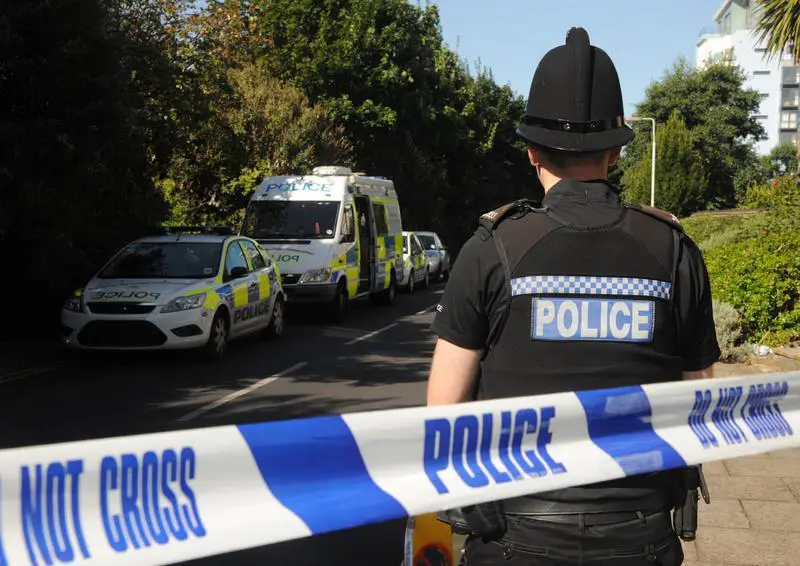
Rudakubana arrived at the Hart Space dance studio by taxi on the morning of July 29, 2024, using a false name for the booking. He wore a surgical mask and a green hoodie when he entered through the unlocked front door at 11:45 a.m. He was armed with an 8-inch chef’s knife purchased online under an alias. Two girls died at the scene and a third the following day. Police found him standing over Bebe King’s body, still holding the weapon.
The prosecution said two of his victims suffered at least 85 and 122 sharp force injuries. After his arrest, Rudakubana told police: “I’m glad those kids are dead, it makes me happy.” No clear motive was ever established. The attack triggered days of nationwide rioting fueled by online misinformation about the attacker’s identity.
Fulford identified a “sheer number of missed opportunities over many years to intervene meaningfully.” The report describes a system in which agency after agency passed Rudakubana’s case along without ever taking responsibility for the danger he posed.
One incident in particular stood out as a turning point that authorities failed to recognize. In December 2019, when Rudakubana was 13, he brought a kitchen knife and a hockey stick to Range High School in Formby and attacked another student. Fulford called this a “watershed event” that should have prompted agencies to classify him as a high risk of harm to others. He received a 10-month referral order.
Between 2019 and 2021, he was referred three separate times to Prevent, the U.K. government’s anti-extremism program, after expressing interest in the 2017 London Bridge attack, school shootings, and the Irish Republican Army. All three referrals were closed.
Perhaps the most critical missed chance came in March 2022. Rudakubana was caught on a bus carrying a knife and told police he wanted to stab someone. He also admitted trying to make poison. Lancashire Constabulary accepted that it had missed an opportunity to arrest him that day. A search of his home would likely have uncovered ricin seeds he had purchased and terrorist material downloaded to his computer — including an Al-Qaeda training manual.
Local police were called to his home five times during that same period. He was expelled from school after admitting to bringing a knife on 10 separate occasions. He barely attended the school he was sent to afterward and eventually stopped engaging with social workers entirely.
The inquiry reserved sharp criticism for Rudakubana’s parents, who moved to the U.K. from Rwanda. They created “significant obstacles” that blocked agencies from accessing their son and assessing his risk, according to the report. Fulford stated that if the family had shared their full concerns with authorities in late July 2024 — just days before the attack — the tragedy would “almost certainly” have been averted.
Both parents gave evidence to the inquiry from remote locations. Rudakubana’s mother told the hearing: “There are many things that Alphonse and I wish we had done differently, anything that might have prevented the horrific event of July 29, 2024.”
Rudakubana pleaded guilty to all 16 charges in January 2025 and was sentenced to life with a minimum term of 52 years.
A second phase of the inquiry will examine broader questions, including whether authorities should have greater powers to restrict or monitor internet access for children who pose a risk to others. Planned reforms based on the inquiry’s recommendations include new legislation to close what has been described as an “ideology loophole” for non-political mass casualty plots and improved monitoring of at-risk children’s online activity. The government has pledged to implement sweeping reforms based on the inquiry’s 67 recommendations.
