
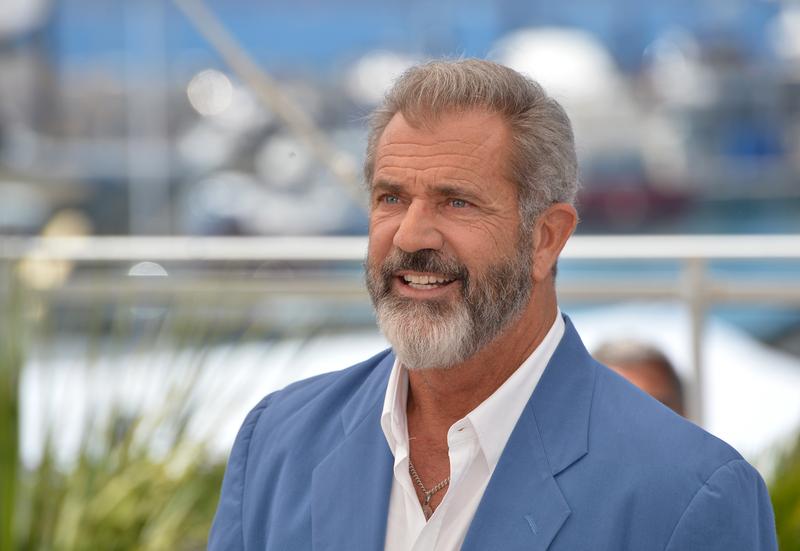
Convicted domestic abusers will not be automatically shut out of a new federal program to restore gun rights, the Justice Department (DOJ) has decided, and the government’s former top clemency lawyer says a senior official told her that relief had to be granted to Mel Gibson.
Elizabeth Oyer, the former U.S. pardon attorney, made the allegation in a complaint to the department’s inspector general about Associate Deputy Attorney General Paul Perkins. The complaint states: “Ms. Oyer was advised by Mr. Perkins that domestic violence offenders could not be excluded because it was necessary to grant relief to Mel Gibson.” The complaint states the reason given was Gibson’s personal relationship with the president.
Perkins denied the allegation, calling it “categorically false.” No such statement ever passed between him and Oyer, he said: he never told Oyer that domestic violence offenders could not be excluded because relief had to be granted to Gibson.
A blanket exclusion barring people with domestic violence convictions from winning back access to firearms is what Oyer says she pushed for, at a point when officials were still designing the restoration program for Americans legally prohibited from owning guns. She says the question came up at the inception of the project in February 2025, and that she proposed cutting those people out altogether or, failing that, consulting the DOJ Office on Violence Against Women about the dangers involved. She alleges she was overruled because of ties between the 70-year-old “Lethal Weapon” star and President Donald Trump.
Program Opens Without Blanket Exclusion
Officials have launched the first stage of the federal gun-rights restoration program, and the catch-all exclusion Oyer says she urged is nowhere in it. Final rules issued by Attorney General Todd Blanche have now taken effect, and people convicted of misdemeanor domestic violence can still apply. The department says it will generally refuse to restore their rights for 10 years absent extraordinary circumstances. With the first stage open and Blanche’s rules in force, the people Oyer wanted excluded can file applications.
How Gibson Landed on the List
A no contest plea in 2011 to misdemeanor spousal battery involving his former girlfriend, Oksana Grigorieva, cost Gibson his federal firearms rights. The conviction was vacated in 2014 after he completed the terms of his sentence, according to The Associated Press as cited by the ABA Journal.
In January 2025, Trump named Gibson an “ambassador” to Hollywood alongside fellow actors Jon Voight and Sylvester Stallone. Gibson was one of 10 people whose gun rights were reinstated by then-Attorney General Pam Bondi, according to a New York Times report. The approval came one month after Oyer’s ouster.
Officials were weighing Gibson’s situation from the program’s earliest days, the complaint indicates — a stretch of time that preceded by months any report that the Justice Department had given the actor his gun rights back.
In the previously reported fight over Gibson’s individual application, Oyer and her staff identified 95 people already extensively vetted through the presidential pardon process as possible candidates for firearms restoration. Nine candidates were all that remained after department leadership trimmed the group. Oyer sent Perkins a memo recommending those candidates on March 6, 2025, and she says he responded by instructing her to add Gibson, who had not gone through the same vetting.
Gibson’s attorney, in asking for the rights back, cited the actor’s famous movie career and his relationship with Trump, according to Oyer. She alleges that after she refused to recommend him, Perkins called to ask whether her position was flexible and conveyed that she would be wise to make the recommendation. A memo containing information about Gibson went in from her the following morning, though it stopped short of recommending him. Hours later, Blanche fired her.
Lawsuit Over Her Firing
Oyer confirms she was fired in March 2025 for refusing to recommend restoring Gibson’s gun rights, and she is suing the department and Blanche over her firing.
The Democracy Forward Foundation filed the suit Thursday, Sept. 3, 2026, in the U.S. District Court for the District of Columbia, naming Blanche and the DOJ. The suit alleges violations of her due process and First Amendment rights, the appointments clause, the Administrative Procedure Act and due process protections of the Civil Service Reform Act. The complaint states: “Shortly after President [Donald] Trump took office, Ms. Oyer was asked to disregard her duties and facilitate a political favor for the actor Mel Gibson, based on Mr. Gibson’s relationship with President Trump.”
Oyer’s lawsuit over the firing that followed her refusal is still moving through the courts. She served as pardon attorney from April 2022 to March 2025, and she testified to the U.S. Senate Judiciary Committee in July 2026, urging that Blanche’s nomination as attorney general not be confirmed.
Any role for Gibson in the dismissal has been denied by Blanche, who told senators at his confirmation hearing that he knew nothing about the Gibson matter when he removed her.
Advocates Warn of Danger
Lives will be lost under the policy, domestic violence campaigners say. Tonia Moultry-Pace, interim president and CEO of the National Network to End Domestic Violence (NNEDV), said that when a male abuser has access to a firearm, the risk that he will shoot and kill a female partner rises by 1,000 percent.
“Removing guns from convicted domestic violence offenders is a lifesaving protection,” Moultry-Pace said. Stripping away that safeguard, she warned, shows disregard for survivors and will put thousands of victims in grave danger.
