
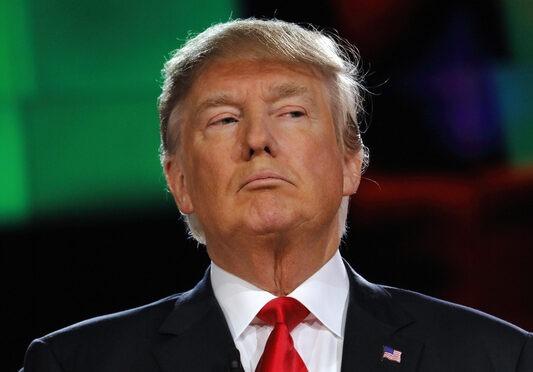
A day after he took a Sharpie to a map on camera and scratched out the Great Lake’s name by hand, an executive order arrived to lend official weight to the plan to rename Lake Ontario “Lake America.” President Donald Trump signed it on August 27, 2026. The Interior Department and the U.S. Board on Geographic Names have 30 days to act under the order, No. 14422. The president’s TikTok account carried the clip under the caption “LAKE AMERICA GREAT AGAIN!”
The 80-year-old president appears seated in the Oval Office, holding up a map of the lake — a shoreline the United States shares with Canada. The post lists its audio as “original sound – President Donald J Trump.”
A Map, a Marker and a Caption
An opening observation from Trump was that the lake sits in both countries. Then came the announcement of his edit. “But we’re gonna make a little change. We’re gonna call it something different than Lake Ontario,” Trump said in the clip. “And all it takes is a good pen and some intelligence.”
Crossing out the existing name, he wrote “LAKE AMERICA” above it and declared that Lake Ontario was gone, according to the video. The country now had both a lake and a gulf bearing America’s name, he continued. That gulf came from an earlier executive order, the one he signed on the first day of his second term seeking to rename the Gulf of Mexico the Gulf of America, an effort that also drew ridicule.
A public trial balloon came first. Writing on Truth Social on Tuesday, August 25, Trump said the United States was “giving serious consideration to changing the name of Lake Ontario to Lake America in that we don’t expect to be doing much business with Ontario any longer.”
The Trade War Behind the Stunt
Relations between Washington and Ottawa were unraveling fast when the map came out. Proclaimed in July and delayed once, tariffs of 50 percent on about $20 billion in Canadian goods took effect after midnight on Saturday, August 22, once last-minute talks collapsed. “We were attacked. You’re at war when you get attacked. We got attacked,” Prime Minister Mark Carney said. Countermeasures from Canada, announced on August 25, cover C$27.6 billion in U.S. imports at rates of 15, 25 and 50 percent and take effect September 8.
The fight has since gotten personal. On Truth Social on August 24, Trump wrote of “lots of ‘bluster’ from Doug Ford,” calling the Ontario premier “the less charismatic, intelligent, and overall unimpressive brother of the late, great, Rob Ford” and referring to him as Carney’s “Flunky.” Ford answered the same day on Ottawa radio, telling the station Trump could “kiss my ass,” then repeated the line at a Hamilton news conference: “I don’t respond to a dictator like President Trump, a bully like President Trump. I’m not going to take any advice off a guy that’s the king of bankruptcies.”
The list of grievances runs well past the lake. Wildfire smoke drifting south from Canada has already drawn a warning from Trump of retaliation of some kind, and Canadian officials have sparred with him about sharing revenue or ownership of the Gordie Howe International Bridge between Windsor, Ontario, and Detroit. Canada financed in full the span’s C$6.4 billion construction, and a July agreement now splits its toll profits with the United States.
Real money rides on the playground insults. Certain goods on both sides of the border are expected to grow more expensive because of the tariffs and countermeasures, even while the White House argues its case in half-minute social media clips and escalating tensions online.
What a Renaming Would Actually Do
Renaming a shared body of water takes considerably more than a marker and a steady hand. A federal board under the Interior Department, the U.S. Board on Geographic Names is administered by the U.S. Geological Survey and sets how federal agencies use geographic names. Approval there still would not bind any other nation, and Canadian maps, Canadian textbooks and Canadian weather forecasts could go on unchanged.
The Gulf of America order ran into that same wall. Mexico refused the change and sued Google over it. Common English usage was Britain’s stated reason for declining, while The Associated Press refused and was barred from White House events. The lake has produced an identical split. Google updated its maps over the weekend so that American users see “Lake America,” Canadian users see “Lake Ontario” and everyone else sees both. Apple Maps followed on September 1 with the identical three-tier scheme, while MapQuest declined outright. “We’re not changing it,” the company posted, adding, “We are aware that Lake Ontario is correctly labeled on our map.” Its app climbed to No. 1 in the App Store’s navigation category on the strength of that refusal.
Trump’s Long-Running Sharpie Habit
Nobody who follows the president was surprised by the choice of tool. The marker is sold by a U.S.-based company owned by Newell Brands, and Trump, a Sharpie loyalist, pulls one out at formal and casual occasions alike.
The pens got a lengthy riff from the president at a Cabinet meeting on March 26, where he waved one and called it inexpensive but effective. Pens had cost him $1,000 in the past, he recounted, before he phoned the head of Sharpie to have custom black markers bearing gold White House logos made for the building at roughly $5 each. The results, he said, were “hot as a pistol,” and he said the company treats him well. A spokesperson for Newell Brands said the company had no information about the call Trump described.
This is not the first map a Trump Sharpie has altered, either. In September 2019, during his first term, he used one to change a weather chart showing the forecast track of Hurricane Dorian, a story that dominated coverage for days.
The target this time is a 7,340-square-mile lake shared with a neighbor and longtime ally whose prime minister has already compared the administration’s tariffs to war. Reaction since has crossed party lines. New York Gov. Kathy Hochul said the state “won’t be calling it that.” Rep. Debbie Dingell, a Michigan Democrat, introduced the Hands Off Our Great Lakes Act on August 31 to nullify the order, and Sen. Kirsten Gillibrand announced a Senate companion on September 4. Vermont’s Republican Gov. Phil Scott called it “petty and disappointing,” and the Seneca Nation demanded it be rescinded, its president, J. Conrad Seneca, saying the president “cannot assert ownership over our culture or erase it through irresponsible political action.”
Carney noted the name is more than 400 years old, “predating both the Confederation of Canada and the Declaration of Independence of the United States of America.” On August 29 Ford unveiled a 24-by-12-foot bilingual sign on the Ontario shore reading “Lake Ontario. Now and Always,” and Trump answered with an AI video of himself kicking it over. The video, the executive order and the tariffs now belong to the same escalating quarrel, and neither capital looks ready to blink.
