
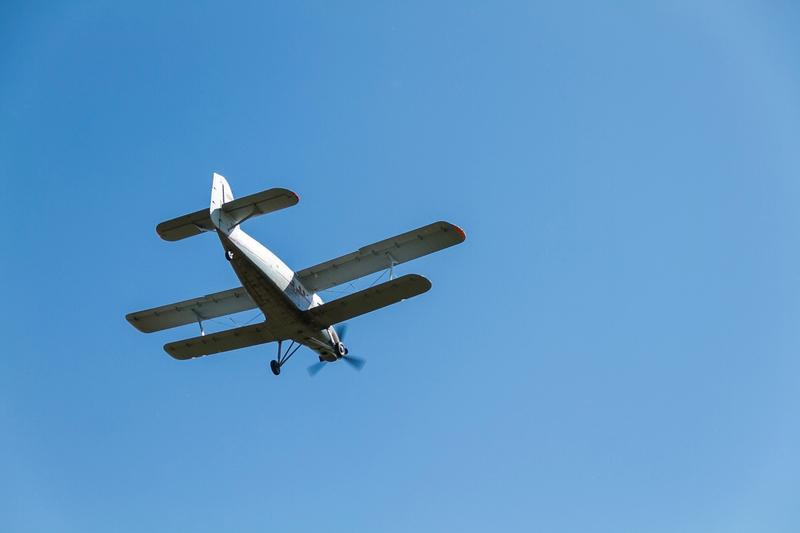
A veteran aviator who once served as mayor of Bethel was among the four men killed when a small plane dropped into shallow tidal water beside the remote coastal town of Seldovia, Alaska, and Alaska State Troopers have now identified all of them. The single-engine Piper PA-24 went down in the Seldovia Slough on August 26, 2026, with troopers notified at about 1:18 p.m. local time.
Flying the plane was Eric Middlebrook, 68, of Anchorage. His three passengers all came from the San Francisco Bay Area: Ronald Schmidt, 65, and Lance Schmidt, 20, both of San Jose, and Daniel Simons, 82, of Los Gatos. All four died.
Merrill Field Airport in Anchorage was the departure point for the Piper PA-24-260, whose destination was Seldovia, a small community roughly 135 miles to the southwest on the far side of Kachemak Bay. It never landed. Instead, the aircraft settled some 15 feet underwater just off the shoreline, its outline visible beneath the surface of the slough.
A Recovery Delayed by the Tide
Where the plane landed made the response agonizingly slow. Crews had no way in until the water dropped. Troopers reached the fuselage once the tide pulled back and brought out all four bodies, which went to the state medical examiner’s office for autopsy.
Video from the scene showed the submerged plane sitting in the slough, and footage shot the following day caught a helicopter hoisting the wreckage clear of the water. People nearby said they heard the plane take off, then heard it crash. One described onlookers left terrified as they waited to learn whether anyone aboard had survived.
No road reaches Seldovia. Residents and visitors arrive by boat or by air, which turns the town’s small airport — and the pilots who serve it — into a lifeline rather than a convenience.
A Longtime Pilot and Former Mayor
Both Alaska aviation and Alaska civic life knew Middlebrook well. The mayor of Bethel — the hub community of the Yukon-Kuskokwim Delta, in the state’s southwest — was a post he once held. Refrigeration equipment was his freight for years, flown out to villages scattered across the delta; it is the sort of unglamorous cargo run that keeps food cold and supply chains intact where no roads lead in or out.
Middlebrook had spent decades in the state and was regarded as an experienced pilot. He came originally from Northern California — the same region his three passengers called home.
The deaths have been felt in the Bay Area, too, where the Schmidts and Simons lived. Ronald Schmidt and Lance Schmidt shared a San Jose address, and Simons, at 82, was the oldest man aboard. Notification of next of kin came first; only then did Alaska State Troopers release the names.
What Investigators Know So Far
What brought the plane down is the subject of an investigation by the National Transportation Safety Board (NTSB). A possible aborted landing or climb-out is suggested by early findings, which have the aircraft clipping trees before it went into the water. Those details are preliminary and could change, and NTSB investigations routinely take months to produce a factual report — longer still to reach a probable cause.
The airframe and engine, the weather at the time, the pilot’s flight history and any available radar or witness data are the material investigators typically work through before drawing conclusions. Central to that work will be the wreckage recovered from the slough.
“Horrendous” was how Alaska Sen. Dan Sullivan described the crash, and he said his thoughts were with the families, adding that the state has “got to keep making the investments” in aviation safety. No other state leans on small aircraft the way Alaska does. For much of the year, hundreds of communities can be reached only by air; that dependence has held air safety near the center of state politics across generations.
Less than a week before the Seldovia crash, a separate fatal plane accident in southwest Alaska killed eight people. A chartered twin-engine Cessna 441 Conquest went down on steep, rising terrain near the Cape Newenham Long Range Radar Site during a second landing attempt in thick fog on August 20, according to the NTSB. Two of the dead were U.S. Army Corps of Engineers staff from the Anchorage office — fire protection engineer Sabrina Hansen, 45, and mechanical engineer Hayden Scalis — who were traveling with contractors and Air Force personnel to inspect a newly installed fire suppression system.
Kaleb Hansen, son of one of the eight killed in that crash, told KTUU: “I’m currently overwhelmed. It’s just, it’s a lot. Overwhelmed, stress, you know.” He added in the same interview: “It’s still hard to believe that mom is gone. I still reminisce a lot about her.” Investigators were still combing through the wreckage on the mountainside. Nothing links the two crashes, which were separate incidents; taken together, though, they have drawn fresh attention to the dangers of small-aircraft travel in a state where flying is frequently the only workable route from one town to another.
Federal investigators, for now, hold the questions about the final minutes of the flight from Merrill Field. No determination of cause has been announced by the safety board, and as the inquiry got underway the bodies of Middlebrook, the Schmidts, and Simons were sent for autopsy. Any formal findings will be the NTSB’s, rather than the preliminary details that surfaced in the days after the aircraft was pulled from the water.
