
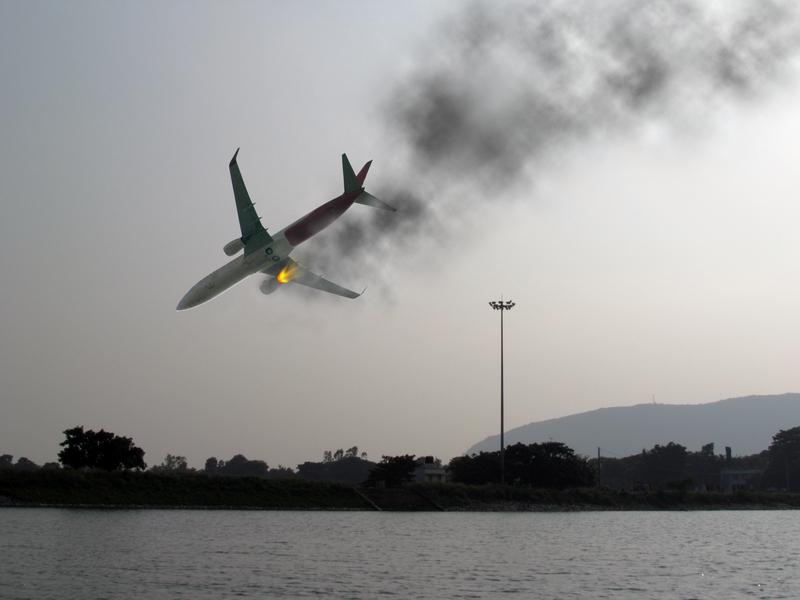
Two years after a military aircraft went down in a northern Malawi forest, killing the country’s vice president and eight other people, lawmakers are pulling the wreck of that June 10, 2024 flight back into public view — and the testimony is raising fresh questions about who knew what, and when.
A parliamentary panel investigating the Chikangawa crash has already heard that the aircraft assigned to Vice President Saulos Klaus Chilima carried a dead emergency beacon, and that a warning about dangerous weather on the same route never reached his office.
Colonel Alex Mwachande, commander of the Zomba Air Base, told the committee that the crew flying that same plane to Mzuzu on June 9 had flagged “very bad weather,” but the alert never made it to the vice president’s staff before the aircraft was handed to Chilima the following morning. The plane’s emergency locator transmitter, Mwachande said, had been useless for years — the battery ran out in 2006 and the manufacturer had long since stopped producing replacements — meaning no signal marked the wreck’s position after impact. He also sketched a defence force pulled in too many directions at once, juggling aircraft requests that included a troop rotation out of the Democratic Republic of Congo on June 10.
Chilima, 51, died along with eight others aboard the Dornier 228-202K, among them former First Lady Shanil Dzimbiri. The plane, initially reported missing in bad weather, was located in ruins in the Chikangawa Forest.
The vice president had flown home not long before from South Korea, where he took part in the Korea-Africa summit, and was widely viewed as a likely contender in the 2025 presidential race. He was traveling to Nkhata Bay for the funeral of Ralph Kasambara, a former justice minister, when the flight ended. Departing Lilongwe at 9:17 a.m., the aircraft could not put down at Mzuzu airport — the closest field to the funeral — because visibility was too poor. Controllers turned it back toward Lilongwe, then lost both radio contact and the radar track.
Neither the aircraft’s solid service record nor the crew’s experience prevented whatever went wrong on that return leg.
Then-President Lazarus Chakwera told the nation the search had ended. “I’m deeply saddened, I’m sorry to inform you all that it has turned out to be a terrible tragedy,” he said. “The search and rescue team has found the aircraft near a hill. They have found it completely destroyed with no survivors.” He added that soldiers had started moving the victims’ bodies to the capital.
“Dr. Saulos Klaus Chilima was a good man, a devoted father and husband, a patriotic citizen who served his country with distinction, and a formidable vice president,” Chakwera said in tribute.
Photographs circulating on social media captured rescue workers and security personnel picking through scattered wreckage around the tail of the plane.
Before entering politics, Chilima ran Airtel Malawi as managing director. He led the United Transformation Movement and teamed up with Chakwera to build the Tonse Alliance, serving as his running mate in the winning 2020 campaign. That partnership soured as 2025 drew closer, and Chilima was expected to run against his boss. He had been arrested in 2022 on corruption allegations, charges that collapsed after the Director of Public Prosecutions filed notice discontinuing the case. He maintained his innocence throughout.
He left behind his wife, Mary, and two children, Sean and Elizabeth. Chakwera set aside a national day of mourning, and the remains of all the victims were flown back to Lilongwe.
Foreign governments were central to the search effort, with the United States, the United Kingdom, Israel and Norway supplying specialized gear. The U.S. Embassy in Lilongwe said it was deeply concerned and pledged whatever help it could give, including a Defense C-12 aircraft. The vice president enjoyed broad affection, especially from younger Malawians, and the country’s grief was widespread.
Two official inquiries did not settle the matter. Germany’s Federal Bureau of Aircraft Accident Investigation issued findings in May 2025 blaming poor visibility for the aircraft striking rising ground, an impact no one could have survived. A commission created by Chakwera reached a comparable conclusion, ruling out foul play and pointing to human and environmental causes. Neither satisfied a skeptical public.
More than a year and a half after the crash, President Peter Mutharika ordered a new probe. Charles Mhango, minister of justice and constitutional affairs, told Parliament in February 2026 that the earlier reports had left central questions about the June 2024 disaster unanswered.
Parliament acted in late March 2026. Speaker Sameer Suleman named a 13-member Parliamentary Ad Hoc Committee spanning the political parties, with Walter Nyamilandu Manda as chairperson. Getting there was messy: the Malawi Congress Party pulled out at first, citing doubts about impartiality, and only returned after talks mediated by the speaker. Lawmakers set a 90-day reporting deadline that the sheer size of the investigation has since blown past.
By late April 2026 the panel had finished its groundwork — terms of reference written, scope defined, an investigative roadmap laid out. Substantive work was slated to start by mid-May 2026 along three simultaneous tracks: an audit covering health, safety, security and the environment; a forensic audit; and autopsies and post-mortem examinations. That last strand requires exhuming all nine victims, because none of the bodies underwent post-mortem examination when they were recovered in June 2024.
“The Parliamentary Ad Hoc Committee established to conduct a fresh inquiry into the Chikangawa Plane Crash has successfully concluded its preparatory work and is now ready to commence investigations,” Nyamilandu said, promising fairness, professionalism and transparency. On July 3, 2026, he said the panel would take the time it needed rather than rush, and might ask for more of it.
Forensic experts have cautioned that the long gap could blunt the science, since decomposition and embalming may undercut toxicology results and soft-tissue examination. The committee anticipates hearing from more than 150 witnesses and has urged anyone with useful information to come forward. The reopened investigation has been welcomed by Malawians who have pressed for conclusive answers for years. On the second anniversary, United Transformation Movement figures gathered with Mary Chilima for a memorial mass at Nsipe in Ntcheu District.
Testimony has already reopened debate over how Chilima ended up on the plane and how the government reacted once it vanished. Former Defence Minister Harry Mkandawire said Chakwera tasked Chilima with standing in for him at Kasambara’s funeral and signed off on using the Malawi Defence Force Dornier 228. Witnesses also told the panel that State House put together K5 million for Chilima to hand Kasambara’s family as a condolence message.
Mkandawire filled in a gap in the flight’s timeline as well. Around 10:02 a.m., shortly before the scheduled 10:16 a.m. touchdown in Mzuzu, then-MDF Commander General Paul Valentino Phiri called him to report that the aircraft had reversed course for Lilongwe because of weather. It falls to Phiri, Mkandawire said, to explain who told him the plane had turned around and who first reported the crash in Chikangawa Forest.
Pressed by the committee, the former minister acknowledged that he stayed for the rest of the funeral, returned home, bathed and went to sleep, reaching the crash site only on June 11, 2024. He rejected suggestions the search paused overnight, saying MDF troops kept looking after dark even though police halted, and that the operation was never formally ended.
Phiri has since testified himself. According to his account, Lucky Sikwese approached him with the aircraft request on June 8, 2024, and the sole plane on hand was sitting in Mzuzu, having just flown Kasambara’s body there. When asked if it could return to Lilongwe, Phiri said he took the matter to Chakwera, who approved it. He put the search force at 172 soldiers, plus 30 additional troops from Zomba.
The first phase wrapped in August 2026 after more than 40 witnesses testified, including active and retired officers, government officials and family members of those killed. The panel met again on August 10 and 11 for its last two witnesses of that round — Dokani Ngwira, former director general of the National Intelligence Service, and retired Lieutenant General John Msonthi — and to map out the next stage.
The pathology work will be led by a pair of specialists recruited from South Africa, Dr. Robert Gabriel Ngude and Dr. Wilson Sibusiso Ntsele. As of early August 2026 no exhumations had been carried out; the committee said they depend on legal clearances and discussions with the bereaved families.
Phase two began Monday, August 24, 2026, and continues through Friday, September 11, focusing on the day of the flight. Scheduled witnesses include airport flight-planning, meteorology and fuelling personnel, weather experts, pilots with Dornier 228 experience, and eyewitnesses from the Nthungwa Forest close to where the plane came down.
