
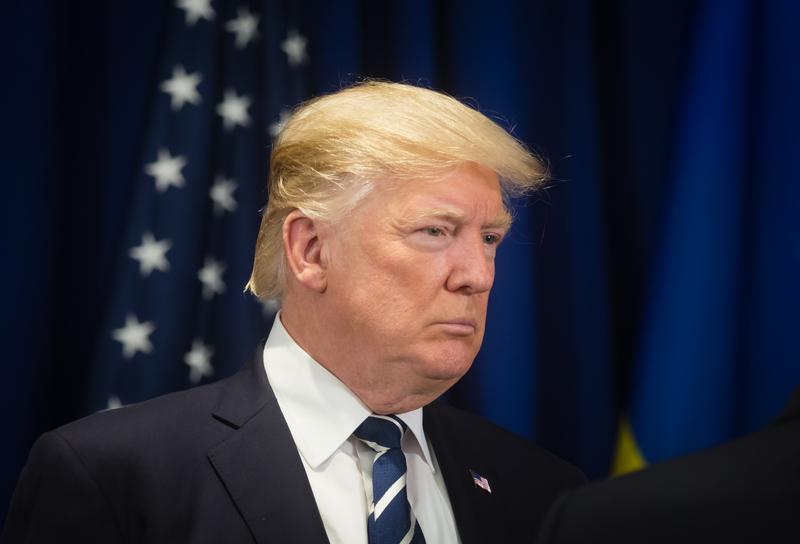
Manitoba Premier Wab Kinew called President Donald Trump a bad person on August 20, 2026, telling Canadians that any agreement signed with the U.S. leader could be ripped up at any moment.
“Everybody knows the American president by now, he’s erratic, he’s irresponsible, and he’s not to be trusted,” Kinew said.
“That’s why I say you can’t make a good deal with a bad person, because who’s to say it’s not going to be undone?” he added. Ties between the two neighbors have soured badly during Trump’s administration, and the 80-year-old’s threatened tariffs on a wide range of Canadian goods had driven the two governments back to the negotiating table.
Coming from the leader of a single Canadian province, the attack landed at a delicate moment. Negotiators on both sides were scrambling to complete a trade agreement that would have averted tariffs Trump had threatened at rates reaching 50 percent. Those talks fell apart the next night, and the tariffs kicked in at 12:01 a.m. August 22.
The Window Closed
Duties on roughly $20 billion worth of Canadian goods had first been slated for Wednesday, August 19, then pushed back to 12:01 a.m. August 22 — a slim opening for negotiators to close the deal. They never took it. The talks fell apart late on August 21, and the 50 percent duties took effect at 12:01 a.m. August 22, hitting about $20 billion in Canadian goods — among them whisky, wine, dairy, cement and hockey equipment — while leaving energy, potash and critical minerals untouched.
Prime Minister Mark Carney said he chose to walk away instead of signing the offer in front of him. The Americans “asked too much and offered too little,” he said, describing the tariffs as a miscalculation and vowing that Canada “will match those tariffs dollar for dollar to protect our workers and businesses.” Ottawa’s retaliatory duties, which cover steel, dairy, appliances, agricultural equipment, pulp and paper and electronics, take effect September 8.
Canada has since announced dollar-for-dollar retaliatory tariffs on hundreds of U.S. products, more than 700 items ranging from steel and aluminum to video game consoles and fishing rods, covering $27.6 billion worth of imports and taking effect September 8.
Carney pointed to three unresolved issues: the treatment of Canadian content in vehicles, along with Washington’s refusal to extend tariff relief to medium and heavy trucks; a U.S. demand that Canada restrict its freedom to negotiate trade deals with other countries; and pressure on Canada’s language and culture protections, an issue Carney framed as a matter of sovereignty.
U.S. Trade Representative Jamieson Greer pinned the responsibility on the other side, saying it was Canada that had refused to finalize the deal and that “new demands and walkbacks of other commitments by Canada have upended the careful balance” reached in the preceding days. On social media, Trump wrote: “Canada wants the benefits of being a State, without being one!!!” On Glenn Beck’s show, Trump said it is “time to teach Canada you can’t do this anymore,” and, asked by CNN about Canada’s account that Washington made last-minute demands, he replied, “That sounds like me.” The White House released a statement calling the dispute a record of Canadian abuse.
Ottawa Said an Agreement Was Near
August 20 had brought the return from Washington of Dominic LeBlanc, the federal minister responsible for Canada-U.S. trade, who had met with Greer and reported that the two countries were very close and still making progress, with Canadian officials remaining in the U.S. capital to work through the remaining details.
Trump himself had characterized the deal taking shape as very fair to both sides. The full terms of the negotiations were never made public by either government, which left businesses on both sides of the border guessing at what a final package might contain.
A Whiskey Truce With a Catch
Alcohol was the immediate flashpoint that week. Carney had leaned on provincial leaders to lift their boycott of U.S. liquor, treating shelf space in provincial liquor stores as a goodwill gesture that could help close the deal.
Kinew indicated Manitoba would fall in behind Carney and let stores stock American products again, framing the decision as part of a united national approach rather than a change of heart. But he attached a pointed condition. “If we put the booze back on the shelves, don’t buy it,” he said. “Let it sit on the shelf … and buy the Canadian stuff instead.”
The premier said Canadians had done a remarkable job holding together against Trump’s tariff threats and should keep it up. The distinction captured the awkward position Canada’s premiers were in that week: asked to soften the most visible symbols of retaliation while the harder economic questions stayed unsettled in Washington.
The truce did not survive the weekend. Once the talks broke down, Kinew said Manitoba would keep American liquor off Liquor Mart shelves. Saskatchewan Premier Scott Moe has since announced a 50 percent tax on U.S. alcohol, effective September 8, while declining to pull American liquor from Saskatchewan shelves — leaving the choice, he said, to consumers.
Premiers Split on Tone, Not Direction
Kinew was not the only provincial leader weighing in that week, but he was among the most combative. In Saskatchewan and Nova Scotia, the premiers voiced open support for the course Carney was charting at the negotiating table, handing the prime minister political cover as he pushed for a settlement.
Kinew’s message was blunter: fight. He argued that Trump is weak, that the United States carries less weight around the world than it did a year ago, and that the president is badly out of step with Americans on the cost of living, which Kinew called the top issue there. He also predicted Trump would be slaughtered in the midterms.
“We’ve got the upper hand,” he said, describing American negotiators as back on their heels and coming to Canada for a deal.
Two days later the tension resolved in his direction. Carney walked, and Kinew said he was fully behind the decision. “History will not be kind to Donald Trump,” the premier said. “So we should never appease him and we should fight back, which is what Canada is doing today.” The way to do that, he added, was to buy from Canadian businesses and support Canadian workers — the same argument he had made about the liquor shelves, now applied to a trade war rather than a trade deal.
Other leaders have floated sharper measures. Ontario Premier Doug Ford said that if the dispute escalates and talks do not resume, “all options are on the table,” but ruled out cutting Ontario’s electricity exports on its own, saying he could not do it alone and that Canada needed a “Team Canada approach.”
