
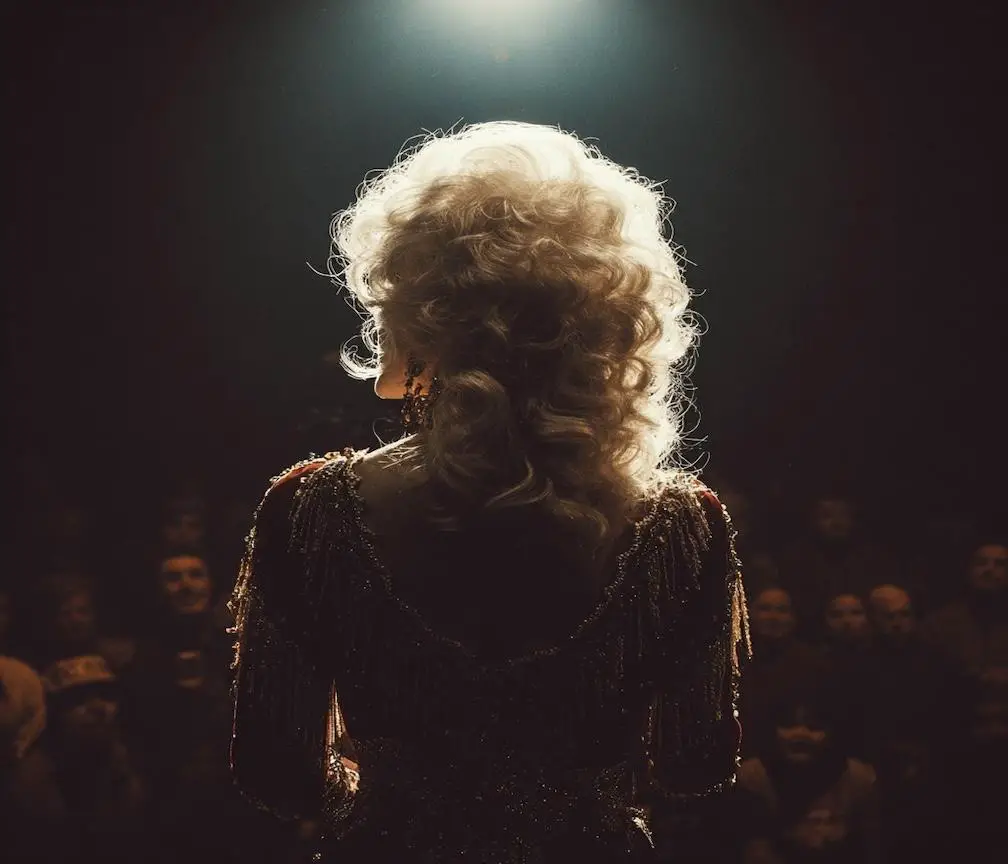
Dolly Parton — the songwriter, singer, actress and philanthropist who turned a childhood of Appalachian poverty into one of the most recognizable careers in American entertainment — died peacefully in Nashville, Tennessee, on August 25, 2026, at the age of 80.
Word of her death came from Bryan Seaver, her nephew and head of security, who posted the news to Parton’s Instagram account; her publicist confirmed it. The family did not release a cause. A private service for close relatives is planned. “I have imagined the heaviness of this moment but haven’t truly felt it until now,” Seaver said, describing the duty of announcing it as an honor tinged with both pride and sorrow.
President Donald Trump, who ranked her among the finest country singers who ever lived, directed that the American flag be lowered across the country for a week beginning at 6 p.m. “There has never been anyone like her, and never will,” Trump wrote. “Rest in Peace, Dolly! The World loves you.”
From a One-Room Cabin to Nashville
She arrived on January 19, 1946, in the hills of East Tennessee, the fourth child in a family of 12. Her father, Robert Lee Parton, farmed and worked construction; her mother, Avie Lee Parton, was the source of the musical talent Parton always said she inherited. Being poor became her material. “Coat of Many Colors” recounts the patchwork coat her mother stitched from leftover fabric — a garment she wore proudly while schoolmates mocked her for it.
Her first instrument was a mandolin strung with bass guitar strings. An uncle gave her an actual guitar when she was eight. She sang in her grandfather’s church, appeared on local television by 10 and cut a record at 13. In that same year, country star Johnny Cash introduced her on the stage of the Grand Ole Opry, calling her a little girl from up in East Tennessee.
Diploma in hand in 1964, she left for Nashville with a suitcase of songs, trailing her uncle Bill Owens, a songwriter. Producer Fred Foster — whose résumé included singers Roy Orbison and Willie Nelson — placed her material with other acts and also brought her into the studio to record it herself. A contract came in 1965. An early attempt to market her as a pop singer flopped, and the pivot to country produced her debut album, “Hello, I’m Dolly.” She married Carl Dean in May 1966; he died March 3, 2025, nine years after the pair renewed their vows in 2016 for their 50th anniversary.
The Songs and the Screen
What lifted her out of obscurity was a partnership with Porter Wagoner, the country singer and TV host, launched in 1967 with the duet “The Last Thing On My Mind.” Wagoner pushed for her recording contract, and his syndicated show doubled as an acting classroom. She opened her own publishing company that year, too. “Joshua” delivered her first country No. 1 in 1971, and “Coat of Many Colors” reached the Top 5. “Jolene,” out in 1973, hit No. 7 to become her first U.K. hit; she wrote that song and “I Will Always Love You” on the same day.
“I Will Always Love You” was her goodbye to Wagoner. It went to No. 1 on the country chart in 1974, then repeated the feat when she re-recorded it in 1982. Singer Whitney Houston’s 1992 rendition for “The Bodyguard” remains the top-selling single ever put out by a female artist, at roughly 20 million copies.
In 1977, “Here You Come Again” became her first album to sell a million copies, and its title track won the first of her 11 Grammy Awards. She landed three consecutive country No. 1s in 1980, among them “9 to 5,” a crossover hit that climbed to the summit of the pop chart in the U.S. and brought her an Academy Award nomination as well. The movie of that name was her first acting role, opposite actors Jane Fonda and Lily Tomlin. Roughly nine films followed, “Steel Magnolias” in 1989 among them, plus two Golden Globe nominations. Her 1983 duet with country singer Kenny Rogers, “Islands in the Stream,” also reached No. 1 on the pop chart.
She stands alone as the only performer to place songs on the charts across seven decades. Her 25 country No. 1 singles are a record, and 47 of her albums cracked the country Top 10. The Country Music Association made her Entertainer of the Year in 1978, a distinction only six women have received. She entered the Country Music Hall of Fame in 1999. Two thousand five brought the National Medal of Arts, and 2023 saw Rolling Stone rank her No. 27 on its list of the 200 Greatest Singers of All Time.
Saint Dolly’s Record of Giving
Fans called her Saint Dolly, and the giving backed up the nickname. The Dollywood Foundation, launched in 1988, aimed to lift educational outcomes for children in her home county. By the early 1990s she was promising every seventh and eighth grader $500 if they made it to graduation, and dropout rates in those classes fell from 35 percent to 6 percent. Her Imagination Library, begun in 1995 and named for a father who never learned to read or write, mails a book each month to nearly 850,000 enrolled children from infancy through kindergarten and has handed out more than 150 million books.
After wildfires tore through the Great Smoky Mountains in 2016, she sent $1,000 a month for six months to about 900 affected families and organized a telethon. In 2020 she gave $1 million to Vanderbilt University, money that went toward Covid-19 vaccine development. Forbes pegged her net worth at $450 million in June 2025, placing her 78th on its list of America’s richest self-made women.
Health Setbacks and Unfinished Plans
A six-day Las Vegas residency announced in June 2025 for that December never happened. She rescheduled it to September 2026 after doctors said she needed procedures, then canceled the run outright earlier in 2026, pointing to health challenges. She had dealt with kidney stones over a long stretch of time, she said, describing an imbalance that had developed in her digestive and immune systems — though she noted that treatable was the word her doctors used for everything she was facing.
At Dollywood’s season opening in early 2026, she acknowledged a few lingering health problems and said she was putting herself back together spiritually, emotionally and physically while grieving her husband. She was still pursuing a museum and hotel project in Nashville, along with her Broadway production, “Dolly: A True Original Musical,” slated for a New York premiere later in 2026.
Six of her 11 siblings survive her: Willadeene, Robert Jr., Stella, Cassie, Freida and Rachel.
