
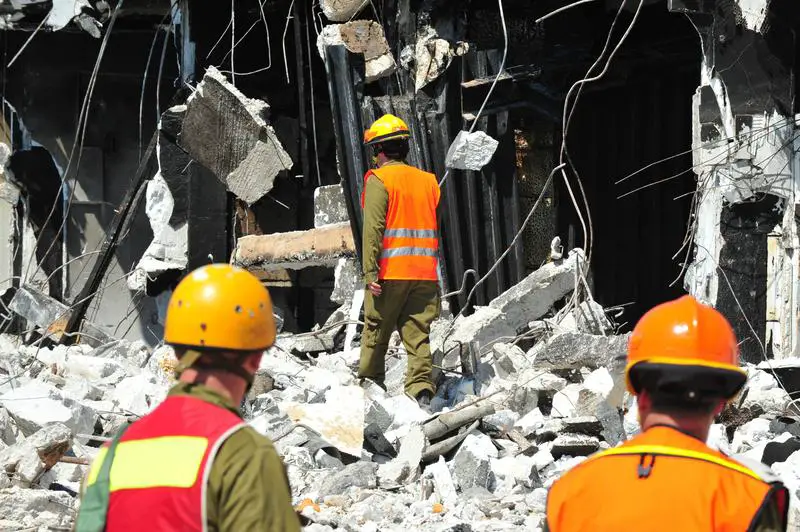
One Syrian soldier was killed and dozens of people injured Tuesday when a car bomb exploded near a Defense Ministry building in Damascus, striking as military personnel worked to dismantle another explosive device that had been discovered moments earlier.
The attack unfolded in Bab Sharqi, a historic district at the eastern edge of central Damascus, on May 19, 2026. Troops had located what officials described as a bomb primed for detonation and began working to defuse it when the car bomb detonated nearby, the Defense Ministry said in a brief statement.
The ministry confirmed the death of one military member but did not release the soldier’s identity or provide details on the conditions of those injured, though state television reported that civilians were among the wounded.
A Trap Sprung on Bomb Technicians
The sequence of events suggested a coordinated attack designed to lure security forces into a kill zone. Soldiers responding to the first device — described by the ministry as ready to be detonated — were the apparent targets of the secondary car bomb, a tactic long associated with insurgent operations across the region.
Bab Sharqi, one of the ancient gates of the old city, sits at the eastern edge of central Damascus and is densely populated with residences, churches, and shops. Its proximity to government installations has made the area a sensitive zone for security forces since the fall of Bashar Assad’s government and the political reordering that followed.
Security forces cordoned off the area following the explosion, according to reporting from Damascus. Emergency crews ferried the wounded to nearby hospitals as investigators began combing the blast site for forensic evidence.
Sparse Details From the Ministry
The ministry confirmed only that the blast occurred outside a building linked to the Defense Ministry, declining to identify the structure or specify how close the car was to the dismantling operation.
The brevity of the official account left key questions unanswered. The ministry did not assign blame, name a suspected group, or indicate whether arrests had been made. There was no immediate claim of responsibility, and authorities did not say whether other devices remained at large in the district.
The ministry has not said whether the dismantled device — or the destroyed car — yielded any evidence that might point investigators toward a suspect. Officials also declined to discuss whether security at Defense Ministry-linked buildings would be tightened in the wake of the blast.
A Site With a Recent, Violent History
Tuesday’s bombing struck near a complex that has been targeted before. On July 16, 2025, the Israeli army struck near the entrance to the Syrian Ministry of Defense in Damascus and returned hours later to hit the same site with a larger strike. The opening salvo was captured on live Syrian television, broadcasting plumes of smoke over the capital in real time.
Israel said at the time that those strikes were intended to support the Druze religious minority amid sectarian violence in southern Syria. Tuesday’s incident bore no immediate hallmarks of an airstrike — the ministry’s account pointed clearly to ground-level explosive devices — but the recurrence of violence at or near a Defense Ministry site underscored how exposed Syria’s central government installations remain.
A Capital on Edge
Damascus has experienced a fragile calm punctuated by sporadic violence in the months since the country’s political transition. Security forces have repeatedly warned of efforts by armed factions and remnants of the former government to destabilize the new administration through targeted attacks on military and ministerial sites.
Tuesday’s attack appeared engineered for maximum psychological impact: a bomb planted in plain sight, a second device timed to detonate as responders converged, and a location that placed civilians in harm’s way alongside the soldiers. The presence of wounded civilians among the casualties is likely to intensify pressure on authorities to provide a fuller accounting of how the attack was carried out and why the second device went undetected.
For now, the picture in Bab Sharqi is one of shattered storefronts, blood on cobblestone, and a soldier dead in a district that has weathered war, foreign airstrikes, and the slow, uneasy work of rebuilding a state. Investigators were continuing their work into the evening, and the ministry promised no further updates.
