
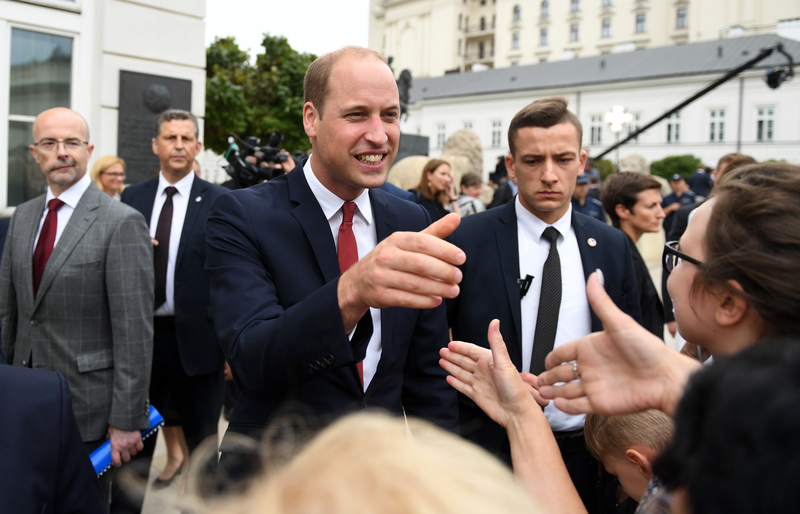
When King Charles authorized Prince William and Princess Kate to become Grantors of Royal Warrants in spring 2026, it marked another milestone in the couple’s evolving royal responsibilities. Kate made history as the first princess of Wales to grant Royal Warrants in 116 years, since Princess Mary of Teck held the title in 1910. The appointments gave them official authority to endorse businesses and brands that supply goods or services to the Royal Household, expanding their public duties in ways that carry real-world weight without relying on ceremony.
That pragmatic approach to royal life has defined William’s tenure as prince of Wales from the very beginning. In September 2022, just one day after his father acceded to the throne following Queen Elizabeth’s death, William assumed the title. But instead of marking the occasion with the pomp and pageantry that accompanied his father’s 1969 investiture, he and Kate undertook a quiet visit to Anglesey and Swansea—places that hold personal significance for the couple, who lived in Anglesey for three years after marrying in 2011.
William flatly declined both a lavish investiture ceremony and even a church service to commemorate his new role. Royal biographer Robert Hardman revealed the extent of William’s break from tradition in his book “Elizabeth II: In Private. In Public. The Inside Story.” According to Hardman’s account, courtiers had planned a formal ceremony at St. David’s Cathedral in Pembrokeshire, West Wales, but William rejected the proposal outright. A member of William’s team confirmed to the biographer that a formal ceremony “wasn’t ever something that he wanted to do.”
The refusal caught royal watchers and palace staff by surprise, representing a sharp departure from centuries of precedent. King Charles’s 1969 investiture at Caernarfon Castle drew 19 million viewers in Britain and an astonishing 500 million people worldwide. That televised event saw Queen Elizabeth present her eldest son with the prince of Wales’ sword, coronet, ring, rod, and mantle in an elaborate display of royal tradition. Charles had spent nine weeks at Aberystwyth University learning Welsh in preparation for the ceremony, which proved controversial and was not well received by many Welsh people at the time.
William’s rejection of the investiture ceremony represents more than simple modernization—it signals a willingness to question long-standing traditions when they no longer serve their purpose. The 1969 ceremony, despite its global reach, sparked tension in Wales and raised questions about English authority over Welsh culture and identity.
By choosing a more understated approach, William avoided reopening old wounds while still honoring his connection to Wales. His visits to Anglesey and Swansea emphasized personal ties over ceremonial grandeur, focusing on the places and people he knows rather than staging a spectacle for television cameras.
Even William’s approach to learning Welsh reflects his thoroughly modern sensibility. In 2024, he downloaded the language-learning app Duolingo to learn Welsh phonetically. He demonstrated his efforts during his St. David’s Day 2025 speech, delivering his first full message in Welsh before switching to English.
In the video message, William celebrated Wales’ “history, its culture, and its incredible people,” adding that “from its breathtaking landscapes to its language, Wales continues to inspire.” He concluded by wishing “the people of Wales and everybody around the world, Happy St. David’s Day.”
Royal biographer Russell Myers, whose book “William and Catherine: The Monarchy’s New Era: The Inside Story” was published in March 2026, sees William’s decisions as part of a broader effort at modernizing the monarchy. A former courtier told Myers that William’s millennial status—he was born in 1982—has fundamentally shaped his approach to royal duty.
The courtier explained that millennials have experienced more rapid change than any previous generation, navigating the birth of the internet, social media, and a world facing unprecedented challenges. This perspective has influenced how William and Kate approach their roles, taking time to establish solid foundations before committing to major initiatives.
A former palace staffer noted that the prince and princess of Wales “recognize their own foundations need to be rock solid before they can deliver for anyone else, much more so than anyone in the family before them.”
The decision fits a pattern in William’s royal career of doing things his own way. Whether downloading language apps instead of attending formal lessons or rejecting elaborate ceremonies, he has consistently prioritized substance over tradition when the two come into conflict.
As William prepares to eventually become king, his approach to the prince of Wales title offers a preview of how he might reshape the monarchy itself. Rather than preserving traditions simply because they exist, he appears willing to evaluate each one on its merits—a potentially transformative philosophy for an ancient institution navigating the 21st century.
