
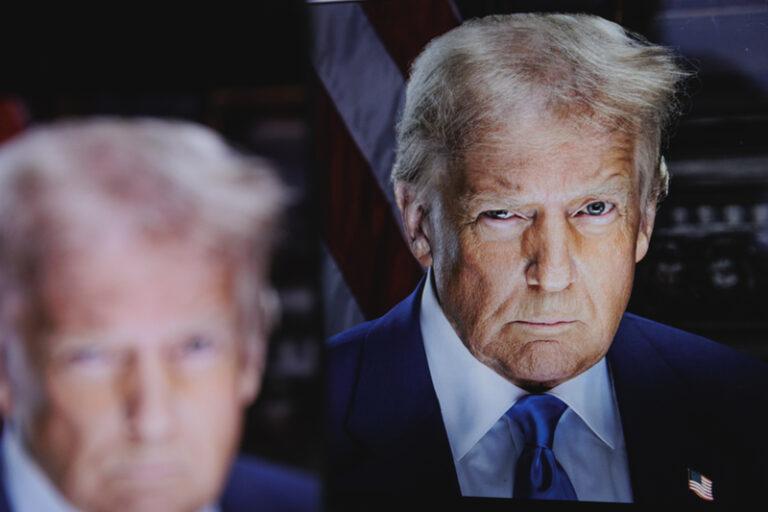
The legal fight concerning President Donald Trump’s New York criminal conviction grew more intense this past autumn when his legal counsel submitted a comprehensive appeal aimed at reversing the landmark guilty decision that established him as the first president found guilty of felony charges.
On October 28, 2025, Trump’s attorneys delivered a 96-page filing to the New York Appellate Division, First Department, contesting his guilty verdict on 34 counts of falsifying business records. The matter revolved around a $130,000 hush money transfer to adult film actress Stormy Daniels during the closing days of the 2016 presidential race.
“This case should have never seen the inside of a courtroom, let alone resulted in a jury conviction,” Trump’s lawyers wrote, describing the prosecution as “the most politically charged prosecution in our nation’s history.”
In May 2024, a Manhattan jury found Trump guilty after listening to testimony from 22 witnesses and examining substantial evidence, including invoices, checks, bank statements, audio recordings, phone logs, and text messages. The proceedings showed that Trump instructed his former attorney, Michael Cohen, to compensate Daniels to stop her from revealing an alleged sexual encounter prior to the 2016 election.
Attorneys from Manhattan District Attorney Alvin Bragg’s office demonstrated that Trump subsequently repaid Cohen via 11 checks amounting to $420,000, masked as legal fees in Trump Organization documents. These transfers were fraudulently documented to hide the hush money arrangement.
After the conviction, District Attorney Bragg declared that Trump was “guilty of repeatedly and fraudulently falsifying business records in a scheme to conceal damaging information from American voters.”
The matter stemmed from an August 2015 gathering at Trump Tower where Trump, Cohen, and David Pecker, then-CEO of American Media Inc., devised a plan to suppress damaging stories about Trump. Pecker’s National Enquirer paid $30,000 to a Trump Tower doorman and $150,000 to former Playboy model Karen McDougal as part of the “catch and kill” strategy.
The Daniels transfer became pressing following the emergence of the Access Hollywood tape in October 2016, where Trump was caught making vulgar comments about women. Cohen established a shell company called Essential Consultants, LLC to wire the money to Daniels’ attorney Keith Davidson.
Trump’s present legal counsel from Sullivan & Cromwell, led by attorney Robert Giuffra, contends the conviction breaches presidential immunity safeguards established by a Supreme Court ruling issued after Trump’s trial. They maintain Justice Juan Merchan improperly allowed evidence related to Trump’s official acts as president, including testimony from former White House communications director Hope Hicks.
The defense also challenged Merchan’s impartiality, citing his $35 in political donations to Democrats—including $15 to Joe Biden’s 2020 campaign—and his daughter’s role as president of Authentic Campaigns, a digital agency with Democratic clients. Merchan previously rejected these arguments, noting he received guidance from the New York State Advisory Committee on Judicial Ethics that found no conflict of interest.
On January 10, 2025, just 10 days before his inauguration, Justice Merchan sentenced Trump to an unconditional discharge. While Trump faces no prison time, fines, or probation, he remains a convicted felon unless an appellate court overturns the verdict.
Trump’s political career suffered no practical consequences from the conviction. He secured victory in the November 2024 presidential election and assumed office for his second term on January 20, 2025. The felony status marks his presidency with an unprecedented legal distinction.
Trump is simultaneously pursuing another legal avenue. His attorneys have asked a federal appeals court to transfer the state criminal case to federal court, which could eventually allow the Supreme Court to review the case on presidential immunity grounds. A federal judge previously rejected this attempt, but the appeals court ordered a second look in November 2025.
The Manhattan District Attorney’s office has not yet filed its response to the appeal, but previously argued that the case involved “wholly private, unofficial conduct” unrelated to Trump’s presidential duties. Prosecutors noted that 12 jurors unanimously found the evidence proved Trump’s guilt beyond a reasonable doubt.
The hush money matter was one of four criminal prosecutions Trump faced in 2024. Two federal cases were dropped after his election victory. A Georgia election interference case was dismissed in November 2025 after a state appeals court disqualified the prosecutor and her replacement declined to pursue charges. Only the Manhattan prosecution reached trial and secured a conviction.
While Trump governs from the White House, the appeal advances through New York’s court system. The appellate panel will review the extensive trial record and legal arguments before deciding whether to uphold the conviction, order a new trial, or dismiss the case entirely.
