
Annette Kilgore, 69, who found her retirement home in Spain on the Channel 4 program “A Place in the Sun,” was among the 15 people killed by the wildfire that tore through Los Gallardos and Bédar in Almería province after breaking out on Thursday, July 9, 2026. Her husband, Malcolm Timbrell, 70, who appeared beside her on the show, survived.
The toll has now climbed to 15, making the blaze what Spanish broadcasters describe as the deadliest wildfire in Andalusia’s recorded history. Fourteen of those killed were foreign nationals, nine of them British.
The latest to die was Michelle Leake, a British carer who had lived in Spain for more than 20 years. She was burned two months earlier while trying to help a 93-year-old woman she cared for escape the flames, and she died in the early hours of Tuesday, September 8, in the burns unit at Hospital Universitario Virgen del Rocío in Seville with burns to about 40 percent of her body. The woman she had gone back for died in hospital on July 12.
The same Seville unit lost another patient on July 28, a woman with burns to 70 percent of her body. Spanish authorities have not released her name or nationality.
The flames began near Los Gallardos and pushed toward Bédar, a village of fewer than 1,000 people. All 15 of the dead were adults — 10 women and five men. Alongside the Britons, three were Belgian, one French and one American, and one was a Spanish citizen. Nearly 1,500 people were evacuated across Almería province, where many foreign residents live near the Mediterranean coast.
The House They Found on Television
Kilgore and Timbrell left Cornwall for Bédar after their 2023 appearance on the show, with the program’s presenter, Leah Charles-King, guiding them through the purchase. A career in mental health lay behind Kilgore, and at the opening of their episode she talked about settling gradually into life in Spain. Seventeen years of partnership was what the pair brought with them. When the fire bore down on the village she evacuated the house and then vanished; her body was formally identified among the dead by authorities later.
Speaking to the BBC, Timbrell — who survived — described losing sight of his wife and of seven friends and neighbors as the flames reached their street. The group had agreed to drive out together, but he turned back for Charlie and Lilly. The two cats belonged to him and Kilgore. When he finally set off after the others, their vehicles had been abandoned and they were trying to flee on foot. He shouted at them not to walk into the fire, which he has since been told was advancing at more than 20 kilometers an hour, but they believed it was their only way out. “They had no chance,” Timbrell told the BBC.
With one of the cats, he took shelter inside a car as the fire closed in. Four of the six vehicles the group had been driving caught fire at once, he said, and he moved to the next as each one ignited; the last two were scorched and blistered but held. “We have had an amazing life together and now it’s stopped,” he told the broadcaster.
Jasmine Harman, a presenter on Channel 4, paid tribute after news of the deaths in Bédar, saying the loss had left her devastated and offering sympathy to everyone who had lost someone, and to Timbrell in particular.
Cars Abandoned on the Road Out
A British couple settled in Bédar, Pete and Fran Gillam, were killed as well. Danielle Gillam-Kirton, their daughter, posted on Facebook that police had confirmed her parents did not survive, and she thanked those who had sent the family love, support and prayers.
Rescuers pulled four bodies from a burned-out car whose steering wheel sat on the right — an indication that the occupants were British. Charred vehicles stood along the road leading out of the village, and some of the dead, authorities confirmed, were in their cars when they tried to flee.
Emergency crews recovered 12 bodies in the first stage of the search, burned so badly that DNA samples were needed to identify them, and relatives of the missing were asked to give samples at Bédar’s civil office. Burns to roughly 20 percent of her body sent the 93-year-old British woman Leake had tried to save to hospital on Friday, July 10. She died at Hospital Universitario Torrecárdenas in Almería on the afternoon of Sunday, July 12, which brought the toll at that point to 13. She has never been publicly named.
Found Alive in a Ravine
One search ended differently. Civil Guard officers who went back over ground they had already covered found two British walkers, a couple caught out on the hillside, alive in a ravine just as night fell, with burns to about 40 percent of their bodies. National broadcaster RTVE heard from one of the officers, Sgt. Pedro Barre, that long service teaches officers to double back on terrain they have already searched. Getting the pair out took about three hours. Both survived.
The Alert That Never Went Out
Nobody disputes that nobody triggered Spain’s Es-Alert system, the tool that pushes emergency messages to every mobile phone within a defined area. Whether it should have been is the open question.
Antonio Sanz, the Andalusian regional government’s first vice president and its emergencies chief, defended the decision on July 11 from a forward command post in Turre. Instructions varied from one part of the area to another, he said: “People who had to be evacuated would have received messages telling them to shelter, and people who had to shelter would have received messages telling them to evacuate.” An Es-Alert, he said, “could have affected 7,000 residents when we wanted to move out 70.” Asked again on July 23, he argued that scattered homes and limited access made a blanket alert impractical and that direct, personalized warnings from security forces worked better. Fallen poles, he said, had knocked out communications.
Residents got different things in different places. Church bells were rung. The town hall sent WhatsApp messages. The mayor, councilors, volunteers and local police knocked on doors. Reuters, in an investigation published on July 22, found that the warnings reached people unevenly, with five residents telling the news agency they received nothing at all. Bob Layton, a retired British technical manager, said that “if I had received any advice to stay in my home we would have been dead.” Bédar’s municipal emergency plan had last been approved in 2019 and was still being updated, Reuters also reported, and across Almería province’s 103 municipalities, only 42 had emergency plans at all while just nine met the four-year update requirement.
A caller reported a burning electrical cable to the emergency line at 4:29 p.m., the first such call. The regional government waited until 7:37 p.m. to activate the first operational level of its emergency plan. Disputing the account that coverage had failed, the opposition Socialist party’s Andalusian branch has demanded records showing which mobile base stations were working and when. The regional government has not retracted or qualified its position.
Relatives Take the Case to Court
The court admitted eight families of the dead as private prosecutors in the criminal case on August 7, an arrangement formalized on August 10. Three came to the court in person, while five joined by videoconference from elsewhere in Europe. A ninth family’s application was deferred. One relative told the Spanish news agency EFE that his father had faced an “absence of warnings” before the fire reached him.
Relatives have also set up a group, Help Bédar, to pay for independent expert work on fire behavior, warning systems and evacuation management. It is run by five family members, among them Danielle Gillam-Kirton and Thomas-Wolf Verdonckt, whose father Stanislas was among the Belgian victims. Their fundraising page, opened on August 22, states: “No ES-Alert message was sent to phones in the area. Officials have said residents were warned. Our relatives were not reached.” It also poses a comparison: “One week later, a fire near Madrid burned 27,000 hectares, with over 55,000 people evacuated or confined, and nobody died. Why was Bédar different?” As of September 24 the appeal had raised about €10,900 of a €100,000 target from 161 donors.
The Socialist party said on September 16 that it would join the case as an accusing party. Two days later, the governing majority in the Andalusian Parliament rejected opposition calls for a parliamentary inquiry, arguing that the judicial investigation was sufficient. The regional government has instead announced an interdepartmental commission on fire prevention.
Bone Fragments in the Wreckage
Gillam-Kirton drove to the municipal vehicle pound in Mojácar on August 19 to look over her parents’ burned-out car, which had been recovered from the El Curato area of Bédar. The Civil Guard had told her the vehicle had been inspected meticulously and that she would find nothing. She found multiple bone fragments inside, including what she described as part of a human hip on the front seat, along with two mobile phones, several sets of keys, jewelry and money.
Weeks before, at a funeral, the family had cremated a single small bone fragment that authorities had given them. “Then who or what did we cremate?” she said.
She took the find to local police that same day and was sent on to the Civil Guard barracks at Garrucha, where officers suggested the bones were probably animal remains. Only after she pressed repeatedly were they sent for DNA testing, and no result has been made public. The family has since filed an eight-page complaint against the Civil Guard as an institution, rather than against individual officers, asking what analyses were carried out. A senior officer replied on September 17 in three paragraphs, offering condolences and stating that the matter had been referred to the investigating court.
A second family has reported a similar discovery. At El Curato, where his father died, Thomas-Wolf Verdonckt found human remains and personal effects scattered over the burned ground — spectacles, shoes, clothing buttons, jewelry and keys. He reported it to local police, who called in the Civil Guard, and he then guided officers across the terrain himself.
A Fallen Cable and a Dispute Over Current
The civil and investigating section of the Tribunal de Instancia in Vera, post 3, is running the judicial investigation under judicial secrecy. It has kept open whether the fire was accidental, negligent or deliberate, and no person or company has been named as a formal suspect.
The focus is an inactive private electrical line near kilometer 511 of the N-340A, which once supplied an abandoned restaurant and nearby rural properties. Witnesses reported seeing a cable fall and throw sparks immediately before the fire started. Endesa says the line was decommissioned in 2009 and was therefore dead; Red Eléctrica says the infrastructure is not part of its network. Court-appointed experts have countered that without live current running through the copper, the sparks witnesses describe would be physically impossible. That contradiction is the central question before the court, and it has not been resolved.
Extreme Heat and What Came After
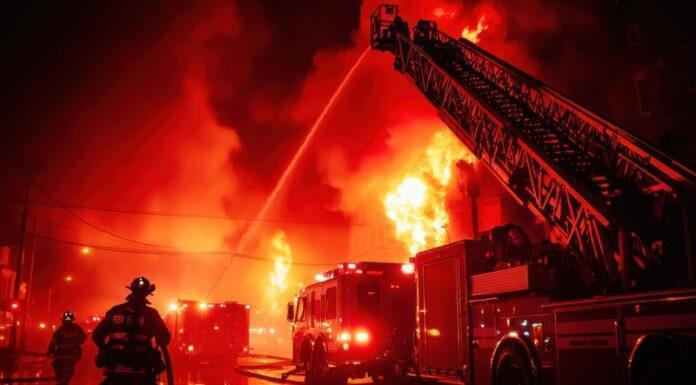
Temperatures in the area reached around 40 degrees, and parched ground and strong winds drove the flames rapidly through Los Gallardos. Juanma Moreno, president of the regional government of Andalusia, announced on the afternoon of Sunday, July 12, that the fire had been stabilized and its perimeter secured, and authorities let more than 1,000 residents return to evacuated villages. Not until July 24 was it declared fully extinguished. The settled figure for the area burned is about 5,200 hectares (12,850 acres), revised down from the roughly 7,000 hectares estimated while the fire was still active.
In 2026 Spain recorded its second-hottest June on record, and the heat was blamed for upward of 1,000 excess deaths. Figures from the European Forest Fire Information System put the area burned nationwide in 2025 at more than 393,000 hectares, the largest such total since 1994. Spain had lost a further 296,815 hectares by September 16 this year — 44 percent of all land burned across the European Union in 2026.
In July the central government said it would designate the area as seriously affected by a civil protection emergency, which unlocks aid for residents and councils across Los Gallardos, Bédar, Lubrín and Antas. Applications closed on August 24 for a separate regional aid scheme offering residential awards of between €2,580 and €15,120. Forest fire damage is not covered by Spain’s insurance compensation body, a gap the consumer group OCU highlighted in the weeks after the blaze.
Alex Ellis, the British ambassador to Spain, traveled to Almería in the days after the fire and met affected residents. “I have seen today the terrible consequences of the wildfires which have swept through Almeria,” he said, thanking emergency services, local authorities and the embassy’s consular team.
