
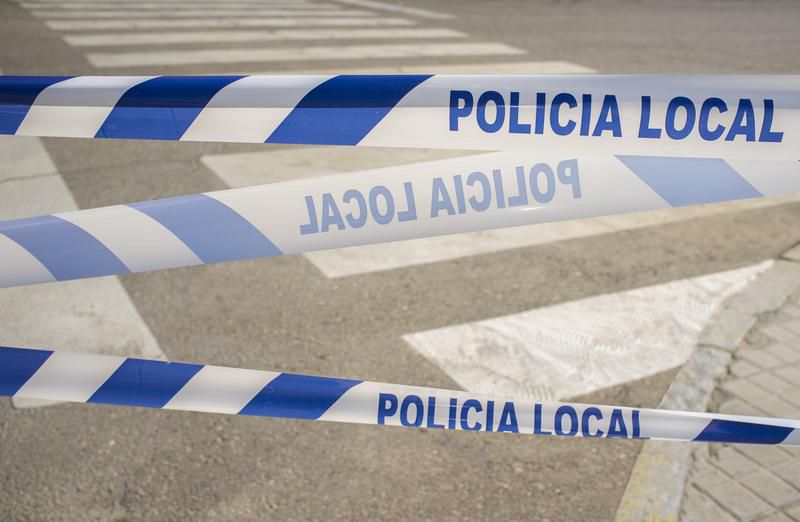
The body of Zenyazen Roberto Escobar García — a 42-year-old federal deputy for Mexico’s governing Morena party — was found on Friday, September 4, 2026, inside his black Mercedes-Benz, pulled onto the shoulder of the Xalapa-Veracruz highway in the eastern state of Veracruz. Investigators counted at least one gunshot wound to the head on the body. The cause of his death has not been established.
A motorist called in the car, stopped on the shoulder of Federal Highway 140 near Chichicaxtle; the body turned up in the community of La Gloria, in the municipality of Puente Nacional. The scene was processed by forensic experts, prosecutors and Ministerial Police officers. Veracruz state Attorney General Lisbeth Aurelia Jiménez confirmed the death and said the investigation file was being compiled, offering nothing further.
At a news conference, Veracruz Secretary of Government Ricardo Ahued Bardahuil said the lawmaker’s vehicle showed no signs of violence. “It wasn’t an attack, because the car is off to the side,” Ahued said, adding that he did not want to get ahead of an investigation still under way. Mexican news television broadcast images of a black firearm inside the Mercedes-Benz C-Class. Escobar was traveling without bodyguards, early reports noted, though he was usually accompanied because of his office.
What the Investigation Has Yet to Answer
Because Escobar held federal office, Mexico’s federal Attorney General’s Office (FGR) took over the case, announcing the move on X. Claudia Sheinbaum, touring San Luis Potosí, said she had asked the office to report as the investigation advances. Several lines of inquiry were being pursued by investigators, Veracruz Gov. Rocío Nahle said on September 5, urging the public to wait for the FGR’s report; she declined to say why a security checkpoint previously installed in the Tamarindo area had been removed. Nahle returned to the subject two days later, on September 7, telling the local program “En Contacto” that the Mercedes-Benz had been locked from the inside with its door locks engaged, that a single bullet was involved and that one casing was recovered inside the car. Forensic and ballistic analyses were under way, she said, repeating her call for the public not to speculate.
Medical examiners completed an autopsy in the early hours of Saturday, September 5. By September 7 the findings remained unpublished, the family had still received no official notification, and the FGR had reached no conclusion about how Escobar died. Authorities have not disclosed whether ballistics, trajectory or telephone analyses are finished, or whether any cameras or witnesses recorded the minutes beforehand. Magistrate Liliana López Coronado, Escobar’s widow, said the family would hold off on discussing the circumstances until the autopsy findings arrived, telling local media she wanted her husband remembered for his work in the teaching movement.
Farewells in Xalapa and Río Blanco
Mourners gathered for Escobar on September 5 at the Bosques del Recuerdo funeral home in Xalapa, among them Nahle, former Gov. Cuitláhuac García Jiménez, relatives, party members and union groups. Nahle and Cuitláhuac García had not appeared publicly together since December 2024. Mourners set a white cowboy hat atop the casket — a nod to the one he wore in the Chamber of Deputies.
Rain fell over his burial on September 6 at the municipal cemetery in Río Blanco. Escobar belonged to Cuitláhuac García’s inner circle, and the former governor wrote on Facebook that he deeply mourned a friend and fellow party member with whom he had shared years of struggle and work for the people of Veracruz. Ricardo Monreal, Morena’s floor leader in the Chamber of Deputies, sent condolences in a social media message to Escobar’s family, staff and associates; the parliamentary group and the district he represented had both suffered a loss, Monreal said. Judicial authorities were urged by the lower house of Congress to conduct a thorough investigation.
Monreal, who chairs the chamber’s Political Coordination Board, said on September 8 that leaders of the parliamentary groups had agreed against creating a special commission to investigate the death, choosing instead to wait for the FGR to establish what happened. A formal tribute followed in the chamber on September 9, opening with a minute of silence and closing with a minute of applause; Escobar’s widow, daughters, mother and sister stood at the foot of the rostrum. Sergio Gil Rullán, a Movimiento Ciudadano deputy who also represents Veracruz, told the floor that the deaths in its ranks had made the 66th Legislature the most violent since post-revolutionary Mexico. The death could not be left in the realm of versions and speculation, PRI deputy Lorena Piñón said.
From Telesecundaria Teacher to Federal Deputy
Escobar was born June 4, 1984. He took a degree in communication sciences at the Universidad de Sotavento and a master’s in education sciences; state telesecundarias brought him into school supervision in 2007, and Veracruz classrooms occupied him as a teacher from 2009. A movement linked to the dissident teachers’ union CNTE, Educación, Resistencia y Dignidad Magisterial, took him in as a member in 2015, and he went on to lead the Movimiento Magisterial Popular Veracruzano, which opposed the federal education reform. He entered the Veracruz state congress in 2016 and coordinated Morena’s caucus there; Cuitláhuac García named him state secretary of education in December 2018. He won a seat in the federal Chamber of Deputies in 2024 for Veracruz’s 16th district, based in Córdoba. For years, images from his early adulthood dogged him, said to show him offering private dances under the name “Tarzán Boy” in bars around Orizaba. He denied having worked as a stripper, telling an internet interviewer in October 2017 that he had spent 11 years in bodybuilding and fitness.
On May 28, during an extraordinary session, he confronted Institutional Revolutionary Party (PRI) deputy Carlos Gutiérrez Mancilla on the floor of the Chamber, and the video spread widely online, drawing national attention. Gutiérrez Mancilla shouted an insult referring to those old images; Escobar removed his hat and took a fighting stance before other deputies separated them. Ana Isabel González, another PRI deputy, asked that Escobar take a drug test, a request opposition legislators backed on suspicion he had been drinking. Monreal denied that Escobar was drunk and put the behavior down to exhaustion after the marathon session. The Chamber reported no sanctions.
Violence Ahead of the 2027 Vote
The death comes as Mexico heads toward elections on June 6, 2027, that will renew mayoral, state legislative, city council and gubernatorial posts. A human rights organization recorded at least 30 incidents of “political-criminal violence” across 11 states in July, 14 of them homicides, and defines the category as threats, murders, armed attacks, assassination attempts, disappearances and kidnappings. Another member of the same legislature, Veracruz deputy Benito Aguas Atlahua, was shot in the Sierra de Zongolica in December 2024 and died hours later.
Asked about the case at her morning news conference on September 10, President Claudia Sheinbaum said the prosecutor’s office would have to be the one to report and that it already had some results. “Our condolences to the family and to all the friends and colleagues,” she added. No cause of death had been announced publicly as of that date, and no arrest had been made.
