
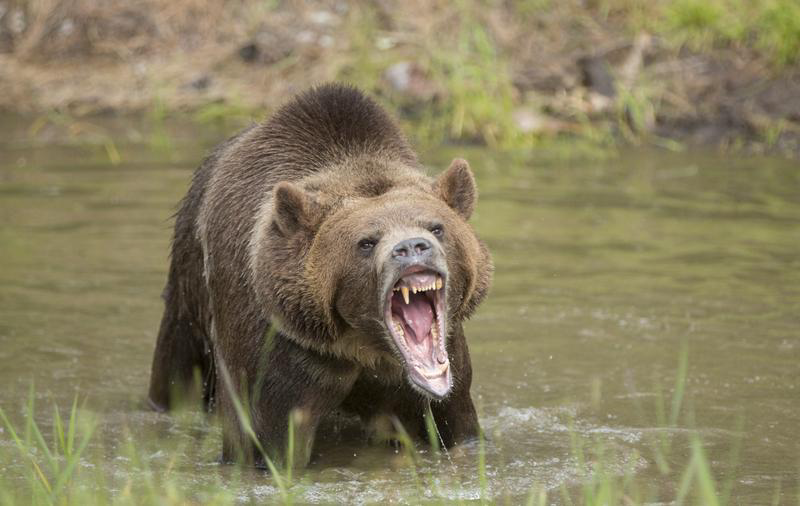
The Navajo Nation Department of Fish and Wildlife said a black bear forced its way into Benjamin Halona’s house in the Navajo Nation community of Crystal and killed him at about 1 p.m. on Thursday, August 20, 2026. His New Mexico family is asking that he be remembered for the work he did, not for the violent way his life ended.
The animal got inside while Halona, who had turned 67 eight days earlier, was alone at the house. His stepson, Casey, had gone to the post office.
Escape was not an option. Halona was recovering from a seizure that had left him relying on a walker and a wheelchair, and he had been widowed in February, when his wife, Bernadine, died of an illness. He could not get away from the bear.
A Stepson’s Frantic Call for Help
Casey came back to a door standing ajar. Then he spotted the bear inside.
He ducked into a nearby room, shoved a dresser against the door and hid in a closet, using his cellphone from there to call for help. He also reached two relatives — his stepfather’s sister, Gloria Halona, and his stepfather’s niece, Samantha Vandever.
Both women drove to the home. The bear had moved outside by the time they pulled up, and Vandever laid on the car horn until it ran off. The scene inside, she said afterward, was horrific, and a lot for the family to take in.
Gunfire from responding law enforcement officers wounded the bear, which then fled into nearby woods, according to the wildlife department. Responders eventually caught up with the animal and neutralized it. The injuries Halona suffered in the attack killed him, the department confirmed. A statement from the Navajo Police Department gave the same account. Nobody has released a necropsy finding, leaving it unknown whether the bear was sick, starving or habituated to people.
New Mexico has recorded Fatal bear attacks only twice in a century, making Halona’s the second such case in the state. Adelia Maestas Trujillo, 93, was the earlier victim, killed 25 years ago, almost to the day: a black bear pushed through a screen door at her home in Cleveland, in Mora County, on August 18, 2001.
Family Recalls a Firefighting Career
Relatives have said they want the work to define him, not the manner of his death. Halona was a wildland firefighter for the Navajo Nation, and in later years he made and sold tamales, a trade that gave him a local nickname.
Her uncle endured a great deal over the course of his life, Vandever said, and his relatives are devastated by what happened to him.
Mourners gathered for funeral services on Saturday, August 29, at The Family Church Assembly of God in Fort Defiance, Ariz., and he was buried the same day at the family plot in Crystal. Surviving him, his family said, are a great-grandchild, 15 grandchildren, five stepchildren, four children and two siblings. Nobody has announced a memorial fund.
Officials Point to Drought Conditions
Bear sightings had been rising across Navajo Nation communities in the period before the killing. Drought and low moisture have cut into the natural food supply bears depend on, Navajo police have said, and the animals are roaming farther and taking bigger risks as they hunt for calories and prepare for hibernation.
Food is behind the majority of run-ins between people and bears, according to the wildlife department, which has warned residents to treat black bears as unpredictable animals capable of turning dangerous without warning. The department called such attacks unusual, though any bear may act defensively or aggressively; residents should keep their distance — no feeding, no following, and no close-range photographs.
The urge to flee is one that Anyone who runs into a bear should resist, the department advised. “Do not run. Face the bear and back away slowly, giving it a clear route to leave,” its guidance reads. “If the bear approaches, stand your ground, make yourself look large, and make loud noises.” Children should stay close by and dogs should be leashed, and no dog should be allowed to chase or confront a bear. Anyone attacked by a black bear should fight it off with whatever is available, the department said, and nobody should play dead.
Households can act well ahead of any bear’s arrival, the same release notes, by securing garbage and livestock feed, bringing pet food indoors, cleaning grills, clearing brush from around homes and corrals, never feeding a bear and keeping doors and windows closed. Halona’s family, his loved ones and the Crystal community all received condolences from the wildlife department.
A Bad Year for Bears
The problem runs well past the boundaries of the Navajo Nation. Renamed from the Department of Game and Fish on July 1, the New Mexico Department of Wildlife has counted 253 bears killed statewide in the license year that began April 1 — 186 of them as threats to people, livestock, pets or property, 37 by hunters and 30 on roads or otherwise. That first figure stood at 60 across the whole of the previous license year. Those numbers were current as of the week of the attack; the count of bears killed by wildlife officials and authorized property owners had climbed to 187 by September 9, the most since 2011.
Other parts of the state have felt the same pressure. A camper at Red River was bitten by a bear two days after the Crystal attack; a sighting sent five Santa Fe schools into shelter-in-place, and another animal was treed in an Albuquerque backyard. The state closed bear hunting in one of its management zones on September 8 after the harvest limit was reached.
Three weeks after the attack, no findings have been published, and the tribal government has said nothing publicly about it.
