
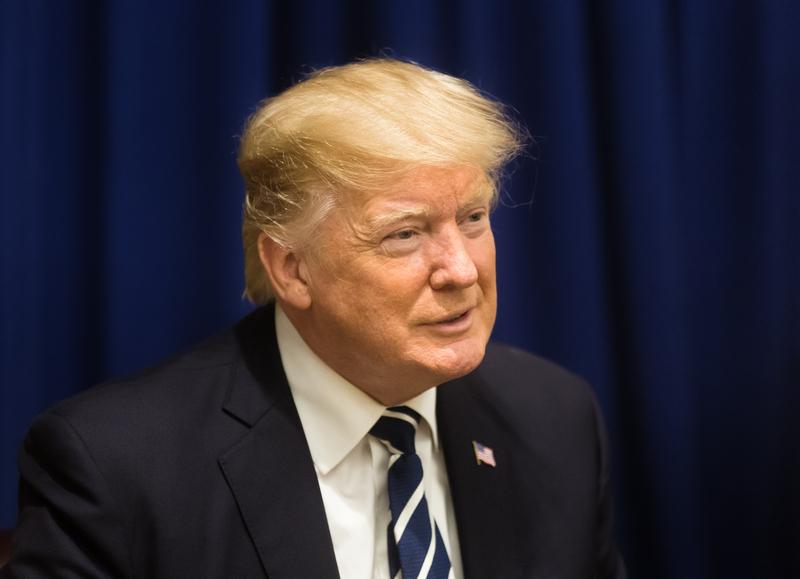
Mary Trump, the clinical psychologist and niece of President Donald Trump, delivered her sharpest public assessment yet of her uncle’s condition Monday, telling a national audience that untreated psychiatric disorders are compounding what she described as a deepening cognitive and physical decline in the 80-year-old president.
The 61-year-old daughter of Trump’s late older brother, Fred Jr., told former CNN White House correspondent Jessica Yellin on “Big Tent USA” Monday that her uncle’s condition reflects more than typical aging. She called the current moment a “perfect storm,” arguing that years of unaddressed mental illness had left her uncle increasingly volatile and, at times, difficult to reach. “He’s somebody who has lived for decades with longstanding, undiagnosed, and untreated psychiatric disorders,” she said. “As with many illnesses, when they’re left untreated, they worsen over time.”
A Pattern of Alarm Calls
The Monday interview was not an isolated warning. In a conversation with journalist Steven Beschloss, 67, published in her newsletter on Sunday, Mary Trump said her uncle’s deterioration had become impossible to conceal, pointing to his behavior at the G7 summit in Evian-les-Bains, France, as evidence that something was visibly wrong. She told Beschloss that the president was in a “downward spiral”—a phrase she had also used in January when she spoke to CNN anchor Erin Burnett and warned that his condition appeared to be “getting rapidly worse.”
In the newsletter, Mary Trump traced her uncle’s behavior to what she characterized as a lifelong psychological wound—a fear of humiliation rooted in a family culture shaped by his father, Fred Sr. “He’s experiencing constant narcissistic injuries,” she wrote, “and nothing terrifies Donald more than humiliation.”
Iran Rhetoric Draws Scrutiny
On “Big Tent USA,” Mary Trump pointed specifically to the president’s recent public statements about Iran as a window into his mental state. Yellin said the language carried “a bloodlust to it that’s deeply unnerving.” The remarks came after Iran closed the Strait of Hormuz on a Saturday following Israeli strikes against Iranian-backed Hezbollah militants—a closure that followed the collapse of a preliminary peace agreement the president had signed alongside French President Emmanuel Macron at the Palace of Versailles. In posts on Truth Social on Friday, President Donald Trump had threatened to “completely decimate and destroy all areas of Iran” during a one-year period, and claimed that 1,000 Missiles were “Locked and Loaded” and aimed at the country. Mary Trump argued those posts reflected someone whose grip on his audience and surroundings was slipping, noting that he frequently appeared unaware of who he was speaking to or where he was.
The G7 summit itself had proven turbulent for the administration. Beyond the Iran peace deal’s unraveling, the president drew mockery for announcing his late arrival to a session with world leaders by declaring himself “the boss.” The episode fed into a broader narrative, amplified by Mary Trump and others, that the president’s public conduct had grown erratic in ways that were difficult to attribute solely to temperament.
Hospital Visits and Cognitive Tests
Questions about the president’s health have dogged his second term. In late May, President Trump made his third visit to Walter Reed Medical Center in 13 months—described as a routine medical and dental check-up. During the three-hour visit, 22 specialists conducted a CT scan, heart imaging, cancer screenings, and other assessments. The White House declared him fully fit to serve. Afterward, President Trump boasted on Truth Social that he had scored a perfect 30 out of 30 on what is believed to have been the Montreal Cognitive Assessment, a screening tool used to detect dementia and cognitive impairment, and claimed a cumulative record of 120 correct answers out of 120 questions across four such tests.
Mary Trump addressed those results on “Big Tent USA,” noting that the very frequency of cognitive testing—and the president’s eagerness to publicize his scores—was itself telling. She also raised the family’s history with Alzheimer’s disease; Fred Sr. lived with the illness for almost a decade. That history, she argued, combined with observable behavioral changes, warranted serious scrutiny regardless of any official clean bill of health.
White House Pushes Back
The administration did not engage with the substance of Mary Trump’s claims. White House Communications Director Steven Cheung, 43, called her a “stone-cold loser” with no credibility, adding that her assessments amounted to self-serving fabrications designed to keep her in the public eye. It was a characteristically blunt dismissal from an administration that has consistently rejected her commentary as bad-faith family grievance rather than legitimate clinical observation.
Mary Trump, who holds a doctorate in clinical psychology, has written extensively about her uncle’s psychological makeup and has been a persistent critic of his fitness for office. Her Monday remarks pushed that criticism into new territory, framing the current period not as a stable if troubled presidency but as an accelerating deterioration—one she suggested was being driven by the collision of untreated mental illness, advancing age, and the relentless pressure of holding power.
