
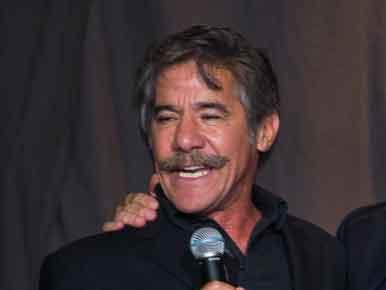
President Donald Trump appeared to acknowledge in October 2025 that the Constitution bars him from seeking a third term, only to joke months later — vindicating, in the eyes of some, a prediction Geraldo Rivera had made nearly a year earlier. In December 2024, the veteran broadcaster and estranged Trump friend forecast on X that “President Trump & Co. will soon start chattering about revoking/amending the 22d Amendment, which limits presidents to two four year terms,” pointedly asking, “Trump in 2028?” The tension between Trump’s later concessions and his continued flirtation with the idea has since drawn predictions from former White House strategist Steve Bannon, fueled speculation about a 2028 Republican ticket pairing Vice President JD Vance with Secretary of State Marco Rubio, and raised questions about whether any constitutional workaround exists.
Rivera’s Early Warning and Bannon’s Prediction
Rivera, a onetime Trump ally who broke with the president over his 2020 election fraud claims, staked out the terrain first. On Dec. 17, 2024, he posted on X that Trump and his circle would “soon start chattering” about amending the 22nd Amendment, adding that Trump “just needs 38 of 50 state governments to agree to convene. (3/4ths) Trump won 30 in 2024.”
The storyline picked up in October 2025, when Bannon, who has no formal role in the administration, told The Economist that Trump was headed for a third term and that Americans should “get accommodated with that.” Bannon claimed a plan was in the works and would be revealed at the appropriate time. Two days later, on Oct. 27, 2025, Trump told reporters aboard Air Force One traveling from Kuala Lumpur, Malaysia, to Tokyo, Japan, that he would love to run again in 2028, citing what he called his strongest polling numbers ever. In an interview that aired March 30, 2026, NBC News anchor Kristen Welker raised a scenario in which Vance or another ally could run in 2028 with Trump as the vice presidential nominee, then step aside after winning. Trump told her the idea was one option among several and insisted he was not joking.
Trump Appears to Concede the Limit
By Oct. 29, 2025, Trump’s tone had shifted. Speaking to reporters on Air Force One en route to Gyeongju, South Korea, he said he had his highest poll numbers ever but acknowledged that based on what he read, he was not allowed to run. Trump said the text was clear that he could not run and called it “too bad,” while noting the party had many great people.
Later that same trip, he attended a dinner hosted by South Korean President Lee Jae Myung at the Hilton Gyeongju hotel. Trump also dismissed the vice-presidential workaround Welker had described, calling it “too cute” and predicting voters would reject such a maneuver. The day before, House Speaker Mike Johnson had told reporters he did not see the path for a third Trump term after speaking with the president directly.
Even so, Trump has continued to nod at the prospect in ways his critics read as provocation. He has been selling red “Trump 2028” hats, which he displayed at a meeting with Democratic leaders during negotiations over the federal government shutdown — a standoff the White House later said lasted 43 days and blamed on Democrats.
The 2028 Succession Question
The debate has also drawn Vance into the succession picture. On the “Pod Force One with Miranda Devine” podcast, Vance said Trump had raised the idea of a Vance-Rubio 2028 ticket about six months earlier during one of their private White House lunches. Vance described the conversation as premature and said he had mentioned it to Rubio in jest, adding that if they took care of business, the politics would take care of itself.
Asked whether Trump’s silence on who should lead the ticket might strain his relationship with Rubio, Vance said there would be no tension and called Rubio his closest ally in the administration.
Legal scholars say the constitutional text is a genuine obstacle, if not an ironclad one. The 22nd Amendment states plainly that no person shall be elected president more than twice. Ilya Somin, a law professor, said the best reading is that Trump is ineligible for a third term, though he cautioned the question is not airtight. The word “elected,” some experts note, leaves open a theoretical argument about whether someone could serve without being elected a third time — a loophole that would still require buy-in from the courts, Congress and voters weighing Trump’s record and his age. He would be 82 on Inauguration Day 2029, older than any president has been when taking the oath.
For now, the president’s own words remain the story’s engine — from his October 2025 concession that the rules appear to block him, to the “Trump 2028” merchandise that seems to shrug those rules off entirely. And the amendment fight Rivera flagged in December 2024 has yet to materialize as the formal campaign he warned about: Rivera’s own math underscored why, noting Trump would need 38 states to convene and had carried just 30. Whether the former friend’s prediction proves prescient or premature, it framed the question the country is still asking — “Trump in 2028?”
