
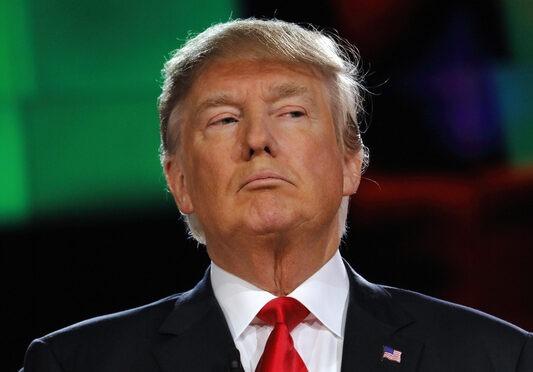
Diplomatic efforts to salvage a fragile ceasefire between the United States and Iran came under severe strain over the weekend as President Donald Trump issued stark threats late Friday U.S. time and Iranian officials accused Washington of breaching last month’s preliminary agreement.
Iranian Foreign Minister Abbas Araghchi traveled to Oman early Saturday to pursue negotiations with the sultanate, which has served as a central mediator in attempts to halt the conflict. But those talks unfolded against the backdrop of Trump’s warning that the United States would “decimate and destroy” Iran if Tehran acts on threats to kill him.
Writing on Truth Social, Trump announced that “1,000 Missiles are Locked and Loaded and aimed at the Islamic Republic of Iran” if assassination attempts were made against him. He added that military orders were already in place, valid for one year with possible extension, authorizing strikes to “completely decimate and destroy all areas of Iran.”
Toll Proposals Under Review
According to a senior Middle East diplomat familiar with the negotiations, France and the United Kingdom are reviewing proposals drafted by Oman that could permit the charging of navigational fees in the Strait of Hormuz. The plan would work only if the tolls were not compulsory and won the backing of the United Nations’ International Maritime Organization (IMO), the body that regulates sea transport.
The strait has been at the center of the crisis. Shipping traffic through the waterway effectively ground to a halt after fighting broke out, as Iranian military action cut off critical petroleum shipments from the region and sent oil prices soaring. Under the interim deal, Iran promised safe passage to commercial vessels and agreed not to charge tolls for 60 days, while the United States lifted its naval blockade and temporarily removed sanctions on Iranian oil sales.
That arrangement has proved brittle. Iran’s Islamic Revolutionary Guard Corps Navy shut down the strait indefinitely following a warning shot fired at a commercial ship, insisting that ships were entitled to safe passage only if they used a northern route through Iranian territorial waters. Washington answered by reimposing its blockade on Iranian ports following the attacks in the strait.
New Sanctions Trigger Iranian Backlash
Trump’s warning came as the U.S. Treasury Department imposed sanctions on an alleged Iranian financier. Iran responded Saturday by declaring that the new financial measure violated the preliminary agreement the two warring nations reached last month.
The outburst came after a week of renewed fighting and mounting fears that a fragile ceasefire could collapse. It also arrived on the heels of reporting earlier in the week that Israel had shared intelligence pointing to an alleged Iranian plot against Trump’s life.
Trump’s rhetoric echoed language he has used before. During an exchange with reporters on Feb. 4, 2025, as he signed an executive order calling for maximum pressure on Tehran, he told advisers he would obliterate Iran if it assassinated him, warning nothing would remain. The consistency of that threat has become a defining feature of his posture toward Iran.
A War That Killed Iran’s Supreme Leader
The threats stem from a conflict that has already resulted in the death of Iran’s supreme leader, Ayatollah Ali Khamenei, killed in a U.S. airstrike early in the war. Large crowds attended his burial Thursday at the Imam Reza Shrine in Mashhad, Iran, where some mourners displayed banners reading “We Will Kill Trump,” a chilling display that underscored the depth of Iranian anger.
His son and successor, Mojtaba Khamenei, pledged retribution for those killed in the American strikes. In a post on X, the new supreme leader said the demand for vengeance was one the nation was making, and that it must be carried out. He has not appeared in public since the Feb. 28 attack that killed his father and other family members at the start of the war.
Diplomacy in Oman as Tensions Simmer
Trump’s remarks, delivered from Truth Social days after he spoke at the NATO Summit at the Presidential Complex in Ankara, Turkey, on July 8, added a volatile new element to an already precarious moment. With diplomatic talks underway in Oman, the president’s vow to unleash overwhelming force sat uneasily beside the negotiations. For now, the two tracks — negotiation and threat — advance in parallel, each shadowing the other.
The dispute over the tolls has become a flashpoint in the broader standoff. The proposals now under study by France and the United Kingdom represent an attempt to find a formula acceptable to all sides, but the fragility of the ceasefire has repeatedly threatened to unravel any progress.
