
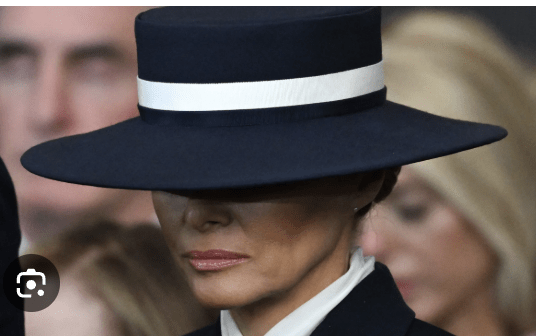
A newly published book about President Donald Trump’s second term discloses that the president quietly rearranged decorating choices made by First Lady Melania Trump while she was away from the White House — and that was far from the only time her wishes were overruled inside the executive mansion.
“Regime Change: Inside the Imperial Presidency of Donald Trump,” released Tuesday, June 23, 2026 by New York Times reporters Maggie Haberman and Jonathan Swan, chronicles tensions between the president and the first lady over everything from overnight guests to construction projects. The book reports that Trump and Melania Trump maintain separate bedrooms, and that the president has moved items she placed in shared spaces into his own second-floor room.
Among the book’s most striking revelations: Elon Musk, then-head of the Department of Government Efficiency, asked Trump for permission to sleep at the White House. The president said yes. Melania Trump objected. She was overruled, and Musk spent several nights in the Lincoln Bedroom.
An Invitation on Air Force One
Musk later described the arrangement as spontaneous. Trump asked him where he planned to stay while the two men were aboard Air Force One, and when Musk said he hadn’t decided, the president invited him and gave him a tour of the historic Lincoln Bedroom. Musk told reporters in May 2025 that he had stayed at the White House “more than once.” He clarified that none of it was his idea. “I didn’t request it, to be sure,” he said.
The book reveals Musk didn’t always stay in the Lincoln Bedroom. He sometimes stayed with friends in the area, and at other times the richest man in the world told people he had used a sleeping bag to sleep on his Eisenhower Building office floor.
Late-Night Ice Cream and Hospitality
Trump sometimes phoned Musk late at night with invitations to go get ice cream from the White House kitchen, according to the book. Musk recalled consuming an entire container of caramel Häagen-Dazs and quipped that Robert F. Kennedy Jr. shouldn’t find out. “He’s actually a very good host,” Musk said.
But the overnight visits became a point of contention between the president and first lady. The sleepovers occurred while Musk was arguably one of the most controversial unelected figures in Washington.
Controversy at the Department of Government Efficiency
As head of DOGE, Musk oversaw sweeping workforce reductions and reallocated funds already approved by Congress. According to the book, he came across as “unhinged,” and his presence rankled officials beyond the first lady. White House Chief of Staff Susie Wiles was critical of Musk, and senior cabinet members — Secretary of State Marco Rubio, Veterans Affairs Secretary Doug Collins, and Transportation Secretary Sean Duffy — confronted him in March 2025, angry that he had overstepped into their agencies.
One outside Trump adviser said moving fast and breaking things was acceptable, but doing so without agency buy-in was problematic. A second adviser questioned how many workers were terminated over a weekly reporting requirement before concluding the administration was ready to move on from that chapter.
The drug questions that shadowed Musk’s White House tenure resurfaced alongside the book. The New York Times had reported in May 2025 that Musk’s drug use “went well beyond occasional use” — that he told people he was taking so much ketamine it was affecting his bladder, a known effect of chronic use, and that he also took Ecstasy and psychedelic mushrooms and traveled with a daily medication box holding roughly 20 pills, including some bearing the markings of the stimulant Adderall. The Times noted it was unclear whether he was using those drugs while working at the White House. Chief of Staff Susie Wiles — quoted in a December 2025 Vanity Fair profile — described Musk as “an odd, odd duck” and called him “an avowed ketamine user.” Musk has denied the reporting, saying he does not use drugs.
Musk left DOGE at the end of May 2025. His four months in the role succeeded in closing certain agencies and reducing federal headcount, but his department’s broader efficiency goals fell short, and several of his signature policies were quietly abandoned after he departed.
A Falling Out and Reconciliation
The relationship between Trump and Musk did not survive the departure intact. Musk publicly criticized Trump and attacked him over the Epstein files. It was a sharp departure from late-night ice cream runs and Lincoln Bedroom tours.
The two appear to have mended fences with Musk joining Trump on his whirlwind trip to China. Their renewed closeness has drawn fresh attention to Musk’s financial interests: the initial public offering of his SpaceX company was expected to deliver significant gains to people in the Trump administration, and the IPO helped push Musk’s net worth into trillionaire territory — though SpaceX’s stock price has since retreated. Whether Musk has any future sleepovers planned remains an open question.
More Friction Over Residence Decisions
The Musk sleepover was far from Melania’s only friction point with her husband’s freewheeling approach to the residence. Haberman and Swan write that the first lady considered her first-term Rose Garden redesign — with its limestone border and white and pastel roses — one of her proudest achievements, and was “very unhappy” when the president moved to pave it over for a Mar-a-Lago-style patio; the two eventually compromised, replacing the grass with stone tiles while leaving the rosebushes intact.
A larger dispute, mentioned in the book, concerned the ballroom: Melania Trump repeatedly objected to its size and location and to living in a construction zone, but lost the fight when Trump ordered the October 2025 demolition of the East Wing — the traditional home of the first lady’s offices — to make way for the expansion. The book also recounts how a gold-framed mirror Melania Trump had made the centerpiece of her Queens’ Bedroom redesign was relocated to a White House colonnade, where it became known as the “selfie” mirror.
According to the book, Trump has used super glue to make his own modifications to the Oval Office.
