
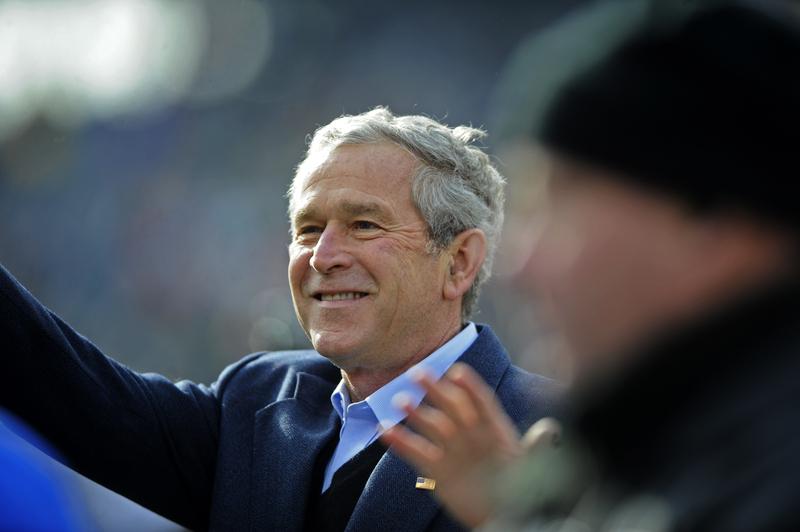
A blockbuster investigation published June 8, 2026, has thrust former President George W. Bush’s Department of Justice into the long-running scandal surrounding convicted sex offender Jeffrey Epstein, raising fresh questions about how the financier escaped serious federal prosecution nearly two decades ago.
The Daily Beast report, written by investigative journalist Catherine Bouris, zeroes in on former Palm Beach Police Chief Michael Reiter, the local cop who opened the first criminal probe into Epstein’s conduct in the mid-2000s. The report builds on earlier Pulitzer Prize-winning reporting by Miami Herald journalist Julie K. Brown, whose work helped force the case back into the public eye and led directly to Epstein’s arrest in 2019.
The latest piece introduces previously unreported details — most notably that then-Miami U.S. Attorney Alex Acosta began negotiating a secret plea deal with Epstein in 2007, one year after the financier was arrested for felony solicitation. By that point, Reiter and his investigators had built what they believed was an overwhelming case. They interviewed roughly two dozen distraught girls and their parents, but were met with resistance from state prosecutors and criticism in the press, then ultimately excluded when federal prosecutors assumed control of the case.
A Police Chief Pushed Aside
Alarmed by complaints from parents of Epstein’s victims, Reiter pressed for a face-to-face meeting with Acosta — the same Acosta who would later serve as labor secretary during President Donald Trump’s first term. Reiter recalled telling the U.S. attorney that he simply wanted him “to live up to the principles that you espoused when you were sworn in.”
The chief, according to the report, then pressed Acosta on the basic math of the case.
The chief said he had asked who ultimately had the authority to decide whether Epstein would be federally prosecuted, noting that his department had handed the matter over after doing most of the work. He recalled that an assistant U.S. attorney told them she typically secured about ten years per count, that there were roughly 100 counts and about two dozen cooperating victims, and he pressed to know whose decision it was. According to the chief, Acosta initially did not respond, and when the chief pressed further, suggesting Epstein’s lawyers were manipulating the U.S. attorney’s office, Acosta explained that guidance was coming from Main Justice and that the defense attorneys had been highly effective in delaying the case.
The Trail to Main Justice
That phrase — “main justice” — is the detail likely to reverberate longest. It refers to the Department of Justice headquarters in Washington, D.C., which during Bush’s presidency was overseen by Attorney General Alberto Gonzales. The reference suggests that decisions about Epstein’s fate were not made solely in Miami, but were being shaped, or at least influenced, at the highest levels of the federal government.
The Daily Beast reported that it contacted both the Department of Justice and George W. Bush’s office seeking comment.
The ultimate outcome of the federal involvement is well known and remains stunning in its leniency. Epstein pleaded guilty to two counts of solicitation, even though law enforcement agencies had identified as many as 40 potential victims. An indictment on charges of trafficking minors did not come until 2019, more than ten years after Reiter first raised concerns in Palm Beach.
Acosta’s Path to the Cabinet
Epstein’s name surfaced again years later, when Acosta was being vetted by the Trump transition team for the labor secretary post. Transition officials, the report says, asked him bluntly, “Is the Epstein case going to cause a problem [for confirmation hearings]?”
Acosta’s reply, as he himself relayed it: “I was told Epstein ‘belonged to intelligence’ and to leave it alone.” He was confirmed anyway and served in Trump’s Cabinet for two years before resigning amid renewed scrutiny of the 2007 plea deal.
A System That Failed
For Reiter, the implications of the report extend far beyond any single official. He told the Daily Beast that Epstein’s ability to operate unchecked for so long — protected by a circle of powerful figures he had carefully cultivated — represented the worst failure of the criminal justice system in recent memory.
The report, building on Brown’s earlier groundbreaking journalism, lands at a moment when public appetite for accountability in the Epstein and Ghislaine Maxwell cases remains intense. Reiter’s account, delivered in his own words for the first time, places a former president’s Justice Department squarely in the frame — and raises the uncomfortable possibility that the road from a Palm Beach police station to a Manhattan jail cell ran straight through Washington.
