
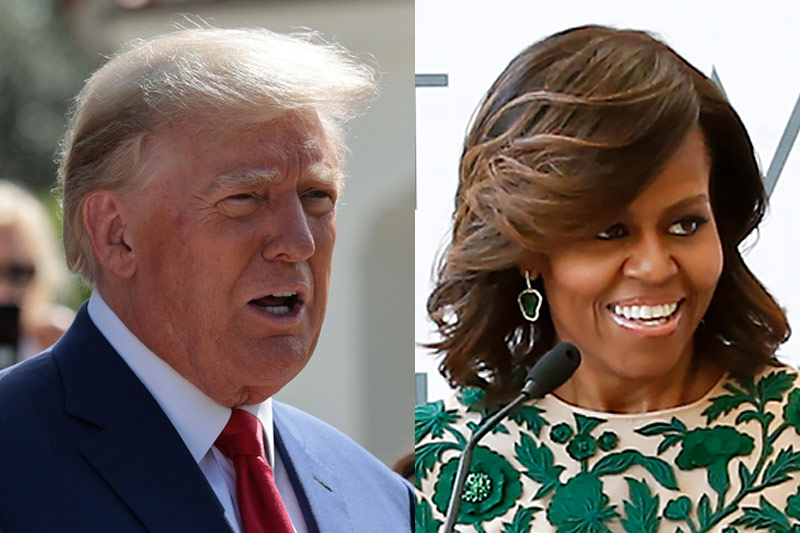
In a recent podcast interview, former first lady Michelle Obama delivered a warning to Democrats still grappling with the political landscape: don’t dismiss the millions of Americans who voted for President Donald Trump.
Speaking on “Talk Easy with Sam Fragoso,” Obama described feeling “deeply, deeply disappointed” by Trump’s victories in both 2016 and 2024, but said she cannot resent the voters who made those outcomes possible. The results, she argued, reflect something deeper than ideology — a country where the building blocks of middle-class life, from housing to healthcare, continue slipping beyond reach, leaving people exhausted and desperate for change.
A Different Read on Anger
When Fragoso asked Michelle how her emotions when her husband won the presidency compared with her reaction when Trump won his, she didn’t dodge. The 2016 and 2024 elections, she said, had so much to do with “people’s pain and confusion” about their own lives.
Then she went further, describing Americans who feel they are doing everything right and still falling behind. The country, she said, once offered more of the basics to more of its people. That is becoming less and less true. When voters watch the rules reward someone else, anger follows — and anger, she added, makes people susceptible to finding someone to blame other than those actually responsible.
“That’s true that anger, you know, I can’t look some people in the face and tell them, ‘You have no right to be angry or to do something that maybe is against your own interest,'” she said, describing Americans “falling through the cracks.”
The Obama-Trump Voter Puzzle
The former first lady reserved particular attention for one slice of the electorate that has long fascinated political analysts: voters who pulled the lever for Barack Obama twice and then for Trump. That crossover, she suggested, isn’t a contradiction so much as a cry for change.
“Many of the people who voted for my husband twice — twice!” she said, marveling at the pattern. Their motivation, as she described it, wasn’t tribal loyalty or hardened ideology. It was a hunger for something — anything — different from a system they no longer trust to deliver. Voters of all races and from every corner of the country, she noted, from cities to rural counties to farms, share that frustration. People like her own father, she said, are watching the ground shift beneath them.
That framing, detailed in her remarks, runs counter to a strain of post-election analysis on the left that has cast Trump’s coalition primarily through the lens of cultural grievance or prejudice. Obama pushed firmly against that interpretation.
A Warning to the Left
Obama urged liberals to resist the temptation to dismiss Trump supporters as bigots or extremists. Pigeonholing them, she suggested, isn’t only wrong — it’s politically self-defeating.
“You can’t just pigeonhole them and say, ‘You just don’t care, and you’re racist’ or whatever you’re thinking. This is an act of ‘I don’t know what else to do,'” she said.
It was, in effect, a plea for a different posture: less lecturing, more listening. The voters who shifted toward Trump are not lost causes, she argued, but neighbors making bad choices because they cannot find good ones. They are, she said, good people without a way out.
Where the Party Goes From Here
If Obama offered a diagnosis, she also gestured at a prescription. The path back, she said, runs directly through the kitchen tables of working- and middle-class Americans — the people she described as drowning in the current economy. She wished aloud for more leaders willing to do the unglamorous work of figuring out how to make their lives easier.
“It’s not me anymore,” she said, signaling once again that she has no intention of running for office. But she added that she still knows those folks, still considers them good people, and still believes their inability to find a way out makes for bad choices.
Her message, delivered with unusual frankness for a figure who has largely avoided the political fray since leaving the White House, lands at a moment when many Democrats are still searching for an explanation — and a path forward.
Obama spoke publicly earlier this year at the SXSW Conference and Festival in Austin, Texas, a rare high-profile appearance that hinted at the more philosophical phase she now occupies. The Fragoso conversation, recapped in coverage of the episode, fits that arc — less a partisan broadside than an attempt to translate disappointment into a vision for what comes next.
Whether her party is in a mood to hear it remains an open question. Democrats have spent much of the past 18 months litigating who and what to blame for 2024. Obama’s answer is uncomfortable in its simplicity: the economy broke faith with too many people, and until leaders fix that, the politics will keep delivering results the left does not want.
Her closing thought wasn’t a rebuke. It was something closer to recognition — that empathy, not condescension, is the only place a rebuild can start.
