
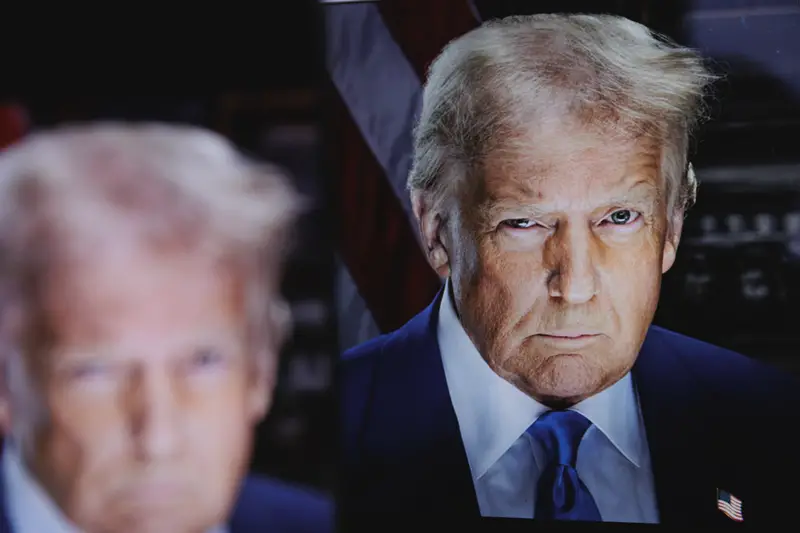
President Donald Trump, 79, became increasingly agitated with his senior national security team during tense Situation Room talks last week about possible military action against Iran, according to new details shared by his longtime biographer.
The session included Vice President JD Vance, Secretary of State Marco Rubio, Joint Chiefs Chairman Gen. Dan “Raizin” Caine, CIA Director John Ratcliffe, and White House Chief of Staff Susie Wiles. Author Michael Wolff described the event as a “very typical Trump meeting” during his podcast “Inside Trump’s Head.”
Wolff explained to co-host Joanna Coles that Trump “asked for analysis and then brushed it off. He wanted solutions but grew annoyed when no one could offer a straightforward plan. Then he pushed—demanded—guarantees of victory and lashed out at the generals and experts who could not provide them.”
According to The Daily Beast and other outlets, Trump assembled the high-level meeting as tensions with Tehran rose. The administration is weighing both an immediate strike on Iran in the coming days and a larger operation later this year if Iran refuses to halt its nuclear program.
Gen. Caine urged restraint during the talks, cautioning about major risks such as potential casualties, weakened air defenses, and an already strained military. His sober analysis reportedly clashed with Trump’s insistence on absolute certainty of success, fueling the president’s irritation. The Washington Post noted that Caine specifically highlighted shortages in key munitions and a lack of allied backing as major hurdles to any operation.
The disclosures prompted what observers described as a Truth Social outburst from Trump in response to the media reports. The president later tried to downplay concerns about military preparedness, posting that Gen. Caine “would like not to see War but, if a decision is made on going against Iran at a Military level, it is his opinion that it will be something easily won.”
The Situation Room dispute is just one of several flashpoints during a turbulent period for the administration. In his State of the Union address on Tuesday evening, Feb. 24, Trump shifted focus to domestic issues, calling for a ban on congressional insider trading.
The president urged the full Congress to “ensure that members of Congress cannot corruptly profit from using insider information” and pressed lawmakers to “pass the Stop Insider Trading Act without delay.”
The appeal drew an unexpected standing ovation from Sen. Elizabeth Warren, prompting Trump to take a jab at former House Speaker Nancy Pelosi. “They stood up for that. I can’t believe it. I can’t believe it. Did Nancy Pelosi stand up if she’s here? Doubt it,” he remarked.
Pelosi, who has faced questions over stock transactions by her husband that have aligned with major market changes, holds a net worth of more than $269 million according to estimates by Quiver Quantitative, placing her among Congress’s wealthiest members.
In December, another heated Oval Office exchange emerged involving marijuana rescheduling. According to The Wall Street Journal, House Speaker Mike Johnson joined a Dec. 10 meeting via speakerphone and urged Trump to reject the move, calling marijuana “a gateway drug.”
Florida Sheriff Gordon Smith, who was present along with Dr. Oz and several others, called Johnson a “nice guy” but said Trump ultimately backed the pro-rescheduling side. Smith said Trump became so eager to reveal the decision that aides had to physically stop him from posting about it too early.
Smith told the Journal that aides “started yelling, ‘No sir, you can’t yet; there’s a 30-day period.'” He added that he was directed to help draft an executive order in another room, with Trump wanting to include the “real story of why we are doing this in the order.” Trump signed the order on Dec. 18.
Wolff’s podcast disclosures arrive as multiple news outlets, including Axios and The Wall Street Journal, report on the increasingly strained environment inside the administration as it grapples with several simultaneous crises.
