
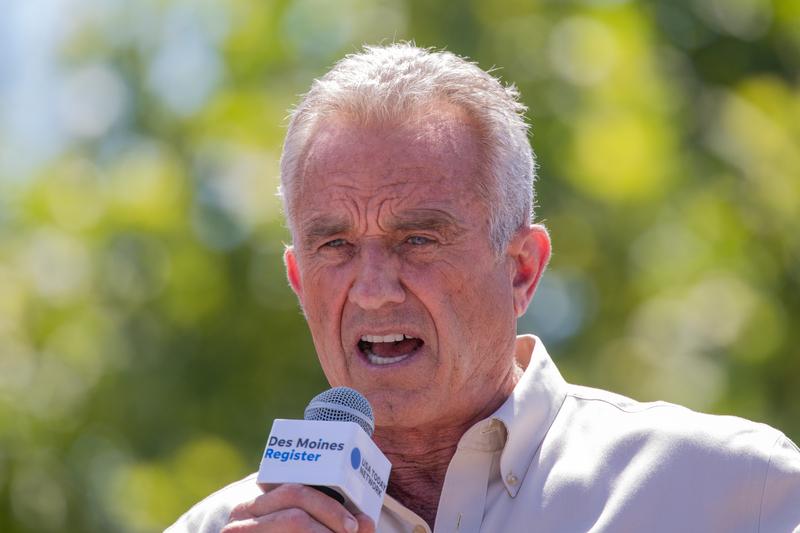
A federally appointed autism advisory panel restructured by Health and Human Services Secretary Robert F. Kennedy Jr. called off its initial public gathering mere days ahead of the scheduled date, while a competing coalition of researchers convened their own meeting instead. The abrupt cancellation, made public on March 7, 2026, without any clarification from HHS, marked the most recent point of contention in an ongoing dispute spanning several months regarding Kennedy’s effort to shift federal autism research focus toward the thoroughly disproven theory linking vaccines to autism.
The Department of Health and Human Services revealed on Tuesday, January 28, 2026, that 21 fresh appointees joined the Interagency Autism Coordinating Committee, a governmental body that provides guidance on distributing approximately $2 billion in yearly autism research and service funds. The extensive modifications removed every prior public participant who qualified for another term.
“These public servants will pursue rigorous science and deliver the answers Americans deserve,” Kennedy said of the new members.
The updated membership features multiple individuals with track records of advancing vaccine doubt, including the person who established the Autism Action Network and a researcher affiliated with the Brownstone Institute for Social and Economic Research.
Noticeably missing from the reformed committee were delegates from well-established research and advocacy entities such as the Simons Foundation and Autism Speaks, organizations that have propelled significant scientific advancement in comprehending autism throughout the last 20 years.
The omission of these entities triggered an immediate reaction. On March 3, an alliance of distinguished researchers — numerous of whom were previous federal committee participants removed by Kennedy — established the Independent Autism Coordinating Committee to formulate its own science-driven research priorities. The organization set its first meeting for March 19, identical to the date when the governmental IACC was expected to conduct its initial public gathering with the new composition. After the official body suddenly called off that session on March 7, offering no justification, the independent organization moved forward regardless.
David Mandell, a professor of psychiatry and autism researcher at the University of Pennsylvania who has served on the committee, warned that the bulk of new appointees “appear to be people who adhere to untested, disproven, and sometimes dangerous ideas about what causes autism and the best ways to care for autistic people.”
The committee’s transformation occurred as the Centers for Disease Control and Prevention (CDC) signaled its intention to support a research project investigating the extensively refuted connection between vaccines and autism.
Kennedy’s campaign had advanced even further in November 2025, when the CDC’s autism information page was revised to state that the assertion that vaccines do not trigger autism “is not an evidence-based claim.” Professional researchers were not informed. Disease control specialists and children’s doctors broadly criticized the modification.
Alison Singer, president of the Autism Science Foundation, who served three terms on the committee, called the new panel “a complete and unprecedented overhaul, with no continuity from prior committees and a striking absence of scientific expertise.” Joshua Gordon, former director of the National Institute of Mental Health who chaired the committee from 2016 to 2024, was equally blunt, telling The New York Times that not a single scientist he recognized as an expert in autism research made the list.
The selections also diminished participation for autistic individuals advocating for themselves. The updated committee contains merely three self-advocates, the lowest number mandated by statute, reduced from seven on the prior body. Sam Crane, a self-advocate and disability law expert who served two terms on the committee, criticized the lack of transparency in how the selections were made. Kennedy’s selection to oversee the restructured committee nevertheless caught some detractors off guard.
Dr. Sylvia Fogel, an instructor in psychiatry at Harvard Medical School, was selected to chair the new committee. She acknowledged that large-scale studies have not demonstrated a causal link between vaccines and autism.
The matter caused division among Congressional Republicans. Senate Health, Education, Labor, and Pensions Committee Chair Bill Cassidy, who cast a deciding vote to confirm Kennedy, warned that pursuing debunked theories “creates anxiety and a lot of self-recrimination.” Appropriations Chair Susan Collins, whose husband has a severely autistic son, said she did not think it was “helpful in any way to link it to vaccines, because the scientific evidence does not support such a link.”
A 12-month evaluation in February 2026 determined Kennedy had violated several confirmation commitments — reducing vaccine research expenditures, withdrawing NIH grants, and eliminating approximately $500 million in mRNA studies, all actions he had pledged to avoid.
One out of 31 children aged eight obtained an autism diagnosis in 2022, based on CDC statistics. Authorities credit a substantial portion of the increasing prevalence to enhanced detection methods and expanded diagnostic standards.
The dispute intensified additionally in mid-March 2026, when a federal magistrate in Boston halted Kennedy’s wider vaccine policy modifications, determining that the government had executed arbitrary and capricious actions that disregarded a well-established scientific procedure for creating vaccine guidelines. The government indicated plans to challenge the decision. The federal IACC has not yet set a new date for its postponed session. Meanwhile, the independent organization established by dismissed researchers persists in its efforts, with participants cautioning that, absent a change in direction, federal autism research strategy faces being redirected away from generations of scientific data and toward extensively discredited hypotheses.
