
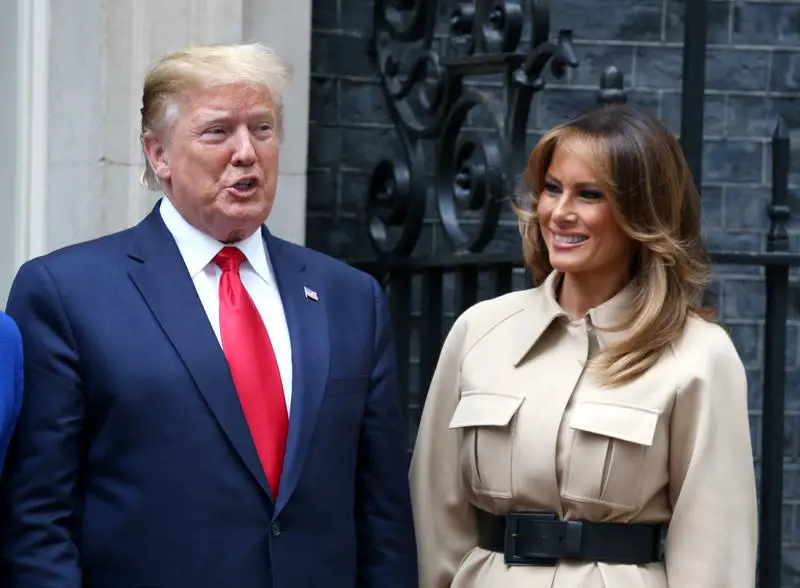
President Donald Trump has privately told First Lady Melania Trump that his administration’s tough immigration crackdown has become “election poison,” sources familiar with conversations between the president and senior aides say. The surprising concession comes as the commander-in-chief faces increasing calls to reform Immigration and Customs Enforcement (ICE) after a string of controversial raids that alarmed the country.
The admission follows violent confrontations in Los Angeles that broke out last year when ICE raids sparked clashes with police, leading Trump to send about 700 U.S. Marines from the Marine Corps Air Ground Combat Center Twentynine Palms to the city. Those troops joined National Guard units already assigned to protect federal employees and property in the greater Los Angeles region.
Over the last year, immigration enforcement has been reshaped under Gregory Bovino, the Border Patrol commander-at-large (a role that ended in January 2026), who emerged as the public face of the administration’s interior enforcement push. Congress approved roughly $178 billion for the Department of Homeland Security (DHS) through reconciliation—the largest single supplemental DHS funding package ever—funding aggressive operations nationwide.
The human toll has been significant. The deaths of Renee Good and Alex Pretti at the hands of ICE and Customs and Border Protection officers galvanized critics who argue the administration abandoned its pledge to target immigrants with criminal records. Both victims, 37-year-old U.S. citizens, were fatally shot in Minneapolis during Operation Metro Surge in January 2026.
“Immigrants, refugees, asylum seekers, and their allies are no longer safe,” said HIAS staff in a statement after the shootings.
The administration carried out a broad shake-up of ICE, replacing more than a dozen senior officials in various cities with leaders from Customs and Border Protection. Jason Houser, ICE chief of staff from 2021 to 2023, described the reorganization as politically driven rather than shaped by operational law enforcement needs.
“What’s unfolding under Bovino isn’t law enforcement. It’s political stagecraft directed from Washington, not the field,” Houser wrote in his analysis of the overhaul.
White House Deputy Chief of Staff Stephen Miller has been a key architect of the administration’s immigration agenda. He is now coordinating closely with the new Homeland Security Secretary Markwayne Mullin — confirmed by the Senate on March 22, succeeding Kristi Noem — and “border czar” Tom Homan. Miller convenes daily 10 a.m. calls demanding status updates from agencies and pressures senior officials whose performance he deems unsatisfactory. The trio advanced plans, including sending ICE agents to airport security lines during the current partial DHS shutdown and creating temporary detention sites to process thousands of migrants.
The enforcement push has reached nearly every part of the country. More than 400,000 people have been processed through an immigration detention system that has expanded substantially to support the administration’s target of one million removals per year.
The potential scale of deportations is enormous. Over 16.7 million people live with at least one undocumented family member, and about six million of those are children under 18. Undocumented adults account for nearly five percent of the workforce. The American Civil Liberties Union (ACLU) has urged cutting the size of the immigration detention system by at least 75 percent.
In Los Angeles, where recent clashes occurred, local leaders have clashed with federal officials over enforcement methods. California Governor Gavin Newsom has been a strong critic, calling the troop deployment a “serious breach of state sovereignty” and filing several lawsuits against the administration.
In San Antonio, Texas, community leaders rallied at City Hall on Feb. 20, 2026, to protest the administration’s tactics. Similar demonstrations have taken place in cities nationwide—from Atlanta to New York City—as news of the enforcement actions spread.
Community organizers have mobilized across the country, partnering with advocacy groups like HIAS to provide aid and support to immigrant families facing detention or deportation. In Minneapolis, thousands attended candlelight vigils after the Good and Pretti shootings.
Naureen Shah, ACLU director of policy and government affairs for immigration, called sending ICE agents to airports an unprecedented escalation. ICE agents were deployed to more than a dozen airports, including JFK, Atlanta, New Orleans, and Phoenix, after Trump ordered the move amid a partial DHS shutdown that left TSA workers unpaid since February 14, causing mass absences and long security lines. Trump glibly said the agents could make immigration arrests at airports, calling them “very fertile territory.”
The airport deployment has added pressure on Congress to end the six-week partial DHS shutdown. Democrats have withheld funding, demanding ICE reforms after the Minneapolis shootings, while Republicans have blocked piecemeal funding bills. Senators from both parties expressed guarded hope that a deal separating ICE funding from the larger DHS package could be reached by the end of the week.
Vice President JD Vance has largely stayed out of the public debate, though sources say he has privately voiced worries about the political consequences. The administration’s approval on immigration has fallen sharply since early 2026, with polls showing rising unease among even Republican voters about the tactics used.
With Trump approaching his 80th birthday in June, he faces a pivotal choice about whether to maintain the current enforcement strategy or adopt a different path. His remark to Melania indicates he sees the political risk, but turning that awareness into policy would mean abandoning the hardline approach that has defined his presidency.
For millions of immigrant families, the consequences could not be more consequential.
