
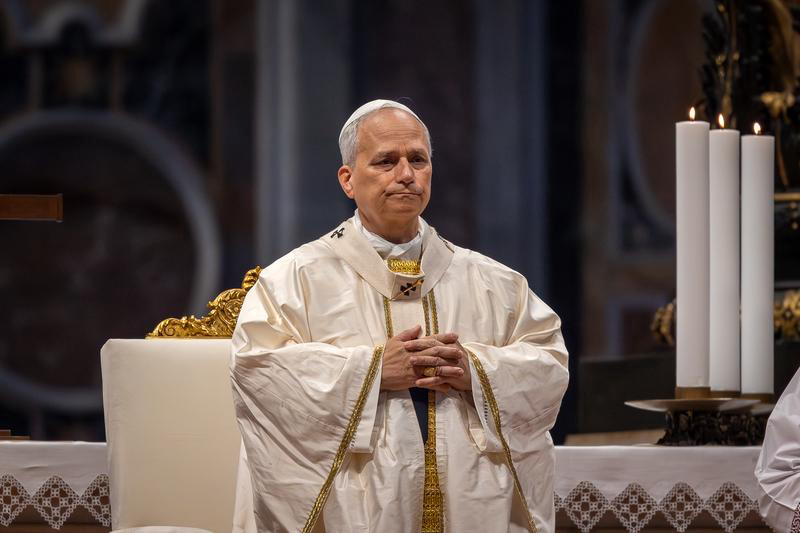
Pope Leo XIV delivered his strongest criticism yet of the escalating Middle East violence on Sunday, March 15, 2026, calling for an immediate ceasefire and insisting that force cannot create enduring peace. The 70-year-old pontiff, the first American pope, referenced a catastrophic missile strike on an Iranian girls’ elementary school that killed more than 165 people, most of them children.
Speaking from the Vatican to tens of thousands in St. Peter’s Square after his Sunday noon blessing, Pope Leo XIV made remarks aimed at those who can halt the violence, though he did not explicitly name the United States or Israel. “Cease fire so that avenues for dialogue may be reopened,” he said. “Violence can never lead to the justice, stability, and peace that the people are waiting for.”
The emotional address was the most pointed statement yet from the Chicago-born pontiff, who has grown more forthright on international conflicts since his election on May 8, 2025. In the first fortnight of the U.S.-Israeli war on Iran, Leo had generally offered measured calls for diplomacy—apparently to avoid being perceived as an American political counterpoint to President Donald Trump.
His comments extended beyond the immediate crisis to the broader themes of human dignity that have marked his brief papacy. Born Robert Francis Prevost in Chicago in 1955, he served for years as a missionary in Peru before becoming Bishop of Chiclayo and later Prefect of the Dicastery for Bishops under Pope Francis. Observers say his American roots combined with long Latin American experience make him “a bridge builder” with a global perspective.
The Minab school strike has drawn worldwide outrage and amplified calls for diplomacy. The February 28 attack hit Shajareh Tayyebeh Primary School in southern Iran during morning classes, devastating families and prompting emergency U.N. sessions. Early U.S. military probes suggest a Tomahawk cruise missile likely struck the school after outdated intelligence misidentified it as a military target.
The Vatican has not outlined concrete policy measures, but the Pope’s Sunday words clarified his position. He offered prayers and solidarity with families who lost relatives in attacks “which have hit schools, hospitals and residential centers.” The Vatican paper L’Osservatore Romano published an aerial image of mass graves of young victims under the headline “The Face of War.”
Dr. Charlie Gillespie, a professor at Sacred Heart University, told PEOPLE after the May 2025 election that selecting Leo XIV signaled “a clear signal that the College of Cardinals felt the calling of the spirit to elect someone for the whole globe.” That global outlook has become more evident as the Pope speaks more decisively on international crises.
By adopting the name Leo XIV the Pope paid homage to Pope Leo XIII, the late-19th-century pontiff associated with social justice whose encyclical Rerum novarum influenced modern Catholic social teaching. Vatican insiders said the name choice referenced the lives and labor of men and women, significant amid an era shaped by artificial intelligence. The earlier Pope Leo I, “Leo the Great,” is remembered for persuading Attila the Hun to retreat in 452, showing how moral authority can shape geopolitics.
The address arrives as Pope Leo XIV approaches his first anniversary. Since his election, he has kept ties to his Midwestern background while undertaking global responsibilities. He is a White Sox fan who still reportedly does the New York Times’ Wordle each morning, uses a plainspoken style, speaks to cardinals in his flat-voweled English, and stays in regular phone contact with family.
His brother Louis Prevost, who described himself as a “MAGA type,” previously said his brother is “much more liberal” but expected him to steer the papacy “down the middle.” That assessment appears more nuanced as the Pope tackles contentious issues from Middle East violence to immigration and the death penalty.
The Pope’s intervention could affect U.S. foreign policy under President Trump. Although Leo has tried to keep his remarks indirect and nonpartisan, some U.S. cardinals and the Vatican secretary of state have been more explicit. Cardinal Robert McElroy of Washington called the war morally unjustifiable. Chicago Cardinal Blase Cupich criticized the White House for using video-game-style imagery in war-related social media posts as “sickening.”
As the first American pope, Leo XIV occupies a unique role. His words carry extra weight in the United States, where many Catholics wrestle with aligning faith and national military actions. The Pope’s Sunday message urged Americans to consider whether their country’s policies reflect the values of life and human dignity they profess.
Vatican observers expect Pope Leo XIV to continue pressing for a diplomatic resolution in the Middle East. Cardinal Pietro Parolin, the Vatican secretary of state, said the Holy See remains in conversation with all parties. “When necessary we speak also with the Americans, with the Israelis,” Parolin said, “and show them what to us are the solutions.”
