
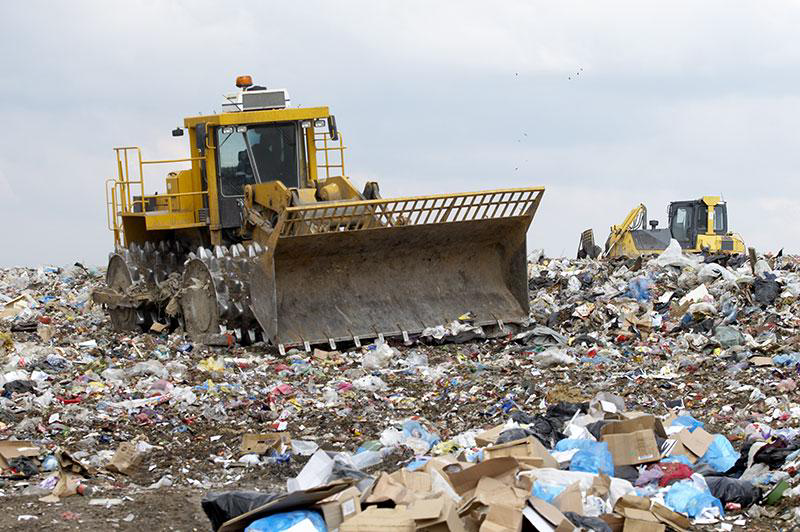
Rescue efforts have officially concluded at Indonesia’s Bantargebang Integrated Waste Treatment Facility after a massive garbage slide killed seven people on Sunday, March 8, 2026, marking a somber end to a two-day recovery operation at the nation’s largest landfill.
The fatal collapse occurred Sunday morning at the vast dump in Bekasi, just outside Jakarta, when heavy overnight rain triggered a sudden slippage of trash and debris. The slide buried workers who were on duty or resting nearby as tons of waste swept down unexpectedly, engulfing several garbage trucks and small food stalls.
Desiana Kartika Bahari, head of Jakarta’s Search and Rescue Office, said the search wrapped up Tuesday after teams recovered the seventh victim from the landfill. The victims were truck drivers and food stall operators who had been at the site. Six people survived.
“We received information from police that two among those missing were safe and had returned to their homes,” Bahari told reporters Tuesday, March 10.
Over 200 rescuers worked nonstop using excavators and thermal drones to find victims during the intensive operation. Photos and videos released by the National Search and Rescue Agency showed teams searching through huge mounds of trash while heavy equipment carefully dug through the waste in hopes of finding survivors.
Opened in 1989, the Bantargebang site is Indonesia’s largest waste disposal facility. Covering 110 hectares, the landfill accepts between 6,500 and 7,000 tons of garbage each day from Greater Jakarta and has accumulated roughly 55 million tonnes of waste over the years. Authorities have long targeted the facility for environmental reforms as they struggle to handle the enormous volume of waste from a metro area of about 32 million people.
This was not the first deadly event at the site. Past landslides have caused fatalities, including a 2006 collapse that killed three scavengers. In January 2026, another slide pulled three garbage trucks into a riverbed, foreshadowing Sunday’s larger disaster.
Thousands of nearby residents work informally as waste pickers at Bantargebang, sorting trash to find recyclables they can sell for a small income. An estimated 3,000 pickers live and work at the site daily, contributing nearly 10 percent of the facility’s non-organic recycling. Sunday’s catastrophe highlighted the dangerous conditions these workers face.
The facility has repeatedly been warned about capacity issues, and the site has been described as “overwhelmed” by the amount of waste it receives. In late 2025, the government set a two-year deadline to clear Bantargebang via an accelerated waste-to-energy project intended to reduce dependence on open dumping.
The deadly collapse has renewed scrutiny of Bantargebang and similar sites across Indonesia. Environment Minister Hanif Faisol Nurofiq visited the scene Sunday evening and placed responsibility squarely with local authorities.
“Bantargebang belongs to the Jakarta administration, so they have to take responsibility,” Hanif told broadcaster Kompas TV. “This incident must truly serve as a bitter lesson for us so that Jakarta can promptly make improvements.”
His remarks reflect mounting pressure on Indonesian officials to fix long-standing waste management problems affecting the country’s cities. President Prabowo Subianto warned last month that most of Indonesia’s landfills—being gradually phased out—are projected to exceed capacity by 2028.
Environmental group Walhi said Sunday’s disaster was at least the fifth trash avalanche in Greater Jakarta in the past six months, highlighting severe capacity issues at disposal sites. The organization urged the city to cut waste at the source and enforce extended producer responsibility measures.
The incident underscores the hazardous working conditions for thousands of waste workers across Southeast Asia, where informal waste picking is a primary livelihood for many poor families. These workers often climb unstable piles of trash without protective gear or training.
Heavy rainfall has increasingly threatened landfill stability across the region, as poor drainage and inadequate design create conditions for catastrophic failures. The overnight rain that triggered Sunday’s slide saturated the towering waste piles, causing them to lose structural integrity and collapse.
Indonesia has grappled with waste management issues for decades, as fast urban growth and population increases have outpaced infrastructure. Jakarta alone produces thousands of tons of trash daily, much of it going to sites like Bantargebang, which was built on former rice fields chosen for low-cost land rather than long-term suitability.
The incident bears chilling similarities to other recent landfill disasters in Asia. In January, a garbage slide at the Binaliw landfill in Cebu City, Philippines killed 36 people—mostly sanitation workers—and became one of the deadliest industrial tragedies in that city’s history.
Indonesian officials face rising pressure to overhaul waste management, moving beyond piling trash into ever-larger mounds and toward sustainable solutions that protect workers and the environment. The government has announced plans to build 10 waste-to-energy incinerators nationwide as part of a plan to have 33 operational plants by 2029—but whether these measures will come soon enough to prevent another disaster remains unclear.
