
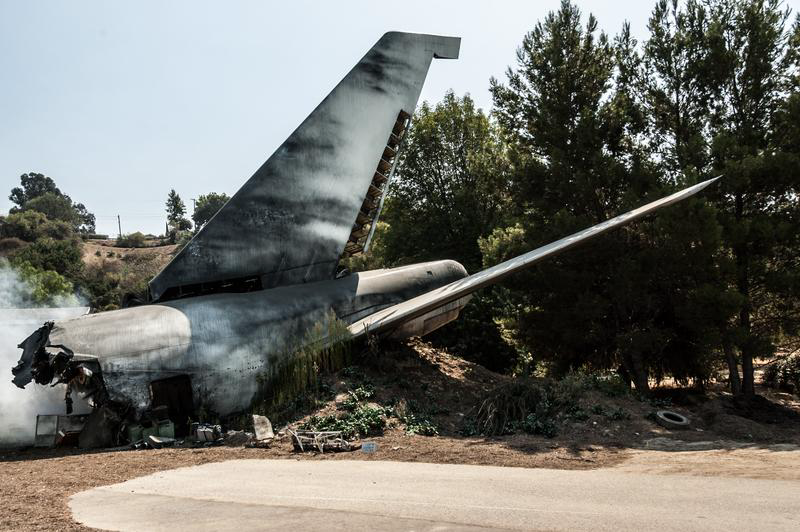
A Bolivian Air Force C-130 Hercules cargo aircraft crashed near La Paz on February 27, 2026, resulting in 24 deaths and scattering millions of dollars’ worth of newly printed banknotes across a highway. The incident triggered chaotic scenes as thousands of people rushed to grab the cash while rescue teams searched the wreckage for survivors.
The military plane veered off the runway at El Alto International Airport at about 6:15 p.m. local time after a flight from Santa Cruz. It overran runway 28, broke through the airport fence, and tore onto Costanera Avenue—a major roadway crowded with evening commuters. The aircraft collided with at least 15 vehicles, including private cars, buses, and cargo trucks, before splitting apart, according to authorities. It was carrying freshly printed Bolivian currency that had not yet been released into circulation.
Air Force Commander General Sergio Lora stated that eight crew members were on board, “including cargo personnel and flight crew.” One crew member died, while the other seven survived with severe injuries. The remaining 23 victims were people on the ground, including four children who were riding in vehicles crushed during the crash. More than 37 others were hurt, most of them passengers on public buses traveling along the avenue when the aircraft broke through.
Witnesses described dangerous weather at the time. A woman whose vehicle was hit said a heavy hailstorm and lightning were occurring when the plane descended. The surviving pilot later told investigators the runway was icy and the aircraft’s brakes failed, according to his lawyer.
The disaster quickly turned into chaos. When bundles of banknotes spilled from the damaged cargo hold, an estimated 20,000 people rushed toward the scene. Police used tear gas and water cannons in attempts to disperse crowds who were reportedly trampling through debris where emergency responders were still searching for victims. More than 500 soldiers and 100 police officers were deployed to secure the area.
Defence Minister Marcelo Salinas delivered a firm warning to those taking the cash, stating the money “has no legal value since it has not been issued by the Central Bank” and that possessing or using the bills is a criminal offense. He urged the public “to respect the mourning and grief we are experiencing at this difficult time.”
The turmoil escalated when journalists covering the crash were assaulted. The National Association of Journalists of Bolivia reported that a mobile TV truck was directly targeted, and other reporters were attacked with stones, sustaining serious injuries. The La Paz Prosecutor’s Office also received reports of businesses being looted by criminals taking advantage of the chaos, resulting in at least a dozen arrests.
Police and military forces eventually burned the boxes of cash at the scene in the presence of Central Bank President David Espinoza. The shipment—17 million banknotes worth 423 million bolivianos (around $62 million)—had come into Santa Cruz from abroad and was en route to La Paz. Authorities believe that nearly 30 percent of the notes were stolen before the site could be secured.
The aftermath caused significant financial confusion nationwide. The Central Bank suspended the legal tender status of specific 10, 20, and 50-boliviano notes with serial numbers matching those in the crashed aircraft, leaving vendors unsure which bills were valid. Thousands of Bolivians queued at banks to exchange their money, and some merchants began refusing all Series B banknotes, including legitimate ones.
Fire crews were able to put out the flames that engulfed the plane after impact. El Alto International Airport was temporarily shut down, disrupting flights at one of the world’s highest and most challenging airports. Bolivia’s health ministry issued an urgent call for blood donations to help treat the injured, coordinated through the La Paz Regional Reference Blood Bank Hemocenter.
One man recounted how his sister narrowly survived. He told news outlets that she was in her vehicle when the plane crashed, and a detached aircraft tire struck her head. She was taken to a hospital for treatment.
The cause of the crash remains under investigation. A preliminary report indicated the plane was loaded to maximum capacity and that the delivery company was behind schedule, adding pressure to complete the flight. Investigators are searching for the black box and examining whether the aircraft’s weight, along with the extreme altitude of El Alto (13,325 feet above sea level), contributed to the overrun.
This tragedy is one of Bolivia’s worst aviation accidents in recent years. The aircraft was a 49-year-old Lockheed C-130H Hercules, tail number FAB-81, manufactured in 1977. El Alto, next to La Paz, presents unique aviation challenges due to its high altitude and unpredictable weather. Thin air reduces lift and engine performance, requiring specialized pilot training and longer runways for safe operations.
