
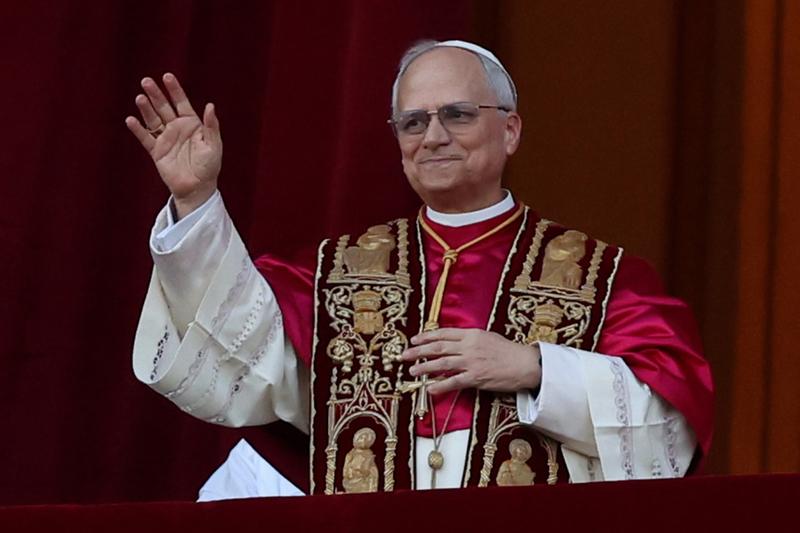
Pope Leo XIV issued a diplomatic criticism of President Donald Trump on Monday, Feb. 16, 2026, declining an invitation to join the administration’s contentious Board of Peace as the Vatican warned that the project might weaken the United Nations.
Cardinal Pietro Parolin, the Vatican’s Secretary of State and chief diplomatic authority, stated that the Holy See “will not participate in the Board of Peace due to its unique nature, which he said clearly differs from that of other nations.” The announcement came just three days before the board’s scheduled first meeting in Washington on Thursday, Feb. 19.
The pope, who leads a global community of 1.4 billion Catholics, received the invitation in January as Trump broadened the board’s mission beyond supervising Gaza’s temporary administration. Trump chairs the board with extensive veto authority and full discretion over which countries may join, presenting it as a platform to address international conflicts and oversee Gaza’s reconstruction after the Israel-Hamas war.
“One concern is that at the international level it should above all be the UN that manages these crisis situations,” Parolin told reporters. “This is one of the points on which we have insisted.”
The Vatican’s decision marks a notable diplomatic blow to Trump, who revealed the Board of Peace plans last fall and formally launched the organization last month during the World Economic Forum in Davos. White House press secretary Karoline Leavitt called the Vatican’s stance “deeply unfortunate,” defending the administration’s expansive plans for rebuilding Gaza.
“I don’t think that peace should be partisan or political or controversial,” Leavitt said. “This is a legitimate organization where there are tens of member countries from around the world.”
Pope Leo XIV, the first American pope, has become an outspoken critic of several Trump administration policies. He has frequently condemned civilian casualties and living conditions in Gaza following Israel’s response to the Hamas-led attack that killed roughly 1,200 people in Israel. The Board of Peace has pressed Hamas to disarm and has coordinated reconstruction plans, with Trump announcing $5 billion in commitments from board members for rebuilding efforts.
The Vatican’s unease mirrors reservations raised by several Western partners. Italy and the European Union planned to attend Thursday’s meeting as observers but have not joined. France, Denmark, Norway, Slovenia, Sweden, and the United Kingdom have either declined invitations or expressed strong doubts about the initiative.
Human rights observers have faulted the board’s design, arguing that Trump supervising a panel responsible for the governance of a foreign territory resembles a colonial structure. Critics also note the lack of significant Palestinian participation. Trump holds exclusive veto power and sole authority to invite members, and his role as chair has no defined term limit—the charter states he may remain indefinitely, even once out of office.
The board’s administrative headquarters functions out of the newly renamed Donald J. Trump Institute of Peace, previously the U.S. Institute of Peace. Russia, China, and Turkey were invited to join, though Russia announced this week it would not take part in Thursday’s summit. While some Middle Eastern partners have joined, most Western nations remain distant over concerns the board could undermine the U.N. system.
The Vatican maintains an extensive diplomatic network and holds the status of permanent observer at the United Nations. The pope rarely participates directly in such international boards, typically preferring established diplomatic pathways and the broader U.N. structure.
A senior Trump administration official told reporters that the Pope and Vatican “are welcome to join the many other nations who are committed to the Board of Peace,” though the official declined to elaborate on diplomatic exchanges.
President Trump held the board’s inaugural session on Thursday, Feb. 19, at the U.S. Institute of Peace in Washington, D.C., gathering representatives from over 40 countries for a three-hour summit centered on Gaza’s rebuilding and regional stability. Trump announced a $10 billion U.S. contribution, while other member states pledged roughly $7 billion more. Five nations—Albania, Indonesia, Kazakhstan, Kosovo, and Morocco—agreed to contribute troops for a 20,000-member International Stabilization Force, and Egypt and Jordan pledged to train 12,000 Palestinian police officers. The first deployment is expected to begin in Rafah in southern Gaza, where reconstruction will commence.
In his remarks, Trump also addressed rising tensions with Iran, saying a decision on potential military action would likely come within “10 to 15 days,” adding, “We may have to take it a step further, or we may not. Maybe we’re going to make a deal.”
The Board of Peace—described by Trump as a possible successor to the United Nations—was officially formed in January 2026 at the World Economic Forum in Davos, with 25 of 62 invited nations signing its founding charter.
The Vatican’s decision not to participate underscores mounting global friction over how to address the Gaza crisis and whether Trump’s new body will work alongside or compete with traditional institutions such as the United Nations. With Pope Leo XIV joining other skeptics, Trump’s Board of Peace faces a steep challenge in gaining legitimacy among key Western allies.
