
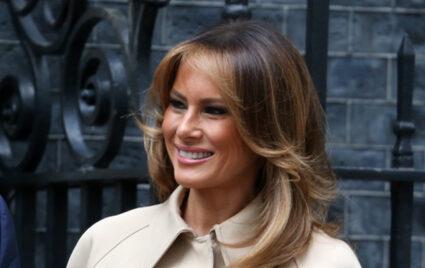
First Lady Melania Trump announced on Feb. 12, 2026, that six additional children had been brought back to their families, marking the third Russia–Ukraine child reunification she has helped facilitate through her humanitarian work with both nations.
The Feb. 12 effort reunited one Russian child and five Ukrainian children who had been separated from their families because of the ongoing conflict. The White House confirmed that Melania Trump and her representative are continuing discussions with both governments to support the safe return of displaced children.
“Today marks the third reunification since I have been working strategically with both nations,” Melania Trump stated. “I have no doubt more progress will come.”
Her involvement began in October, when eight Ukrainian children were reunited with their families. A second effort took place in December, bringing seven more children back home.
This initiative stems from the removal of Ukrainian children from their homeland during the war to be raised as Russians, a practice that has drawn global concern as families across the region have been separated.
Melania Trump’s role in the reunification process began in August after she wrote a letter to Russian President Vladimir Putin. President Donald Trump delivered the letter to Putin during their meeting in Alaska.
Putin replied in writing, opening a direct line of communication with the first lady. That exchange set the stage for several months of cooperation focused on helping children affected by the Russia–Ukraine conflict.
Over the past three months, quiet meetings and calls have taken place to coordinate the reunifications. Melania Trump’s representative has worked directly with Putin’s team to ensure children are safely returned across both countries.
On Feb. 13, 2026, Melania Trump wrote on X that she is grateful to see Russia and Ukraine dedicated to returning children impacted by the war. She noted that although communication and cooperation remain strong, she urges both nations to increase their efforts to ensure every child is reunited with their families or guardians.
This diplomatic collaboration represents a rare area of coordination between Russia and Ukraine, two nations still engaged in active conflict. Despite the war, both sides have shown a willingness to work together on this humanitarian issue.
Reuniting children during wartime presents significant logistical and diplomatic difficulties, requiring multi-agency cooperation, verification of family ties, and secure travel across dangerous areas. The direct communication channel between the first lady’s office and Russia’s leadership has helped simplify these negotiations.
International humanitarian law protects children in times of war and forbids the forced transfer of minors from occupied regions. These reunification efforts aim to address separation or displacement caused by the conflict.
The first lady’s initiative builds on the traditional humanitarian roles often taken on by U.S. first ladies, who, while holding no official office, frequently use their platform to advocate for vulnerable communities.
The White House has stressed that communication between all parties remains strong and that cooperation continues in good faith. This ongoing dialogue suggests that more reunifications may occur in the months ahead.
Recently released White House photos also show Melania Trump meeting with Keith and Aviva Siegel in the Blue Room on Feb. 4, 2026. Keith Siegel was freed on Feb. 1, 2025, after 484 days in Hamas captivity, while Aviva was released earlier, in November 2023.
The meeting underscored the first lady’s broader concern for humanitarian issues involving families separated by conflict. Although the Siegel case relates to a different region, it highlights the administration’s focus on hostages and family reunification in multiple global situations.
Observers note that humanitarian agreements often create openings for dialogue even when wider peace negotiations remain stalled. The child reunification channel is one such example of practical cooperation amid ongoing warfare between Russia and Ukraine.
The first lady has described the initiative as a meaningful effort rooted in shared purpose and long-term impact. By centering on the needs of children, the work both addresses immediate humanitarian concerns and maintains communication between the two countries.
As reunification work continues, the White House has indicated that both Russia and Ukraine remain committed to locating and returning additional children displaced by the war. The process requires thorough documentation and verification to ensure children are safely restored to their legitimate families and guardians.
