
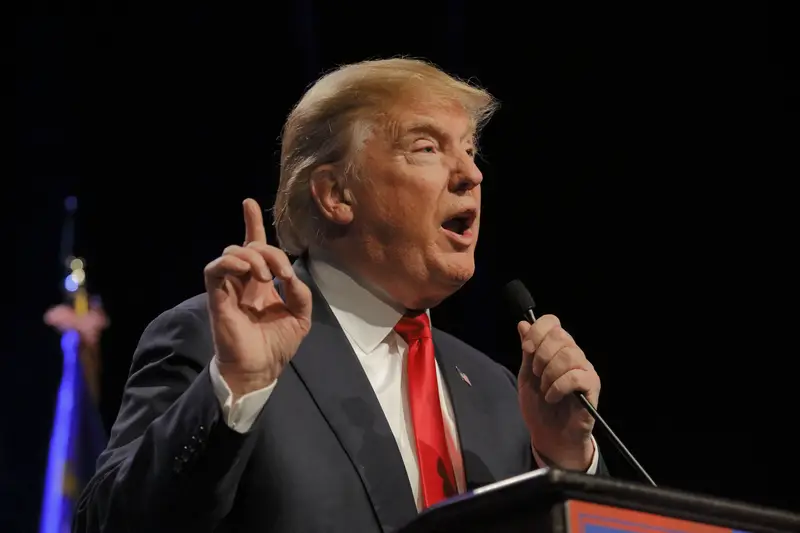
President Donald Trump unleashed a profanity-laced tirade against Colorado officials on December 31, 2025, telling Gov. Jared Polis and a local district attorney to “rot in hell” over the continued imprisonment of Tina Peters, a former county clerk convicted of election interference.
In a Truth Social post, Trump called Polis a “scumbag governor” and described Mesa County District Attorney Dan Rubinstein as “disgusting” and a “RINO,” using the acronym for “Republican in Name Only.” The president expressed sympathy for Peters, who is serving a nine-year prison sentence for crimes related to her role in allowing unauthorized access to voting equipment following the 2020 election.
Peters, 73 years old, was convicted on seven state-level charges of election interference and has served two years of her sentence so far. The former Mesa County clerk gave unauthorized individuals access to voting equipment after the 2020 election, allowing access to breach election systems in connection with MyPillow CEO Mike Lindell.
Trump pardoned Peters on December 5, but the presidential action carries no legal weight for her case. Presidential pardons have no effect on state convictions, a constitutional limitation that prevents federal executive authority from overriding state criminal justice systems. The distinction between federal and state jurisdiction means that only Colorado Gov. Polis has the power to pardon Peters for her state crimes.
Colorado officials have refused the federal government’s request to transfer Peters to a federal prison, maintaining that she is serving a sentence for state crimes under state jurisdiction. Peters’ lawyers have asked an appeals court to recognize Trump’s pardon and release her from prison, arguing that the presidential action should apply to her case.
The appeals court did not immediately dismiss the request. Instead, judges asked Phil Weiser to respond by January 8. The court is scheduled to hear arguments from lawyers in Peters’ appeal of her conviction on January 14.
Polis responded to Trump’s attack with a measured statement. “I hope the President’s resolution this year is to spend less time online talking about me and more on making America more affordable by stopping his disastrous tariffs and fixing rising health care costs,” Polis said.
The public confrontation represents the latest escalation in an ongoing feud between Trump and the Colorado governor. Trump has previously called Polis “weak and pathetic” and accused him of being “run by Tren de Aragua,” referring to a Venezuelan gang. On December 15, 2025, Trump repeated these criticisms, attacking Polis over his handling of both the Peters case and criminal activity in the state.
Rubinstein, the Republican district attorney who prosecuted Peters, dismissed Trump’s criticism. “Trump had no facts or law on his side,” Rubinstein said.
The dispute over Peters’ imprisonment comes amid broader tensions between the Trump administration and Colorado leadership. Trump recently vetoed the Arkansas Valley Conduit Act, legislation that would have helped finance a water pipeline to provide clean drinking water to approximately 50,000 Coloradans in the southeastern part of the state.
The conflict also extends to other federal-state interactions. The Trump administration has announced plans affecting NCAR in Boulder, Colorado.
Peters’ case has become a flashpoint in debates over election security and the prosecution of individuals who challenged the 2020 election results. Prosecutors and the jury that convicted her found that she violated state laws by allowing unauthorized access to secure election systems.
The legal battle over Peters’ conviction and potential release continues to unfold in Colorado courts.
The separation of pardon powers is a fundamental principle of American federalism, designed to maintain the independence of state criminal justice systems from federal interference.
The confrontation between Trump and Polis reflects broader tensions in American politics over election integrity, state versus federal authority, and the appropriate use of prosecutorial power. As Peters’ legal team prepares for the January 14 hearing and Phil Weiser’s office drafts its response, the case continues to generate national attention and inflame partisan divisions over how to handle election-related crimes.
Polis, a Democrat serving as Colorado’s governor, has consistently defended the state’s handling of the Peters case and emphasized that she was convicted by a jury following a trial prosecuted by a Republican district attorney. The appeal moves through the Colorado court system.
The January 8 deadline for Phil Weiser’s response will mark the next significant development in the case, with all parties awaiting the appeals court’s decision on whether Trump’s pardon has any bearing on Peters’ state conviction and continued imprisonment.
