
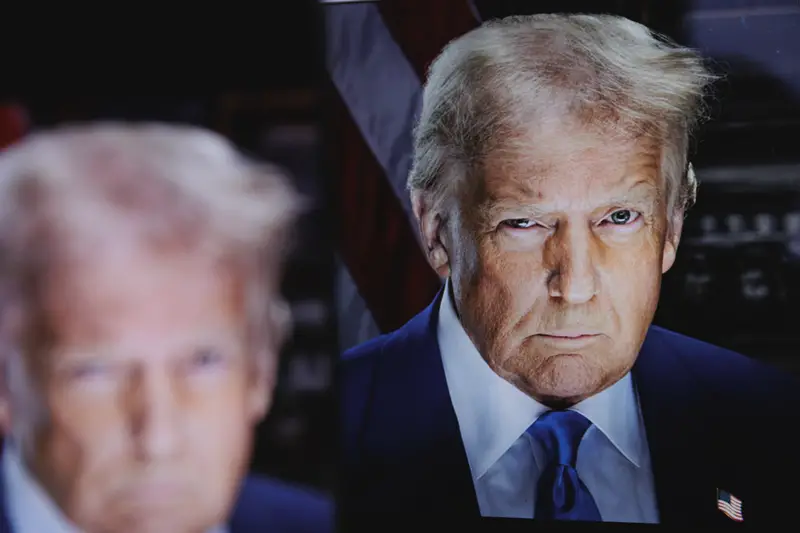
President Donald Trump erupted in fury after five Republican senators joined Democrats to advance a resolution requiring congressional approval for future military action in Venezuela. The 52-47 vote on Thursday, January 8, marked a rare rebuke of Trump by members of his own party, with Trump immediately calling each defecting senator and threatening primary challenges.
Republican Senators Rand Paul of Kentucky, Susan Collins of Maine, Lisa Murkowski of Alaska, Josh Hawley of Missouri and Todd Young of Indiana crossed party lines to invoke the Vietnam-era War Powers Resolution. The measure, co-sponsored by Democratic Senator Tim Kaine of Virginia and Paul, would require Trump to seek congressional authorization before committing additional forces to Venezuela.
Trump placed “angry” calls to each senator within hours of the vote, threatening them with primary challenges and vowing to work toward their defeat, according to people with knowledge of the conversations. His call with Collins proved particularly heated — Trump raised his voice and delivered what sources described as a “profanity-laced” rant, sharply criticizing the five-term senator who faces reelection this year but hasn’t formally announced her plans.
Two people described most calls as “direct but cordial,” though Trump’s confrontational approach with Collins suggested deeper frustration with Republicans willing to challenge his authority as commander-in-chief. A person close to Collins told reporters that Trump’s rhetoric wouldn’t influence her decision about seeking another term.
Trump vented his rage publicly on Truth Social, writing that the five Republican senators “should never be elected to office again.” He characterized their decision as “stupidity” and argued the vote “greatly hampers American Self Defense and National Security, impeding the President’s Authority as Commander in Chief.”
The president called the War Powers Resolution unconstitutional, arguing it “totally violates Article II of the Constitution.” While Trump claimed that “all Presidents, and their Departments of Justice, have determined” the law unconstitutional, courts have repeatedly declined to rule on its constitutionality, finding reasons like lack of standing to avoid taking sides in eight cases between 1973 and 2012.
Collins fired back at Trump’s social media attack, telling reporters on Capitol Hill, “I guess that means he would prefer to have [Maine Democratic Governor Janet] Mills or somebody else with whom he’s not had a great relationship.” She issued a statement explaining her position: “While I support the operation to seize Nicolas Maduro, which was extraordinary in its precision and complexity, I do not support committing additional U.S. forces or entering into any long-term military involvement in Venezuela or Greenland without specific congressional authorization.”
The confrontation erupted after the U.S. military captured Venezuelan President Nicolás Maduro in a surprise early-morning raid Saturday, following a monthslong military buildup around the South American nation. Maduro now faces drug-related charges in New York, while the Trump administration seeks to control Venezuela’s oil resources and government.
Senator Paul defended his vote in a statement following the Senate action, declaring, “Make no mistake, bombing another nation’s capital and removing their leader is an act of war plain and simple.” He emphasized that “the Constitution vests Congress with the authority to declare war” and stated that “no provision in the Constitution provides such power to the presidency.”
Trump and his allies contended that the operation to capture Maduro was a law enforcement operation rather than military action, arguing it didn’t require congressional consultation. The administration maintains the strike falls outside the War Powers Resolution’s scope because it represents an effort to bring a wanted criminal to justice rather than an act of war.
Senator Hawley, who joined the four other Republicans in supporting the procedural vote, struck a markedly different tone when speaking with reporters afterward. “I love the president. I think he’s doing a great job,” Hawley said, forecasting that he could change his vote when the Senate takes up final passage of the resolution next week.
One of the measure’s sponsors, Democratic Senator Tim Kaine, emphasized that Congress had to get involved because, in his view, the situation amounted to an extended U.S. engagement in Venezuela rather than a single discrete action. Kaine argued that the issue went far beyond an arrest warrant, warning that the seizure of oil assets and U.S. influence over Venezuela’s elections and political trajectory would persist for years.
The full Senate vote expected next week will require only a simple majority for passage. However, the resolution has virtually no chance of becoming law because Trump would have to sign it if it were to pass the House, where Republicans maintain a razor-thin majority. Even if both chambers approved the measure, Trump could veto it, and Congress would need a two-thirds majority in both houses to override his veto.
The Senate previously rejected a similar resolution in November, when only Paul and Murkowski joined Democrats in supporting limitations on Trump’s military authority. The increased Republican defections this time reflect growing unease among some senators about unchecked executive power, even within Trump’s own party.
The confrontation over war powers comes amid broader tensions between the White House and Congress over presidential authority. House Republicans recently supported two Trump domestic policy vetoes after switching positions, while Trump has withdrawn the United States from 66 multinational organizations during his current term.
Constitutional scholars have long debated the War Powers Resolution’s validity, with every president since its passage maintaining that certain provisions unconstitutionally constrain executive authority. Trump’s assertion that “all Presidents” have deemed the law unconstitutional reflects this longstanding executive branch position, though presidents have generally complied with its reporting requirements even while disputing its constitutional basis.
Thursday’s vote demonstrated that at least five Republicans are willing to cross Trump on matters of congressional war powers, despite his threats of political retaliation and his continued influence over the party’s base voters who will determine primary election outcomes.
