
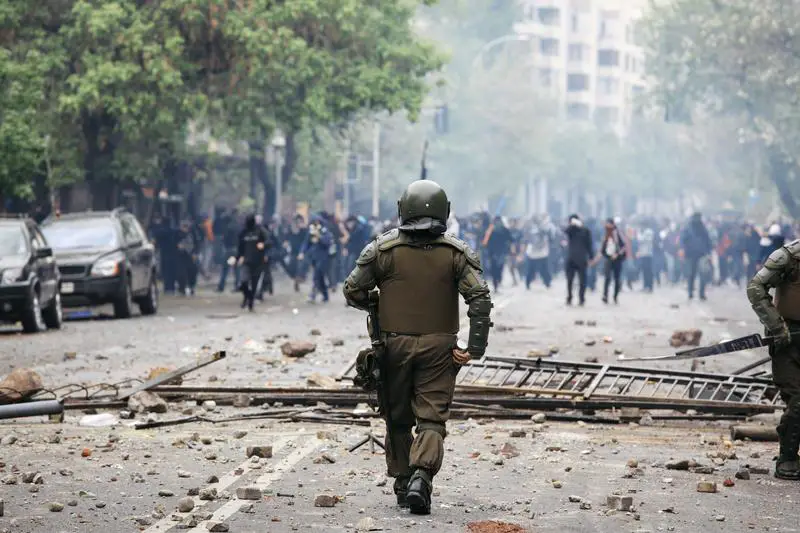
Multiple deaths have been reported across several Iranian cities as protests over high inflation and economic woes turned violent, with casualty figures varying between state media and rights organizations. The unrest marks the most significant demonstrations to grip Iran in recent years as citizens confront an economy battered by sanctions and soaring prices.
Deaths occurred in Lordegan, Kuhdasht, and Isfahan, according to multiple reports. The Revolutionary Guards confirmed that one member of the Basij paramilitary unit was killed in Kuhdasht, with 13 others wounded in clashes with demonstrators. The victim was identified as Amirhossam Khodayari Fard by the Revolutionary Guards.
Rights group Hengaw reported 17 people killed during demonstrations, while the National Council of Resistance of Iran stated that eight martyrs had been identified. State media reports indicated three killed in the initial wave of protests. The discrepancy in death tolls reflects the difficulty of obtaining verified information during civil unrest in Iran, where independent journalism faces severe restrictions.
The protests erupted over economic conditions that have left many Iranians struggling to afford basic necessities. Inflation has reached 40 percent, driven by a combination of international sanctions and domestic economic mismanagement. The purchasing power of ordinary citizens has been eroded.
Security forces fired on protesters in multiple locations, according to accounts from rights organizations. Clashes between protesters and security forces spread to numerous cities including Azna, Marvdasht, Fuladshahr, Malekshahi, Hamedan, and Harsin. The confrontations represented an escalation from initial merchant strikes and shop closures to direct confrontations in the streets.
Among the identified casualties were individuals from diverse backgrounds and age groups. Dariush Ansari Bakhtiarvand, 37 years old, was killed in Fuladshahr. Sajjad Valamanesh Zilaei, 28 years old, and Ahmad Jalil, 21 years old, both died in Lordegan. Shayan Asadollahi, 30 years old, lost his life in Azna. Vahab Ghaedi and Khodadad Shirvani were also identified among the dead.
Particularly tragic was the death of a 15-year-old identified only as Mostafa, killed in Azna. The youth’s death underscored the broad demographic sweep of the protests and the indiscriminate nature of the violence that erupted during the demonstrations. Children and teenagers have historically participated in Iranian protests, often joining family members in expressing economic grievances.
The protests that began on December 31, 2025, and continued into January 1, 2026, represented a significant challenge to Iranian authorities. Hengaw documented 27 deaths in ten days of demonstrations, highlighting the sustained nature of the unrest. The organization has played a crucial role in documenting human rights violations in Iran, particularly in Kurdish and other minority regions.
In response to the growing crisis, the government offered dialogue with trade unions. Government spokesperson Fatemeh Mohajerani announced the administration’s willingness to engage directly with representatives from merchant associations and labor organizations. “The government is ready for direct dialogue with trade union representatives,” Mohajerani stated, signaling a potentially conciliatory approach amid the escalating tensions.
The Revolutionary Guards issued a statement regarding the Kuhdasht incident, framing the violence in terms that blamed demonstrators. “Rioters took advantage of the atmosphere of popular protests,” the organization claimed, suggesting that opportunistic elements had infiltrated legitimate economic demonstrations. This narrative has been consistent with previous government responses to civil unrest in Iran.
The geographic spread of the protests indicated widespread dissatisfaction extending beyond Tehran to provincial cities and towns. Lordegan, Kuhdasht, and Isfahan all experienced significant unrest, along with smaller communities. This pattern differed from previous protests that remained concentrated in major urban centers, suggesting deeper economic pain affecting rural and provincial populations.
The National Council of Resistance of Iran released verified names and details of eight individuals killed during the demonstrations. The organization emphasized that additional deaths remained under investigation and would be reported pending verification. This methodical approach to documentation aimed to counter government narratives while maintaining credibility through careful fact-checking.
Iran’s economic troubles stem from multiple sources, including international sanctions. These external pressures have combined with domestic challenges.
The Basij paramilitary organization, which suffered casualties during the protests, is mobilized during times of unrest to support regular security forces. The organization has played a controversial role in previous protests, with critics accusing it of violent crackdowns while supporters characterize its members as defenders of public order.
Events unfolded rapidly beginning eight days ago, with initial demonstrations focused on bazaars and merchant districts before expanding into broader street protests. The timeline showed escalation from December 31, 2025, through early January 2026, with violence intensifying as security forces confronted increasingly large crowds.
The 40 percent inflation rate has made daily life increasingly difficult for average Iranians, who face rising prices for food, housing, and transportation. These cumulative pressures created the conditions for widespread protests despite government efforts to maintain control.
International observers have noted the significance of merchant participation in the protests. Their involvement in demonstrations suggested economic distress had overcome political loyalties, presenting authorities with a challenge.
The protests occurred against a backdrop of regional tensions and domestic political challenges. Iran’s government faces pressure on multiple fronts, from economic sanctions to internal dissent over social freedoms and governance. The current unrest adds another dimension to these challenges, potentially complicating the administration’s ability to maintain stability while addressing legitimate grievances about living conditions.
