
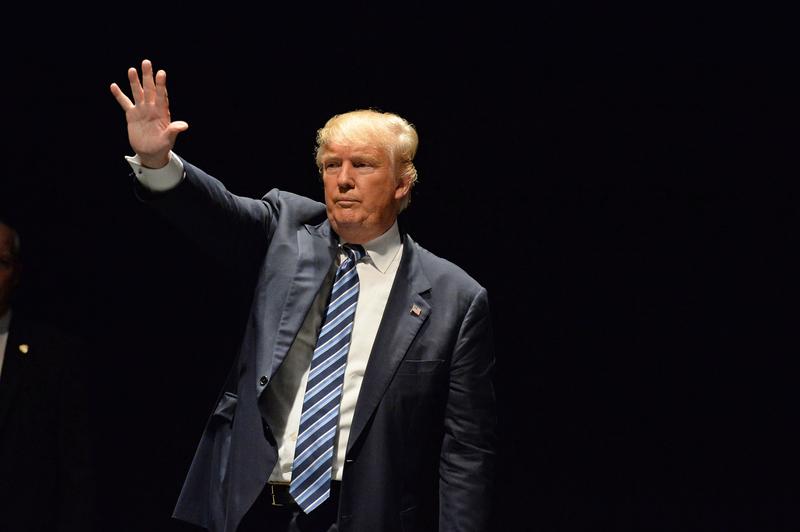
Upon arrival in Davos, Switzerland on January 21 for the World Economic Forum, President Donald Trump, aged 79, had visible difficulty descending the stairs from Air Force One. His fatigue was evident after a flight plagued by mechanical issues and substantial delays, extending his travel time by almost three hours.
The president’s journey started with an electrical problem on Air Force One, necessitating a return to Washington, D.C., on Tuesday night. After switching to a different plane, Trump left once again after midnight, finally landing at Zurich Airport on Wednesday morning. Subsequently, he took a helicopter to Davos for his scheduled address to world leaders.
Video footage showed Trump cautiously descending the aircraft stairs, holding onto the handrail and moving slowly towards the tarmac before boarding a nearby helicopter for the final segment of his journey.
Additionally, White House Communications Adviser Margo Martin shared a video on social media that showed the president walking up a red carpet at the World Economic Forum venue. He appeared to be breathing heavily and had difficulty walking in a straight line, sparking immediate speculation regarding his physical condition after such a strenuous overnight journey.
Before his appearance at Davos, Trump had an exceptionally busy schedule of public engagements. He attended a college football championship game on Monday night, which kept him out until past 2 a.m. On Tuesday, he held a 104-minute White House press briefing before starting his preparations for his international trip.
Observers noted during his speech at the World Economic Forum that the president’s voice was hoarse and his eyes had dark circles. Trump’s physical exhaustion was apparent as he addressed world leaders on subjects such as trade policy and international relations.
The president’s obvious fatigue has raised questions about his demanding schedule. Reports suggest that staff have advised Trump to keep his eyes open during public events, and cabinet members have been encouraged to shorten their presentations during meetings.
White House Press Secretary Karoline Leavitt, CNN correspondent Kaitlan Collins, and CNN’s Alayna Treene were among those who reported on the challenging circumstances of the trip.
During his speech, Trump mistakenly referred to “Iceland” when he seemed to mean Greenland, making the error three times. This occurred as Trump continued to threaten Greenland, an autonomous territory of Denmark, with annexation, a move that has complicated relations with European allies and raised questions about NATO unity.
Following the demanding international journey, Chief of Staff Susie Wiles announced a significant change in the president’s travel plans. Trump will limit his international travel commitments and focus on domestic tours ahead of the November midterm elections.
Wiles stated on Air Force One that the president plans to visit a new U.S. city every week, marking a strategy shift from frequent international trips to a domestic focus.
This domestic tour schedule includes a visit to Iowa on Tuesday, January 27, where Trump plans to deliver a speech on economic topics. This shift indicates a prioritization change for an administration that had originally planned a more active international presence during its second term.
The decision to limit international travel comes as the president faces increasing scrutiny over his physical stamina and cognitive sharpness. Critics have been closely monitoring his public appearances, noting signs of fatigue or confusion such as “extra-long blinks”.
During a lengthy White House briefing, Trump strayed from the topic to discuss his baseball career at Cunningham Park and mental institutions, specifically Creedmoor Psychiatric Hospital, in a tangent that lasted several minutes.
The World Economic Forum in Davos serves as an important platform for American presidents to interact with global business leaders and foreign government officials. The annual meeting gathers heads of state, corporate executives, and international policymakers to discuss economic trends and global challenges.
The mechanical issues that affected Air Force One added an unexpected challenge to an already demanding trip. The decision to return to Washington and switch planes was a safety precaution, but it significantly disrupted the president’s rest schedule and increased travel time.
The new focus on domestic travel reflects both practical considerations about the president’s stamina and political calculations about the upcoming midterm elections. The decision indicates that Trump’s team is prioritizing direct engagement with American voters over international diplomacy during this key period.
The contrast between Trump’s labored movements in Davos and his usually energetic presence on the campaign trail was noticeable. The clear signs of exhaustion – the slow descent from the aircraft, the heavy breathing, the difficulty maintaining a straight walk – have provided critics with fodder for questioning the president’s ability to handle the demands of governance.
As the administration shifts towards a more domestically focused travel schedule, the question of how the president can balance the demands of governance with the physical realities of aging remains central. The decision announced by Wiles suggests that Trump’s advisers recognize the need to manage his schedule more carefully, framing the shift in terms of electoral strategy, rather than physical limitations.
