
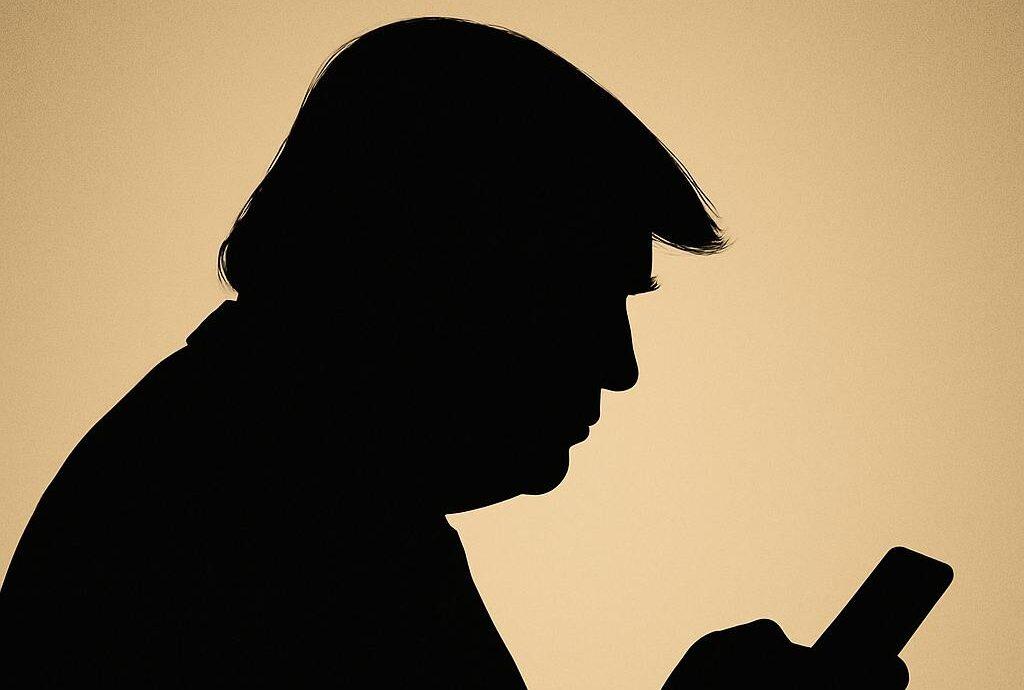
President Donald Trump frequently makes late-night phone calls to members of his administration, including Commerce Secretary Howard Lutnick, often shortly after Lutnick retires for the night. These interactions have become a recognizable feature of Trump’s presidency, covering topics ranging from critical policy matters to informal chat.
Lutnick disclosed that their conversations encompass both significant issues and minor topics. They discuss “real stuff” like tariffs as well as “nothing,” including sporting events, acquaintances, dinner guests, television commentary, and Trump’s media appearances. The Commerce Secretary noted that Trump seeks feedback on his press conferences and social media posts during these late-night discussions.
The 64-year-old former CEO of Cantor Fitzgerald acknowledged that Trump has a similar pattern of late-night calls with other individuals, although he did not specify who else might be on the receiving end. This practice aligns with Trump’s previously documented habit from his first term of making late-night calls to media figures and allies.
Lutnick’s connection with Trump goes beyond their government roles. He knew Trump during his time at Cantor Fitzgerald and appeared as a contestant on Trump’s reality show “Celebrity Apprentice.” Despite voting for Hillary Clinton in 2016, Lutnick became a major fundraiser for Trump’s 2024 campaign and served as co-chair of his presidential transition team.
The Commerce Secretary purchased Fox News anchor Bret Baier’s former home in Washington, D.C., for $25 million this year, relocating to the capital to serve in the administration. The home features expensive artworks by renowned artists, including Mark Rothko and Willem de Kooning. Trump celebrated his birthday at a private dinner at Lutnick’s new residence.
Lutnick initially sought the role of Treasury Secretary but was appointed to lead the Commerce Department in February after unsuccessful lobbying efforts. He considers himself Trump’s primary dealmaker, citing his extensive business experience. He told The New Yorker that he understands Trump’s thinking patterns and can anticipate his decisions.
However, Lutnick has faced criticism from within Trump’s circle. Sources described him variously as an “errand boy,” a “non-stop” talker, and someone lacking the intellectual capabilities of Treasury Secretary Scott Bessent. An insider suggested that while Lutnick’s personality appeals to Trump, Bessent provides the administration with more substantial expertise.
The Commerce Secretary encountered Trump’s dissatisfaction over the controversial “reciprocal tariffs” announced on April 2, which were marketed as policies to “Liberate America.” These tariffs were calculated using a complex and widely criticized formula involving trade deficits and import volumes. When Trump called Lutnick, demanding explanations for the tariff calculations, Lutnick admitted uncertainty about the methodology but was instructed to defend it publicly on television nonetheless.
Lutnick has become a prominent defender of Trump’s trade policies despite occasional inconsistencies in his messaging. During a congressional hearing, he confused Republican senators by appearing unfamiliar with certain trade laws under his department’s jurisdiction. The profile noted that during public appearances throughout the spring and summer in Washington, people regularly approached Lutnick seeking his intervention on various matters.
The New Yorker profile draws parallels between Trump and Lutnick, suggesting both men were excluded from elite Manhattan social circles despite their considerable wealth. A source close to Lutnick explained that while middle America views them as symbols of success, New York’s social elite remains dismissive of their status and influence.
Trump has publicly praised Lutnick’s business instincts and regularly includes him in White House activities. The president described him as possessing great business acumen, though others within the administration question whether Lutnick functions as a serious policy actor or merely serves Trump’s personal needs. The late-night phone calls appear to serve both official business purposes and Trump’s apparent desire for casual conversation and validation of his public appearances.
