
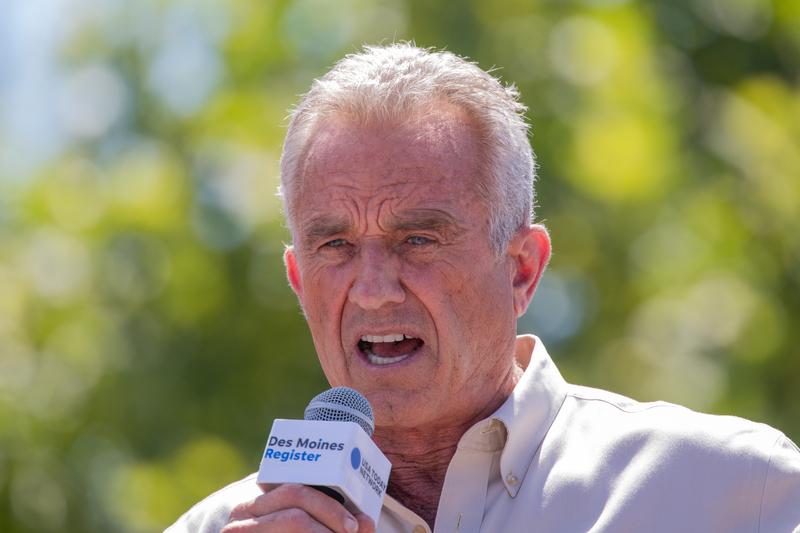
As measles cases surge in Texas and New Mexico, Health and Human Services Secretary Robert F. Kennedy Jr. has reignited debate with remarks suggesting that natural measles infections might provide more robust immunity compared to vaccination.
In a Tuesday, March 11, 2025, interview on Fox News with host Sean Hannity, Kennedy stated that individuals who naturally contracted measles during childhood in past decades gained lifelong immunity. Conversely, he argued that immunity from vaccines might wane over time.
Kennedy mentioned in the interview that it was common in earlier eras for children to contract measles, which provided lasting immunity. He noted that while vaccines offer effective protection for some, the immunity they provide may diminish for others over time.
Health experts acknowledge that natural infection can lead to lifelong immunity but advise against contracting the disease due to its severe risks. The Centers for Disease Control and Prevention (CDC) reports that prior to the vaccine’s introduction in 1963, the U.S. experienced about 500,000 measles cases and roughly 500 deaths annually, with the real number of cases likely being higher. Since the widespread adoption of vaccination, measles cases have decreased by over 95%.
Currently, Texas and New Mexico are facing significant measles outbreaks, primarily in unvaccinated communities. Texas has reported 223 measles cases, including 29 hospitalizations and one death—a child who had not been vaccinated. In New Mexico, there are 33 cases, and an adult’s death is under investigation for potential measles, though confirmation is pending.
In Texas, of the confirmed measles cases, only five individuals had received at least one dose of the MMR vaccine. Eighty were unvaccinated, and 138 had unknown vaccination statuses. Health authorities emphasize the MMR vaccine as the best defense, offering around 97% effectiveness after two doses. The vaccine is usually administered first at 12 to 15 months and again at four to six years. Adults without documented immunity are advised to get one or two doses, based on their risk factors.
Kennedy, known for his skepticism towards vaccines, expressed support for vaccine availability but opposed mandatory vaccination. Kennedy said, “if people don’t want it, the government shouldn’t force them to do it.”
Kennedy also pointed to possible adverse events from vaccines, claiming that “the measles vaccine causes all the illnesses that measles itself causes.” Health officials, however, maintain that vaccine side effects are minor and significantly less severe than the disease, which can cause complications like pneumonia, encephalitis, and death.
Despite his skepticism, Kennedy acknowledged during the interview that the measles vaccine helps prevent disease spread.
Globally, measles cases increased by 20% in 2023 compared to the previous year, raising concerns about declining global vaccination rates. In the U.S., officials note that vaccine hesitancy is a growing public health issue, worsened by online misinformation campaigns.
The issue is also international. In Samoa, health officials criticized Kennedy for his comments on the nation’s devastating 2019 measles outbreak, which led to 83 deaths, mainly among children under five. Kennedy questioned whether those deaths were due to measles, prompting strong criticism from Samoan health officials.
Dr. Alec Ekeroma, Samoa’s Director-General of Health, described Kennedy’s comments as a “huge denial,” warning that if Kennedy assumed a significant health role in the U.S., it could jeopardize vaccine access for smaller countries. “It would be a danger to us, a danger to everyone,” Ekeroma stated.
In response to the outbreaks in the U.S., public health officials in Texas and New Mexico are actively reaching out to communities to boost vaccination rates. They are also encouraging individuals to confirm their own and their children’s vaccination statuses, especially if they are in or traveling to affected areas.
Dr. Tammy Camp, a health official from Texas, indicated that vaccination hesitancy has grown partly due to political influence from anti-vaccine groups, complicating outbreak response efforts.
According to a recent Johns Hopkins report, misinformation about vaccines and an increase in non-medical exemptions for school vaccinations have significantly contributed to outbreaks in various U.S. regions, making it challenging for health departments to control the spread.
Nationally, the CDC reports measles cases across 12 jurisdictions as of early March 2025. Of these, 93% are linked to outbreaks, mainly affecting unvaccinated or partially vaccinated individuals.
Public health officials stress that maintaining high vaccination coverage—above 94%—is crucial for achieving community immunity and reducing the risk of outbreaks.
